Canada

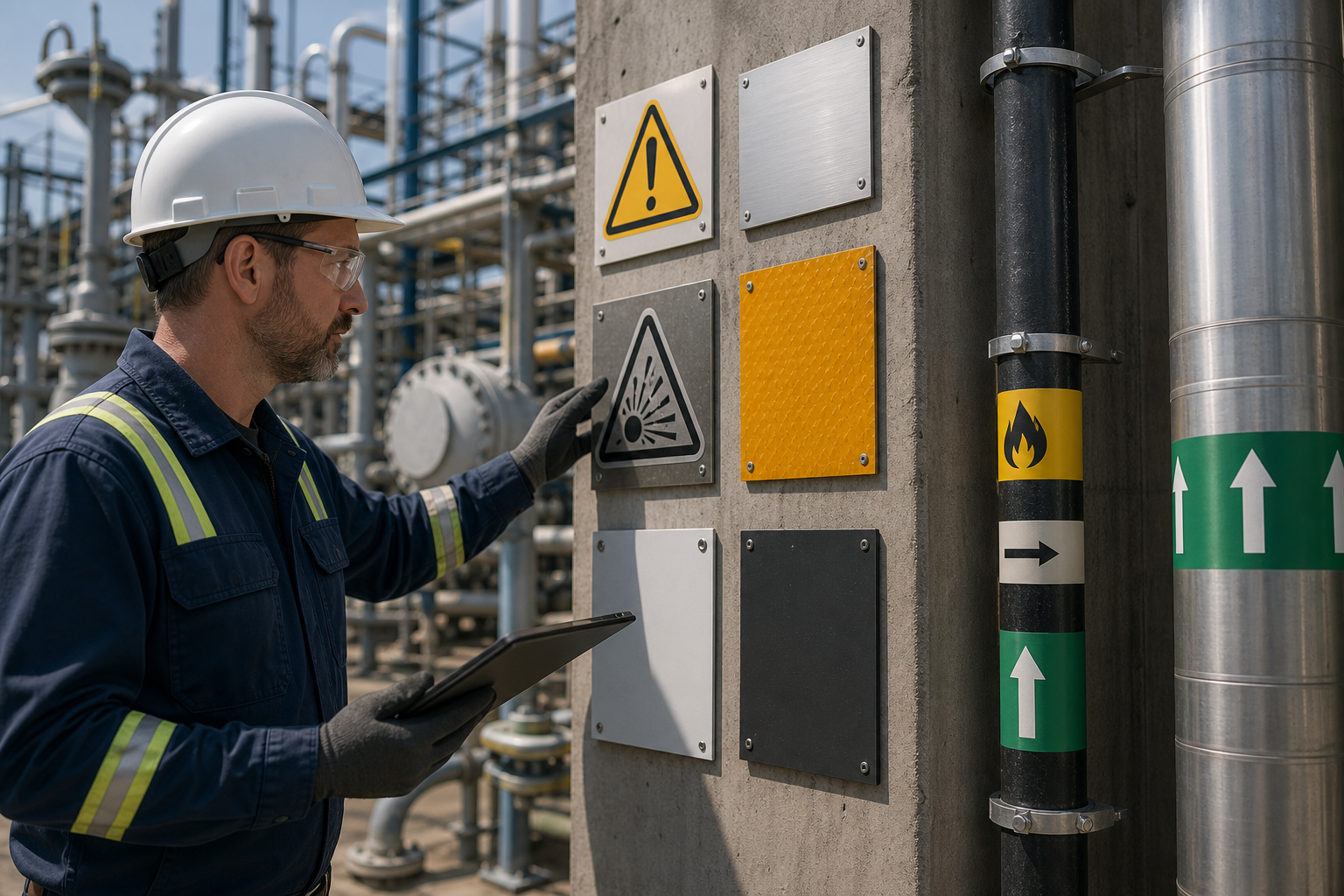
The best sign material for an industrial facility depends on where it will be installed, what it must communicate, and the conditions it will face. Outdoor exposure, UV radiation, moisture, chemicals, impact, cleaning, viewing distance, mounting surface, and applicable standards can all change the right choice.
A durable substrate is only one part of the decision. The finished sign also needs the appropriate message, colors, symbols, dimensions, mounting method, and supporting documentation. This sign materials comparison gives facility managers and safety professionals a practical way to evaluate those factors before requesting specifications or a quote.
How to Compare Sign Materials for a Facility
Begin by defining the job the sign must perform. A sign inside a controlled office area faces different demands from one mounted outdoors, near a washdown area, beside moving equipment, or on a pipe exposed to heat and chemicals.
Record the location, UV and moisture exposure, chemicals and cleaning agents, impact or abrasion risks, viewing distance, lighting, mounting surface, replacement access, and applicable ANSI, NFPA, ASME, CGA, or Canadian requirements. A site audit for workplace safety products can help organize this information.
Material Selection by Environmental Exposure

Environmental exposure is often the first meaningful difference between applications. A material that performs adequately indoors may not suit direct sunlight, persistent moisture, chemical contact, or repeated cleaning.
Indoor and sheltered locations
Protected indoor locations still require attention to readability, mounting, impact, dust, abrasion, vibration, forklifts, and industrial cleaning. The absence of weather exposure does not eliminate durability concerns.
Outdoor, moisture, and chemical exposure
Outdoor signs should be evaluated for sunlight, UV radiation, moisture, and changing weather. Ask whether the complete finished sign, including its printed or marked information, is designed for the intended exposure. For chemical contact, identify the chemical, exposure type, cleaning process, surface, and expected replacement conditions. Request compatibility information for the substrate, face, markings, adhesive, and mounting method.
VisionMarker states that its products are designed for demanding conditions that can include outdoor exposure, UV radiation, moisture, and chemicals. For a particular application, buyers should still request product specifications rather than treating a general durability statement as a universal rating.
Impact, Abrasion, Mounting, and Visibility Considerations
A sign beside a forklift route may need a different approach from one mounted above a doorway. Review impact, abrasion, contact, vibration, and frequent-handling risks before choosing a construction.
Confirm whether the sign will attach to a flat, curved, rough, painted, oily, dusty, or porous surface. For labels and stickers, surface preparation and adhesive compatibility are especially important. For rigid signs, the attachment method should prevent loose edges, blocked information, and avoidable damage.
Assess visibility from the point where people need to read or act on the message. Consider viewing distance, lighting, glare, obstructions, orientation, sign size, contrast, and whether the audience includes pedestrians, vehicle operators, maintenance staff, or emergency responders.
Choosing Materials for General Safety Signs
General safety signs communicate workplace requirements, hazards, restrictions, and instructions. Examples include PPE required signs, eye protection signs, forklift traffic signs, entry prohibited signs, lockout messaging, slippery when wet signs, keep aisles clear signs, caution stripes, and hazard markers.
Compare the material with the message and installation plan. A sign near a production process may need greater resistance to moisture, chemicals, or cleaning than one in a protected corridor. A sign near vehicle traffic may require greater attention to impact and visibility.
Review VisionMarker’s safety signs and poster products by checking the wording, colors, symbols, dimensions, construction, mounting, visibility, and documentation for any required standards alignment.
Choosing Materials for Pipe Markers and Piping Identification
Pipe markers are not simply wall signs placed on a pipe. They support piping identification by communicating information about the service and must remain visible on the pipe or related installation surface. Evaluate pipe diameter, shape, location, access, exposure, and reading distance.
Confirm the service identification, flow-direction information where applicable, color scheme, text, placement, and attachment method. Ask whether the specific product aligns with applicable requirements, including ASME A13.1 where relevant. A general durability statement does not verify that a finished pipe marker meets every requirement for a particular piping system.
VisionMarker offers a dedicated piping identification and pipe marker category. Include the pipe dimensions, service, installation environment, and project standards when requesting information.
Choosing Materials for Fire Protection Signage
Fire protection signage requires a separate review because its message, symbols, placement, visibility, and applicable standard may relate to emergency equipment or response procedures. A material comparison should include more than weather or impact resistance.
Check who must see the sign, whether equipment could obstruct it, and whether lighting or emergency conditions affect readability. Confirm the wording, symbols, colors, dimensions, mounting, and documentation for the specific application. References to NFPA 170 should be evaluated as part of the complete sign and installation, not as proof that any material or generic sign is compliant.
VisionMarker provides a dedicated fire protection signage category for review alongside project requirements.
Where Labels and Stickers Fit in the Comparison
Labels and stickers can identify equipment, cabinets, containers, doors, and other localized surfaces. Their performance depends heavily on the surface and adhesive system.
Before ordering, identify whether the surface is smooth, rough, painted, coated, oily, dusty, curved, or exposed to cleaning. Describe temperature, chemicals, handling, and whether removal or replacement is expected. Request compatibility information for the complete label.
VisionMarker’s labels and stickers selection covers industrial identification needs. Include the application surface and environmental conditions when requesting guidance.
Verify the Complete Finished Sign, Not Just the Substrate
Substrate selection alone does not establish whether a finished sign is suitable. Verify the material, marking method, message, symbols, colors, dimensions, mounting method, environmental resistance, and standards documentation as one system.
Ask how the message is produced and whether that method suits the expected exposure. Confirm that the sign can be read from the required distance, fits the mounting area, and can be inspected or replaced. VisionMarker’s resource on NFPA 170 signs offers additional context, but the applicable requirement still needs to be confirmed for the individual sign and facility.
Buyer Checklist for Sign Material Specifications
- Sign type and exact message.
- Indoor, outdoor, sheltered, or exposed location.
- UV, moisture, washdown, cleaning, chemical, temperature, dust, and weather conditions.
- Impact, abrasion, vibration, or vehicle-contact risks.
- Mounting surface, shape, dimensions, and attachment method.
- Viewing distance, lighting, and visibility constraints.
- Quantity, sizes, variations, and replacement needs.
- Applicable ANSI, NFPA, ASME, CGA, or Canadian requirements.
- Specifications, resistance information, samples, and compliance documentation.
- Lead time, destination, and quote requirements.
This checklist separates genuine application requirements from assumptions such as “metal is best” or “any outdoor label will work.”
When to Request Samples, Specifications, or a Quote
A standard catalog choice may suit a straightforward, protected application. Request more information when signs face chemicals, washdown, strong sunlight, impact, unusual mounting surfaces, or multiple environmental conditions.
Samples can help assess readability, fit, mounting, and surface appearance before a larger order. Product specifications are especially important for safety signs, pipe markers, fire protection signage, and labels that must remain legible in demanding conditions.
A quote is useful when a facility needs multiple categories, varied sizes, custom messages, or coordinated identification. VisionMarker serves customers across the USA and Canada and uses a quote-based purchasing model for many products.
Frequently Asked Questions
Which sign material is best for outdoor facility use?
There is no universal outdoor winner. The choice depends on UV exposure, moisture, weather, mounting, viewing distance, impact risk, and the resistance information available for the complete finished sign. Request product-specific environmental specifications.
What should I check when signs may contact chemicals?
Identify the chemical, concentration if known, contact frequency, splash or immersion conditions, cleaning process, exposure duration, and sign surface. Review the marking method, adhesive, mounting system, and replacement conditions for the complete sign or label.
Does choosing a durable material make a sign compliant?
No. Durability addresses only part of the decision. Compliance or standards alignment may also involve message, colors, symbols, dimensions, placement, mounting, visibility, and documentation.
Can one material serve every sign application in a facility?
That assumption is unreliable. General safety signs, pipe markers, labels and stickers, and fire protection signage may have different exposure, visibility, mounting, and standards requirements. A facility may need several constructions or configurations.
Make the Material Decision From the Facility Conditions
The strongest sign materials comparison does not declare one universal winner. It matches the finished sign to its environment, physical risks, viewing conditions, mounting surface, purpose, replacement expectations, and applicable documentation.
Separate general safety signs from piping identification, labels and stickers, and fire protection signage. Then provide the supplier with site conditions, required messages, exposure details, standards needs, quantities, and mounting information.
Review VisionMarker’s contact and quote options to discuss industrial signage, pipe markers, labels and stickers, or fire protection signage for your facility across the USA and Canada.