Canada

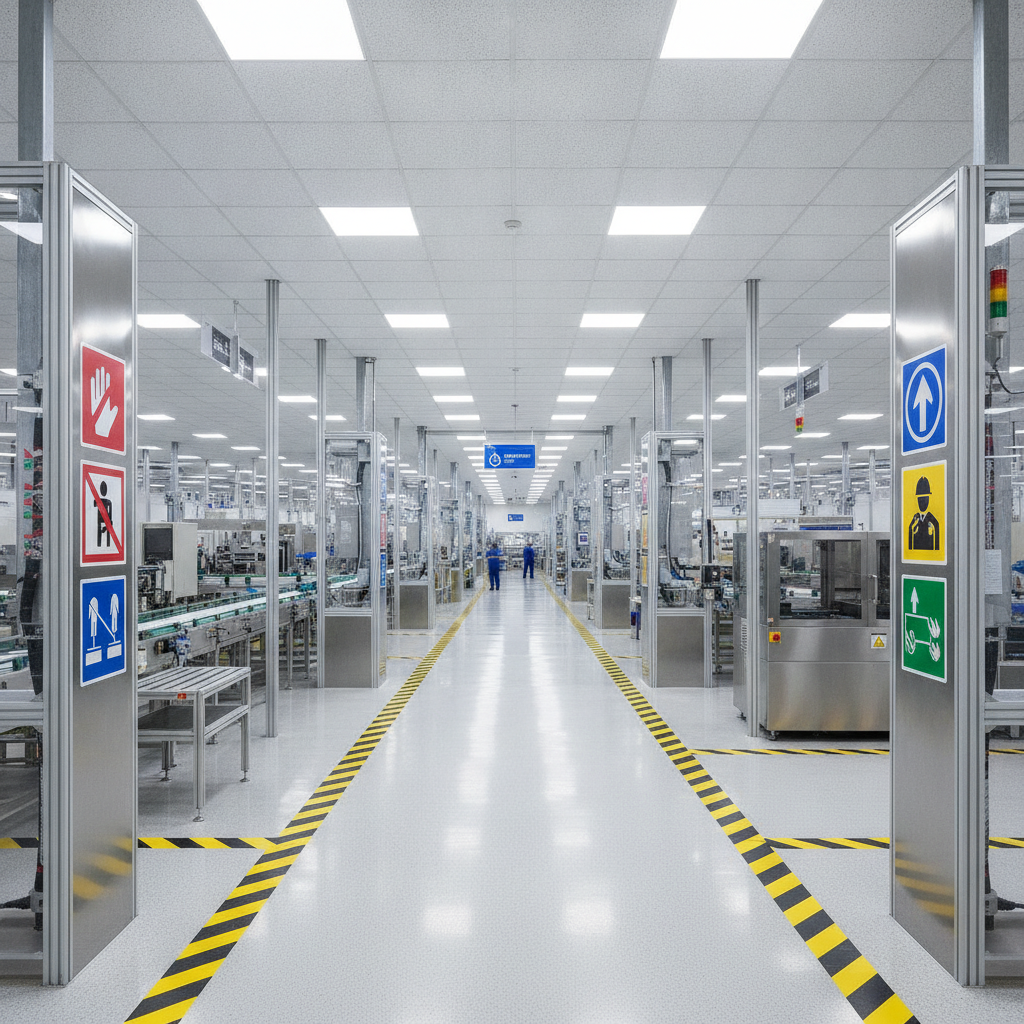
OSHA warning signs are standardized visual messages that alert workers to hazards that could cause serious injury if ignored. In the USA, they align with OSHA 29 CFR 1910.145 and are commonly designed using ANSI Z535 formats. VisionMarker supplies ANSI-certified industrial signage to help facilities nationwide implement these requirements consistently and quickly.
By VisionMarker • Last updated: 2026-06-18
Start here: what you’ll get
This guide shows you how to select, design, and place OSHA-aligned warning signs across U.S. facilities. You’ll learn the difference between danger, warning, and caution, how ANSI Z535 layouts work, where signs belong, and how VisionMarker’s ANSI-certified products help you build a durable, standards-driven program.
If your EHS team needs a clear, field-ready playbook, you’re in the right place. We focus on practical deployment for industrial plants, warehouses, utilities, construction, and commercial sites across the USA.
- What OSHA warning signs mean and where to use them
- How ANSI Z535 layouts support OSHA 1910.145
- Placement rules for forklifts, PPE, slips, fire, and more
- Durability specs: UV, moisture, and chemical resistance
- Audit, training, and maintenance checklists
Overview of sections
- What OSHA warning signs are
- Why this matters now
- How the standards work together
- Types of signs and uses
- Best practices and checklists
- Tools and resources
- Case studies and examples
- Frequently asked questions
- Key takeaways + next steps
What are OSHA warning signs?
OSHA warning signs communicate hazards that can lead to serious injury if not avoided. Under OSHA 1910.145, “Warning” indicates a mid-to-high level hazard below “Danger” but above “Caution.” Most facilities use ANSI Z535 designs to standardize colors, symbols, and layouts for fast, recognizable communication.
In practice, warning signs flag conditions like moving machinery, energized equipment, or hazardous surfaces. They’re part of a broader safety communication system that also includes danger, caution, notice, and instructional signs, plus labels and floor markings.
- Signal word hierarchy: Danger > Warning > Caution
- Typical colors: Warning (black text on orange header), Danger (white on red), Caution (black on yellow)
- Core elements: signal word panel, safety symbol, concise hazard and avoidance message
- Use case: serious hazards where failure to avoid could cause injury; not the most extreme (Danger) conditions
VisionMarker aligns designs with ANSI Z535, NFPA 170 symbols, and related standards so your messages look familiar, read fast, and withstand harsh environments in and outdoors.
Why OSHA warning signs matter
Clear warning signs cut incidents by guiding decisions at the exact moment of risk. They set consistent expectations, reinforce training, and help demonstrate compliance. Durable, standardized signs also reduce confusion during shift changes, contractor work, and emergency response.
Here’s the thing: people scan before they read. Consistent layouts, colors, and pictograms help workers recognize risk in a split second. That’s why facilities standardize on ANSI-certified designs—so new hires, temps, and contractors can interpret messages without hesitation.
- Human factors: recognizable layouts speed perception and reduce decision time.
- Program consistency: using one design system prevents mixed messages across departments.
- Regulatory posture: signage aligned to OSHA/ANSI supports training and documentation.
- Resilience: weatherproof construction helps signs remain legible after UV, moisture, and chemical exposure.
In our experience with national operations, the biggest gains come from pairing standardized signs with floor markings, labels, and pipe markers—so every cue points to the same decision. That integrated approach is where VisionMarker’s catalog shines.
How OSHA, ANSI, NFPA, and ASME work together
Use OSHA 1910.145 for the regulatory framework, ANSI Z535 for modern layouts, NFPA 170 for safety symbols, and ASME A13.1 for pipe identification. Together, they create a coherent visual language so workers interpret hazards the same way across your site.
OSHA defines categories and intent; ANSI Z535 specifies color headers, symbol use, and message structure; NFPA 170 standardizes pictograms; ASME A13.1 covers pipe markers. When you implement all four coherently, you eliminate design guesswork and improve recognition.
| Signal word | Severity intent | ANSI color header | Use when | Example hazards |
|---|---|---|---|---|
| Danger | Immediate hazard; will cause death/serious injury if not avoided | White text on red panel | Highest-risk tasks and locations | Confined space entry, energized high-voltage panels |
| Warning | Could cause death/serious injury if not avoided | Black text on orange panel | Serious hazards below “Danger” | Moving conveyors, pinch points, hot surfaces |
| Caution | Minor to moderate injury possible | Black text on yellow panel | Lower-severity hazards | Trip hazards, low headroom, noise areas |
Connect signage with other markings: integrate ASME A13.1 pipe markers for content/flow direction, apply floor tape/paint for travel aisles, and add equipment labels for lockout and maintenance points. This creates a layered, redundant system that stands up to real-world usage.
Types of OSHA-aligned signs and where they go
Deploy wall-mounted placards, posts, equipment labels, floor graphics, barricade tags, and door/entry panels to cover fixed and temporary hazards. Match “Danger/Warning/Caution” to severity, use NFPA 170 symbols, and place signs at eye height, approach angles, and decision points.
Facility hazards vary. Your program should blend permanent and temporary media so messages appear where people decide: at gate entries, machine interfaces, mezzanine stairs, loading docks, chemical storage, and utility rooms. Here are practical applications we help implement:
- Wall placards: Long-life aluminum or rigid plastic for machine areas and fixed hazards.
- Equipment labels: Adhesive, chemical/UV resistant labels on panels, guards, and access doors.
- Floor graphics/tape: Directional arrows, hazard stripes, keep-clear boxes, and pedestrian lanes.
- Barricade tags: Temporary, high-visibility tags for maintenance or spill response.
- Door/entry signs: Threshold warnings for rooms with specific PPE or process risks.
- Freestanding posts: Mobile or anchored posts near docks, yard staging, or outdoor utilities.
- Overhead banners: Large-span visibility for warehouses and high-bay production.
- Magnetic panels: Reusable markers for steel surfaces, ideal for changeover environments.
- Pipe markers: ASME A13.1-compliant markers at intervals and direction changes.
- Fire protection signs: Mark extinguishers, hydrants, and exits with NFPA 170-aligned symbols.
- Forklift traffic: Combine signs with floor lanes and mirrors at intersections.
- Confined spaces: Permanent placards and entry-tag systems for permits.
- Temporary construction: Portable signs and barrier tape for evolving hazards.
When you standardize on an ANSI-certified set, you can mix substrates and mounting hardware without losing visual consistency. VisionMarker’s warning sign category and danger sign category give you compatible options for every zone.

Best practices and placement checklist
Map hazards, select the correct signal word, choose ANSI layouts, and mount signs at eye height and approach angles. Reinforce with floor markings and labels, then audit quarterly. Document everything—photos, maps, and training records—to prove consistency.
Program design principles
- Start with a hazard map: Walk the floor and mark decisions: approach, operate, clean, and maintain.
- Apply the hierarchy: Decide Danger vs Warning vs Caution based on severity and probability.
- Use standard symbols: NFPA 170 icons improve multilingual comprehension.
- Keep text concise: State the hazard, consequence, and required action in one short sentence.
- Design for glare and distance: Choose matte finishes and sizes readable from expected approach.
- Engineer for environment: UV/chemical/moisture resistance for outdoor and washdown areas.
Placement rules that work
- Eye height on the approach: 57–67 inches typical; adjust for vehicle cabs or mezzanine stairs.
- Near the decision point: Mount where a person chooses a path, presses start, or opens a guard.
- Unobstructed sight lines: Avoid stacking too many messages in one field of view.
- Repetition for long approaches: Add preview and confirmation signs in high-speed forklift lanes.
- Lighting: Ensure adequate illumination; reflective sheeting helps in low light.
- Pair with markings: Use hazard stripes, keep-clear boxes, and pipe markers for redundancy.
Local considerations for your area
- Account for seasonal lighting and weather across U.S. regions by choosing reflective or high-contrast materials for outdoor yards and loading areas.
- Plan around production peaks and holiday rush periods to schedule audits and sign replacement when foot and forklift traffic are lowest.
- Standardize bilingual symbols and clear pictograms if your local workforce includes multiple language groups; NFPA 170 icons help.
Maintenance and auditing
- Quarterly inspections: Log damage, fading, relocations, and new hazards.
- Photo records: Keep before/after photos in your digital map.
- Training tie-in: Review signs during onboarding and refreshers.
- Change control: Re-approve designs when equipment or process changes alter risk.
Want templates and a fast review? Our team can benchmark your current layouts against ANSI Z535 and share substrate recommendations based on your environment.
Free standards alignment check: Get a quick-read assessment of your current signs, labels, and floor markings. We’ll flag severity mismatches, readability issues, and durability risks—then suggest ANSI-certified replacements you can deploy immediately.
Tools and resources to build your system
Combine ANSI-certified wall signs, equipment labels, floor markings, pipe markers, and fire protection signage. Centralize documentation in a visual map, assign owners, and schedule audits. Use durable materials engineered for UV, moisture, and chemicals to extend service life.
VisionMarker’s catalog is built around standards alignment and field durability. That means fewer reprints and less confusion in mixed environments where heat, solvents, or washdowns wear out typical signage.
- Warning/Danger categories: Browse compatible formats in our warning signs and danger signs.
- Fire protection suite: Mark extinguishers, cabinets, and egress with our fire safety products set.
- Pipe ID: Build consistency with ASME A13.1 pipe markers across utilities and process media.
- Marking systems: Pair signs with lanes, hazard boxes, and tape from our marking systems guide.
For general background on electrical safe-work topics often paired with signage, this home electrical safety guide provides approachable context. For eye PPE categories frequently referenced on signage, browse this eye safety collection. And for maintenance coordination insights that influence lockout signage, see this industrial electrician overview.
Case studies and field examples
Standardizing on ANSI-certified designs shortens reaction time and reduces confusion. These mini case examples show how integrated signs, labels, floor markings, and pipe markers improve navigation, maintenance, and emergency response across common U.S. facility types.
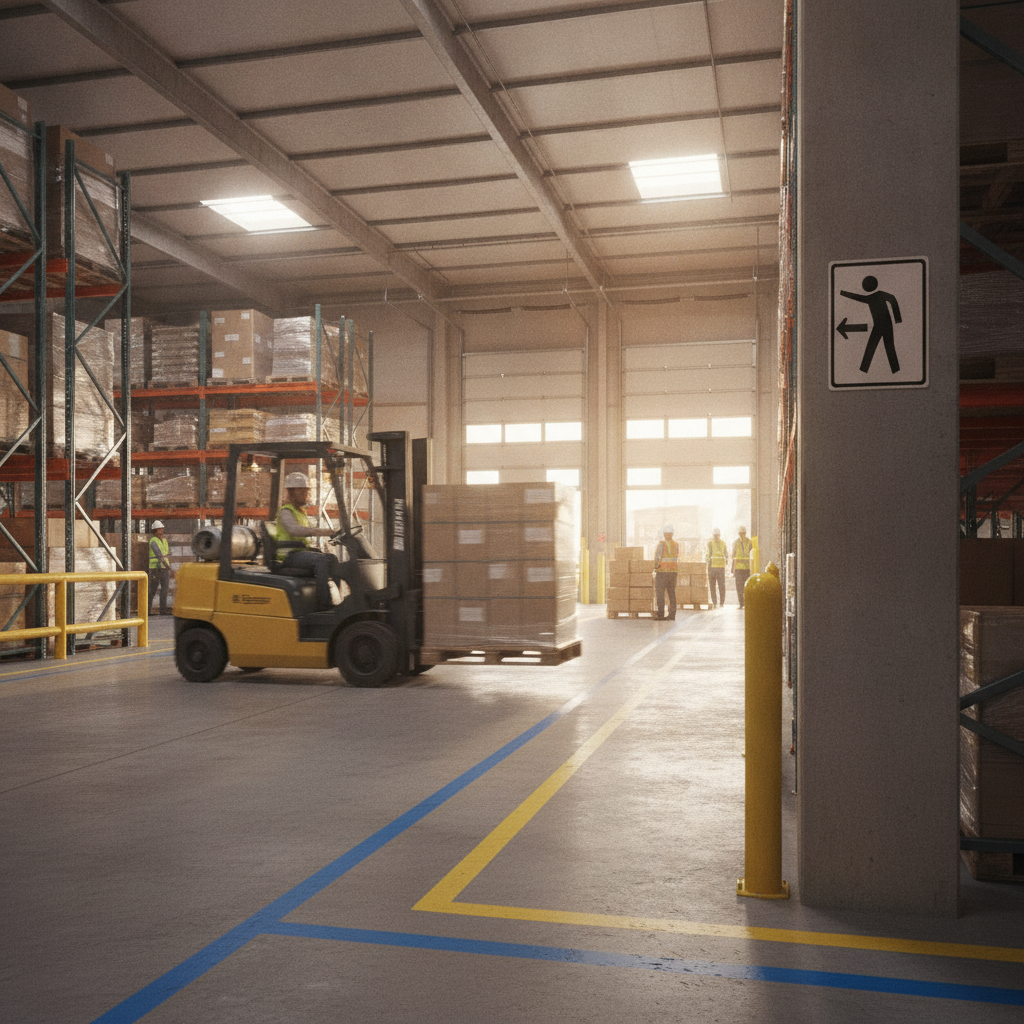
High-throughput warehouse
- Problem: Near misses at intersections and dock edges.
- Action: Deployed forklift Warning signs, convex mirrors, and high-visibility floor lanes.
- Detail: Repeated approach signage every 75–100 feet in fast lanes; added keep-clear boxes at bays.
- Outcome: Operators reported faster recognition and smoother right-of-way decisions.
Batch manufacturing line
- Problem: Ambiguous messages on guards and hot surfaces.
- Action: Replaced mixed legacy designs with ANSI Z535 Warning and Caution labels; clarified actions.
- Detail: NFPA 170 symbols plus short “Do/Don’t” phrasing; matte finishes to control glare.
- Outcome: Technicians referenced labels during PMs; fewer resets for unclear interlocks.
Utilities and mechanical rooms
- Problem: Pipe contents unclear at valves and branch points.
- Action: Implemented ASME A13.1 pipe markers plus threshold warnings at entries.
- Detail: Directional arrows at changes in direction; repeaters through crowded racks.
- Outcome: Faster line tracing during maintenance and emergencies.
Contractor-heavy projects
- Problem: Temporary risks during shutdowns and tie-ins.
- Action: Portable Warning signs and barricade tags at task boundaries.
- Detail: Daily audit of tag locations with foreman sign-off.
- Outcome: Better adherence to exclusion zones and staging areas.
Fire protection and egress
- Problem: Inconsistent extinguisher and exit markings across expansions.
- Action: Standardized on fire safety products and NFPA 170-aligned signage.
- Detail: Added photoluminescent arrows in low-light routes; reinforced keep-clear boxes.
- Outcome: More reliable wayfinding during drills and after-hours events.
Frequently asked questions
These concise answers address the most common buyer and practitioner questions about OSHA warning signs, from wording and color to placement and maintenance. Each answer focuses on practical steps you can act on immediately.
What does “Warning” mean compared with “Danger” and “Caution”?
“Warning” indicates a serious hazard that could cause death or serious injury if not avoided. It’s below “Danger,” which signals the most extreme hazards, and above “Caution,” which addresses lower-level risks. Choose the signal word based on severity and probability, then match it with an ANSI Z535 layout.
Where should OSHA-aligned warning signs be installed?
Place signs at eye height on the approach to a hazard, near decision points such as machine controls, thresholds, and aisle intersections. Ensure clear sight lines, adequate lighting, and repetition for long approaches. Pair signs with floor markings and labels for redundancy and better recognition.
Do I have to use ANSI Z535 designs for OSHA compliance?
OSHA sets the regulatory framework for accident prevention signs. Many facilities use ANSI Z535 as the modern best-practice design standard because it standardizes headers, colors, symbols, and wording. Using ANSI-certified signs simplifies recognition, training, and documentation across large sites.
How often should we audit or replace safety signs?
Audit quarterly and after any process or layout change. Replace signs that are faded, damaged, blocked, or no longer accurate. Keep photo records and a map of sign locations so you can prove updates were completed and ensure consistency across shifts and departments.
Conclusion: put warning signs to work
An effective OSHA warning sign program blends correct severity selection, ANSI Z535 design, strategic placement, and durable materials. Standardize across signs, labels, floor markings, and pipe markers to create a redundant, easy-to-read system workers trust under pressure.
Key takeaways
- Use the Danger/Warning/Caution hierarchy consistently with ANSI Z535 layouts.
- Mount at approach and decision points; engineer for lighting and environment.
- Integrate fire signage, pipe markers, and floor markings for redundancy.
- Audit quarterly, document changes, and tie signage to training.
- Leverage ANSI-certified, weather- and chemical-resistant materials.
Ready to standardize your facility? Explore compatible warning signs, align fire protection using fire safety products, and unify utilities with ASME A13.1 pipe markers. Our team supports U.S. operations with fast, reliable turnaround.
Related safety topics and next steps
To deepen your program, pair this guide with our focused write-ups on specialized hazards. For radiation sources, see our radiation hazard sign guide. To manage restricted spaces and site security, review prohibited area sign practices. For broader system design, our marking systems guide shows how to connect signs with lanes, boxes, and borders.