Canada

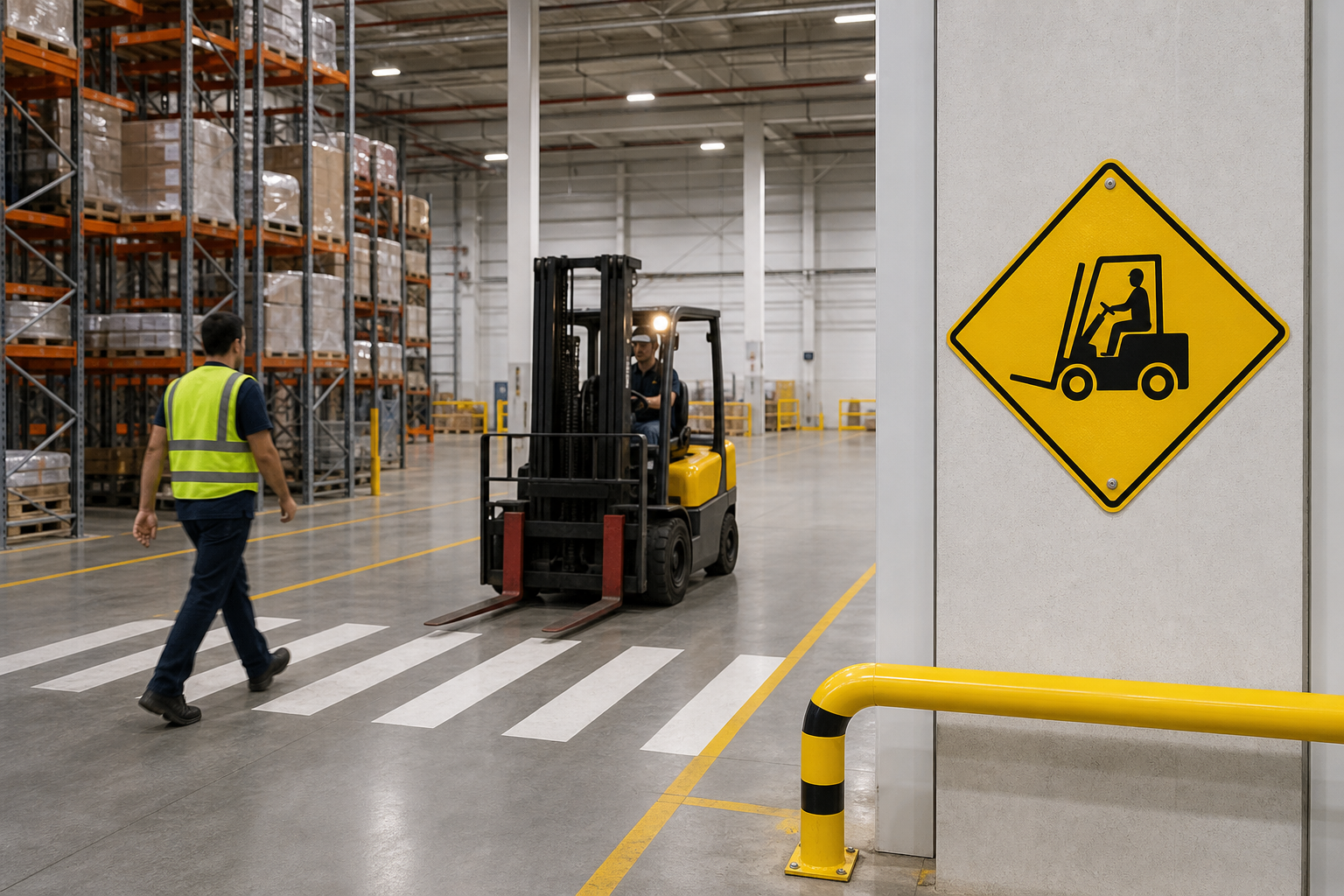
Forklift traffic signs are visual communication tools that clarify movement, access, crossing, and caution information where powered industrial trucks and pedestrians may share space. They can support communication at routes, intersections, loading areas, staging zones, and other shared workspaces.
These signs support a broader safety system. They do not replace traffic planning, physical separation, hazard assessment, operating procedures, or operator and pedestrian training. Their value comes from making intended movement patterns easier to understand where people and equipment interact.
What forklift traffic signs communicate
This category includes signs that explain how forklift activity relates to people, routes, and operating areas. Depending on the facility, a sign may draw attention to forklift traffic, a crossing, a shared zone, restricted access, loading activity, or a caution point.
The key question is whether the message is clear, accurate for that location, and useful to the people expected to see it. A pedestrian-facing sign may emphasize awareness of forklift movement, while an operator-facing sign may identify a crossing, restricted area, or change in operating conditions.
VisionMarker includes forklift traffic signs within its broader range of industrial signs and posters. This lets facility teams consider traffic communication as part of a consistent signage system.
Where forklift traffic signs may help in a facility

No single placement pattern fits every plant, warehouse, utility, construction site, or commercial facility. Start with the movement problem the sign needs to address, then consider how it fits with existing procedures and controls.
Traffic routes and intersections
Signs may draw attention to routes where powered industrial trucks regularly travel, especially where a route intersects another vehicle path, changes direction, or passes through an area used by people. They can reinforce the intended traffic pattern and remind users that equipment movement may occur nearby.
The message should match the actual route design. If a sign suggests a rule that the site does not consistently follow, it can create confusion. Review wording with operations, maintenance, and safety personnel before standardizing it.
Pedestrian crossings and shared work zones
Shared areas deserve particular attention because operators and pedestrians may approach the same space with different lines of sight, tasks, and expectations. A sign can make forklift activity more visible and clarify that people should pay attention to powered industrial truck movement.
Communication is only one part of the solution. Depending on the site, the broader approach may also involve defined walkways, physical separation, visibility controls, procedures, and training.
Restricted areas, loading zones, and staging spaces
Facilities may use signs to distinguish forklift-only areas, restricted access points, loading activity, or temporary staging spaces. Wording should reflect the actual operating rule. A restricted-area message should not be used where pedestrians are routinely expected to enter without additional instructions.
Review these areas when layouts change. Equipment, pallets, trailers, barriers, and stored materials can alter sightlines and movement patterns.
How to choose forklift traffic signs for an industrial facility
Start with the exact message
Choose the message before choosing the product format. Identify what is happening, who needs the information, and what action or awareness the sign should support. A concise message focused on one operational point is generally easier to understand than several unrelated instructions.
Walk the facility with safety, operations, maintenance, and route users where appropriate. Record the language used in procedures and training so signs reinforce familiar terminology.
Consider visibility and placement context
Consider approach direction, visual clutter, lighting, nearby equipment, mounting surfaces, and whether the sign must be noticed while people are moving. Review each proposed position from relevant approach paths and check visibility after normal equipment, inventory, doors, or temporary materials are in place.
Match the sign to the environment
Document whether the sign will encounter sunlight, UV radiation, moisture, chemicals, temperature changes, abrasion, or frequent contact with equipment and personnel.
VisionMarker states that its products are engineered for demanding environments and designed to withstand outdoor exposure, UV radiation, moisture, and chemicals. When evaluating any supplier, match stated construction and intended use to the conditions at your facility rather than assuming every safety sign suits every environment.
Check standards alignment and facility consistency
Confirm which standards, specifications, and internal signage conventions apply to the facility and the particular sign use. Buyers may evaluate ANSI-certified signs, but requirements should be confirmed for the site, jurisdiction, industry, and application.
VisionMarker positions its signage around recognized standards, including NFPA 170 and ASME A13.1, and describes its products as ANSI-certified. This can help build a sourcing shortlist, but it does not mean every sign serves every standard. Review product details and facility specifications before ordering. Its guidance on choosing ANSI-certified signs can support that review.
Forklift traffic signs compared with related safety signage
Industrial signage categories can overlap visually, but they communicate different information. Separating them helps facilities avoid using a general warning where a more specific message is needed.
| Category | Primary purpose | Key question |
|---|---|---|
| Forklift traffic signs | Communicate forklift movement, crossings, access, or shared-zone awareness | What should operators or pedestrians know about movement here? |
| PPE and general safety signs | Communicate protective equipment, instructions, or general hazards | What protection or behavior applies here? |
| Caution markers | Draw attention to boundaries, edges, changes, or physical hazards | What feature requires additional attention? |
| Industrial labels | Identify equipment, containers, assets, or specific information points | What is this item? |
| Pipe markers | Identify piping contents, service, or system information | What does this pipe carry? |
Forklift traffic signs versus PPE and general safety signs
A forklift traffic sign focuses on movement and access. A PPE required sign focuses on protective equipment. The same facility may need both, but each should appear where its instruction applies.
General workplace health and safety signs can address slips, entry restrictions, housekeeping, lockout procedures, or other hazards. They should not be expected to communicate forklift movement unless that is the specific message.
Forklift traffic signs versus caution markers and industrial labels
Caution stripes and similar markers can make a boundary, edge, or hazard feature more noticeable. They may complement a traffic sign, but they do not necessarily explain who may enter an area or how traffic should move.
Industrial labels are generally attached to a particular asset, container, machine, or equipment item. For equipment-specific identification or custom wording, review the distinction between area signage and custom printed labels.
Forklift traffic signs versus pipe markers
Pipe markers identify a pipe or service, while forklift traffic signs communicate movement and access in a facility area. If a project includes piping, review ASME A13.1 pipe markers separately from the traffic signage plan.
What to prepare before requesting pricing
Inventory zones and messages
Prepare a location-by-location list. For each area, record:
- The zone, route, intersection, crossing, loading area, or staging space.
- The exact message and whether it targets operators, pedestrians, or both.
- The quantity required at that location and across the facility.
- The mounting surface and proposed mounting method.
- Nearby signs or markings that the new sign should match.
Confirm exposure, quantity, and timing
Note whether each sign will be indoors or outdoors and whether it will face UV radiation, moisture, chemicals, abrasion, or other demanding conditions. Include quantities, preferred materials or formats, and the date by which signs must be available.
VisionMarker uses a quote-based model for many products, so facility teams can provide these details when requesting pricing instead of relying on a generic product description.
Forklift traffic signs FAQ
Are forklift traffic signs the same as forklift warning signs?
The terms may vary among suppliers and facility teams. The useful distinction is the sign’s actual message and operational purpose. Some signs warn that forklift traffic is present, while others communicate a crossing, restricted area, route, or shared-zone expectation.
Are forklift traffic signs required in every facility?
No universal placement or requirement should be assumed from the product category alone. Appropriate signage depends on hazards, traffic arrangements, procedures, jurisdiction, and applicable standards. Review the site with safety and operations personnel.
Should forklift traffic signs be ANSI certified?
ANSI certification and standards alignment may be important when a facility has documented specifications or a formal signage program. Confirm requirements for the specific sign and location. A certification claim for one product category does not automatically apply to every product.
What makes a forklift traffic sign suitable for an industrial environment?
Evaluate legibility, visibility from relevant approach paths, mounting conditions, consistency with facility signage, and resistance to expected exposure. For demanding areas, review stated performance against UV, moisture, chemicals, and other site conditions.
Use forklift traffic signs as part of a coordinated safety communication system
Forklift traffic signs provide a practical way to communicate movement, access, and shared-zone information where powered industrial trucks and pedestrians may interact. They work best when the message reflects the operating rule, the sign remains visible in context, and signage supports a broader safety approach.
Begin with a zone and message inventory, then evaluate visibility, exposure, mounting, standards alignment, and consistency with related signs, labels, and pipe markers. When ready to review options or request quote-based pricing, contact VisionMarker.