Canada

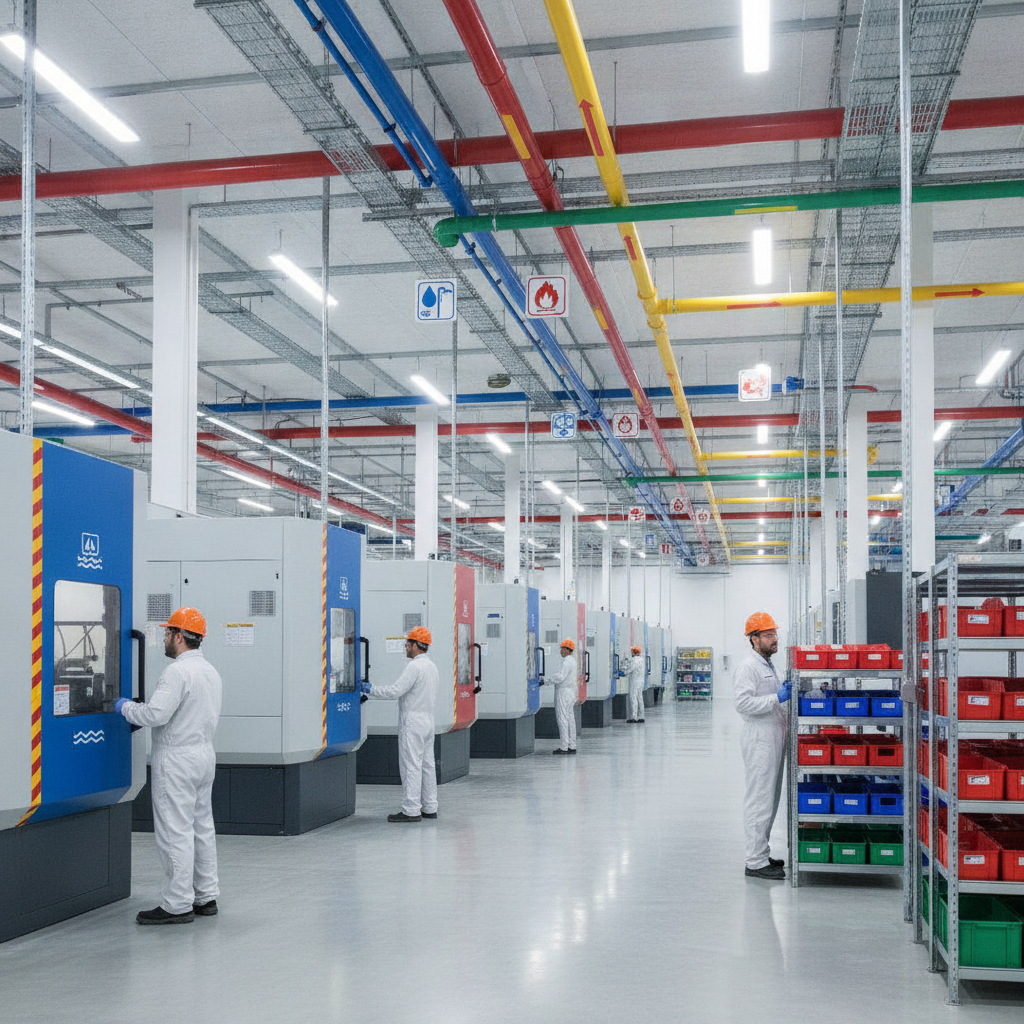
Workplace safety labels in the USA are standardized visuals that call out hazards, required PPE, equipment IDs, and safe routes. Using ANSI-style formatting and ASME A13.1 for pipes boosts recognition speed, prevents mistakes, and helps audits. Choose UV-, chemical-, and moisture-resistant materials so labels survive real industrial conditions.
By Dante de Felice — VisionMarker | Last updated: 2026-07-11
| Founded | 1983 |
|---|---|
| Service area | USA and Canada |
| Core categories | Pipe Markers; Signs; Labels & Stickers; Fire Protection |
| Standards focus | ANSI-certified; aligns with NFPA 170, ASME A13.1, NFPA‑99C, CGA C‑9‑2002, CAN/CGSB‑24.3‑12 |
| Durability | Built for UV, moisture, and chemical resistance |
| Sales model | Quote-based with quick turnaround |
Overview
If an auditor arrives Monday, fix highest-risk items first: label energy isolation points, restore aisle and forklift lane markings, and mark pipe contents and flow. Use ANSI-style headers and pictograms, then document SKUs and locations for reorders so your program stays consistent across shifts and contractors.
- Start where accidents start: unmarked panels/valves, blind forklift corners, and unlabeled gas or water lines.
- Standardize formats: align signal words and color bands using our ANSI Z535 Quick Guide.
- Keep a label register: location, legend, material, and the reorder source to maintain consistency.
What Are Workplace Safety Labels and Why They Matter
Workplace safety labels translate hazards and procedures into fast visual cues. The right system reduces search time, prevents wrong-valve errors, and makes audits straightforward. In our experience, consistent formats across zones help new hires and contractors make safer choices on day one.
We routinely see three failure modes before a facility calls us:
- Main headers labeled, branches ignored: Teams mark a chilled-water header but leave every 1-inch branch blank, so a contractor shuts the wrong valve during maintenance.
- Overused DANGER headers: Everything looks critical, so nothing stands out. Reserve DANGER for imminent, severe hazards; use WARNING and CAUTION appropriately.
- Good labels, bad sightlines: Perfect stickers mounted behind ladders or pallet overhangs provide zero value. Place for the approach path, not the wall layout.
VisionMarker’s catalog spans hazard warnings, PPE prompts, equipment ID, wayfinding, and pipe markers—engineered for UV, moisture, and chemicals. That lets you build one coherent system instead of piecing together mismatched parts.
OSHA and ANSI Requirements Every Facility Must Know
Use OSHA rules for hazard communication and follow ANSI Z535 conventions for format: signal words, colors, and symbols. For pipes, align to ASME A13.1 so contents and flow read the same way for every tech and contractor who enters your site.
- Signal words: DANGER (imminent severe), WARNING (serious), CAUTION (moderate). Don’t dilute DANGER by slapping it everywhere.
- Safety colors: Red for fire/stop; orange for warning; yellow for caution; green for safety/first aid; blue for mandatory action.
- Pictograms: Choose simple, high-contrast symbols sized for the viewing distance. Maintain one icon set sitewide.
- Placement: Mount near the hazard at eye level when possible; repeat after doors, corners, and equipment that block sightlines.
Housekeeping supports labeling. For a practical look at slip and cleaning hazards, this cleaning hazards overview offers useful context you can adapt to safety talks.
Need a refresher on colors, headers, and layout? See our ANSI Z535 Quick Guide and the broader Hazard Markings Guide.
The 5 Core Types of Workplace Safety Labels (With Real Use Cases)
Most programs rely on five types: hazard warnings, PPE requirements, equipment/energy control, wayfinding and floor marking, and pipe/system identification. Map each to a standard, size for viewing distance, and choose materials that survive your heat, washdowns, and UV exposure.
1) Hazard Warning Labels
- Purpose: Flag injury or damage risks with standardized headers and icons.
- Example: DANGER pinch-point at a case packer; WARNING hot surface on a shrink tunnel; CAUTION low clearance at a mezzanine stair.
- Pro tip: Pair panel warnings with nearby arc-flash boundary markings and a clear equipment ID.
2) PPE Requirement Labels
- Purpose: Call for eyewear, gloves, hearing, or respirators at point of use.
- Example: Eye protection required at grinding benches; hand protection required where solvent parts-washing occurs.
- Resource: For context on selecting eyewear, browse eye safety gear examples to inform toolbox talks.
3) Equipment and Energy Control Labels
- Purpose: Identify disconnects, valves, lock points, and reference procedures.
- Example: Lockout for safety labels on pump MCCs and motor IDs that tie back to a procedure binder.
- Internal resource: Our OSHA warning signs guide covers placement and hierarchy.
4) Wayfinding and Floor Marking
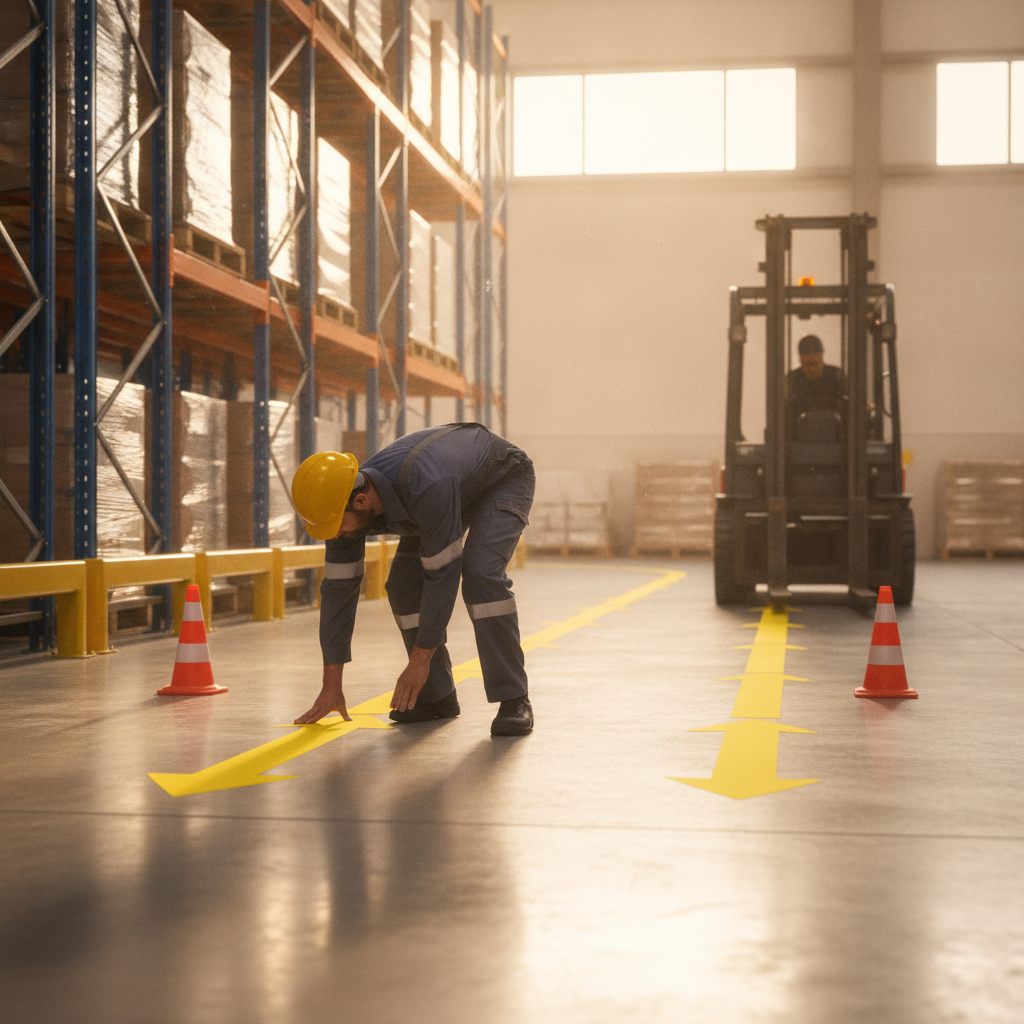
- Purpose: Keep aisles clear, direct pedestrians, and separate forklift lanes.
- Example: Facilities deploy ARROW TAPE (AT) 388‑AT‑A16 and 388‑AT‑B08 to cue flow at intersections, and 388‑AT‑B13/‑B15 to define keep‑clear zones at dock doors.
- Pro tip: Use contrasting colors for lanes vs. pedestrian routes; refresh scuffed areas during scheduled PMs.
5) Pipe and System Identification
- Purpose: Identify contents and flow so maintenance and emergency teams act fast.
- Example: Label Chilled Water Supply/Return, Domestic Hot Water, Cold Water, and Natural Gas; add directional arrows at elbows and near valves.
- Deep dive: See our gas pipe markers overview and marking systems guide.

How to Choose the Right Label for Each Hazard Zone
Map the hazard to a standard, pick materials for your environment, size for viewing distance, and place for the approach path. Then log SKUs and locations in a register so replacements match exactly and audits pull clean records.
- Identify the standard: ANSI-style headers for hazards; ASME A13.1 for pipes; recognized fire icons for fire protection signage. See our ANSI Z535 Quick Guide.
- Match material to environment:
- Skip vinyl near steam or sustained heat; use polyester or aluminum-backed constructions.
- Use chemical-resistant laminates in washdown zones.
- Choose reflective or photoluminescent where egress lighting is limited.
- Right-size for distance: If workers have to step closer to read, it’s undersized. Upsize legends and symbols.
- Place for the approach: Eye level when possible; repeat after doors, corners, and obstructions.
- Document: Keep a label register with location, legend, material, and reorder source to avoid ad‑hoc substitutions.
| Zone | Primary Standard | Recommended Type | Material |
|---|---|---|---|
| Grinding cell | ANSI-style | Eye protection + WARNING | Chemical/abrasion‑resistant laminate |
| Pump room | ASME A13.1 | Pipe content + arrow tape | High‑tack, UV‑rated vinyl |
| Forklift lane | Wayfinding | Arrow tape + keep‑clear | Heavy‑duty floor tape |
| Panel board | ANSI-style | DANGER arc‑flash boundary | High‑contrast industrial polyester |
Pipe and System Identification Labels: The Overlooked Category
Pipe ID prevents wrong‑valve events and speeds shutdowns. Use content markers sized to pipe diameter, and add directional arrows at elbows and before/after valves so flow is unmistakable from any approach.
Our field‑proven sizing (aligned with ASME A13.1 conventions):
- Small lines (≤ 1 in. OD): use at least 0.5 in. legend height.
- Mid‑size (1–6 in. OD): step up to 0.75–1.25 in. legends as diameter increases.
- Large (6–10 in. OD): 2.5–3.5 in. legends improve read distances in crowded pipe galleries.
Repeat markers after every change of direction, at wall/floor penetrations, and every 25–50 feet on long straight runs depending on visibility. Teams often pair content markers like Natural Gaz RM 989 E, Domestic Hot Water RM 989 E, Chilled Water Supply/Return RM 989 E, and Cold Water RM 989 E with high‑visibility arrow tapes such as 388‑AT‑B31 or 388‑AT‑BP73 on elbows.
For gas systems, start with our gas pipe markers guide, then roll out a consistent scheme plant‑wide with help from the marking systems guide.
Common Compliance Mistakes and How to Avoid Them
The biggest misses are format drift, undersized legends, missing arrows on pipes, and poor surface prep. Standardize sitewide, right‑size text for distance, add arrows at every change of direction, and clean/degrease surfaces before application.
- Format drift: Mixing colors and icon sets across buildings confuses workers. Lock a single spec and enforce it.
- Undersized text: If techs lean in to read, upsize. Match legend height to viewing distance and pipe diameter.
- No arrows on pipes: Flow ambiguity slows isolation. Wrap arrows at elbows and place near valves. For industrial adhesives context, see adhesive tape examples.
- Surface contamination: Oils and dust kill adhesion. Clean, dry, and apply within the recommended temperature range.
- Hidden placements: Don’t mount behind ladders, racks, or pallets. Place for the approach path, not the wall.
- Overusing DANGER: Reserve it for imminent severe hazards so workers react when it matters.
For emergency infrastructure, cross‑check labels with your fire protection plan. Our fire and safety signs overview ties labeling to hydrants, extinguishers, and alarm points.
Need a fast labeling plan? Email a floor map and asset list. We’ll return a standards‑aligned bill of materials across Labels & Stickers, Pipe Markers, and Fire Protection signage.
Contact VisionMarker to start your assessment.
FAQ
These concise answers cover standards, materials, placement, and maintaining a label register so your program stays consistent and audit‑ready.
Which standards should workplace safety labels follow in the USA?
Use OSHA for hazard communication duties and format labels with ANSI‑style headers, colors, and symbols for consistency. For pipe content and arrows, align with ASME A13.1 conventions so every technician reads them the same way.
What materials hold up best in washdowns or outdoors?
Polyester or aluminum‑backed constructions outperform basic vinyl near heat or steam. In wet/chemical zones, use laminates and prep surfaces thoroughly—remove oils, dry fully, and apply within the recommended temperature window.
How often should pipe markers and arrows repeat?
Repeat after every elbow, at penetrations, and every 25–50 feet on long straight runs depending on visibility. Place arrows before and after valves to avoid ambiguity during shutdowns and emergency isolation.
Can I standardize PPE messages across multiple plants?
Yes—build a master legend set with defined headers, colors, and pictograms for repeat tasks (grinding, welding, chemical handling). Centralize artwork and a SKU list so maintenance teams can reorder the exact items.
Key takeaways
- Prioritize energy isolation, travel paths, and pipe flows for immediate risk reduction.
- Standardize formats sitewide using ANSI‑style conventions; keep DANGER rare and meaningful.
- Match materials to heat, UV, and washdowns; skip vinyl near steam or sustained heat.
- Use a label register so replacements match exactly and audits move faster.
Next step: Share a floor map and we’ll spec a coherent, standards‑aligned system across Labels & Stickers, Pipe Markers, and Fire Protection—so your Monday audit is uneventful.