Canada

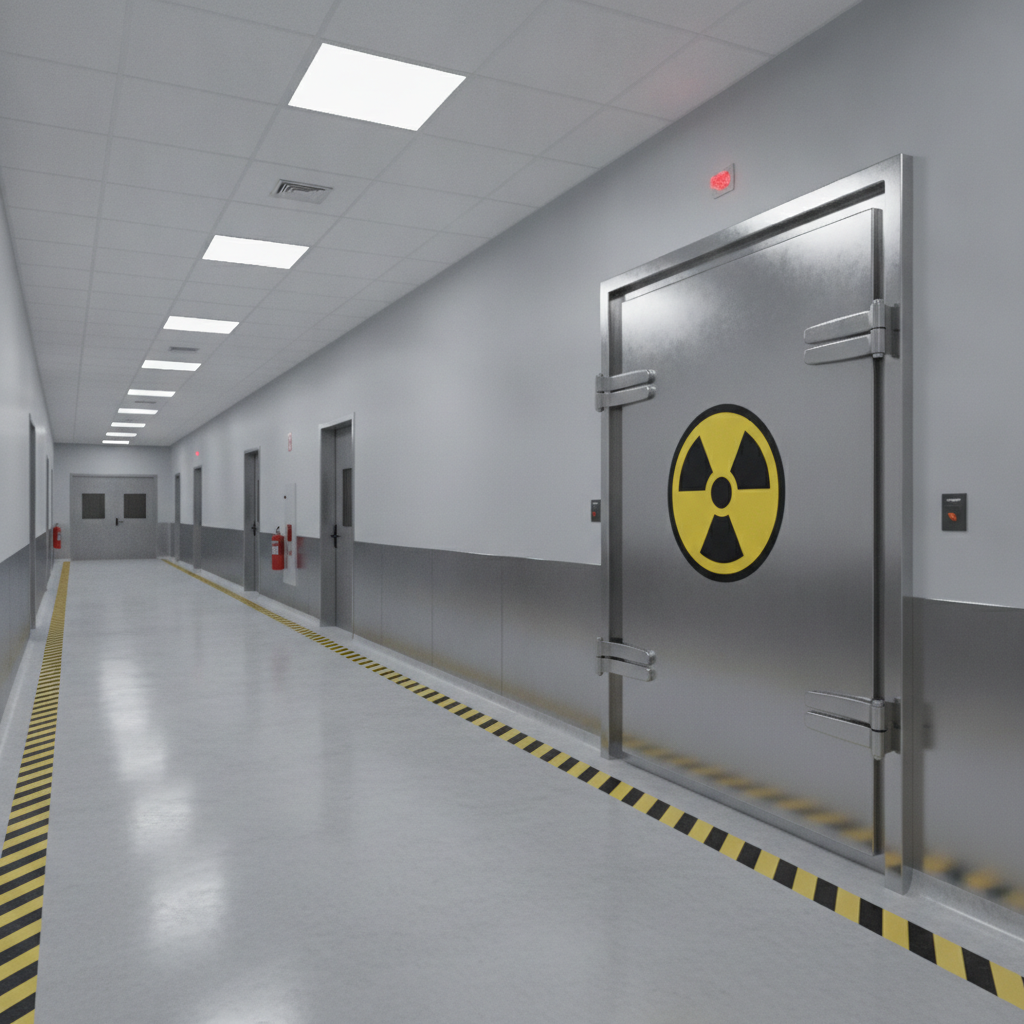
A radiation hazard sign is a standardized safety sign that uses the trefoil symbol to warn people about ionizing radiation sources or contaminated areas. In the USA, facilities must post clear radiation warnings at access points and equipment to reduce exposure risk and meet workplace safety requirements. VisionMarker supplies ANSI‑aligned signs nationwide.
By VisionMarker • Last updated: 2026-06-16
Above the fold: hook and table of contents
Radiation signs save lives by alerting workers before exposure occurs. Place them at room entrances, equipment panels, and storage locations, and use durable, ANSI‑aligned materials so messages remain readable in harsh conditions. This guide shows U.S. facility teams exactly what to post, where to post it, and how to keep it compliant.
Radiation hazards are invisible, yet the decisions you make about signage are not. Clear, durable, standard‑aligned industrial signage protects people, documents compliance, and prevents costly shutdowns. If you’re an EHS leader or maintenance supervisor, this guide is your practical playbook.
- What a radiation sign is and how the trefoil symbol communicates risk
- Where the radiation hazard sign belongs and which wording tiers to use
- Standards alignment in plain language: ANSI, NFPA symbol families, and typical U.S. practices
- Materials that survive UV, moisture, and chemicals—why durability matters
- Actionable checklists, posting templates, and real‑world examples from VisionMarker
What is a radiation sign?
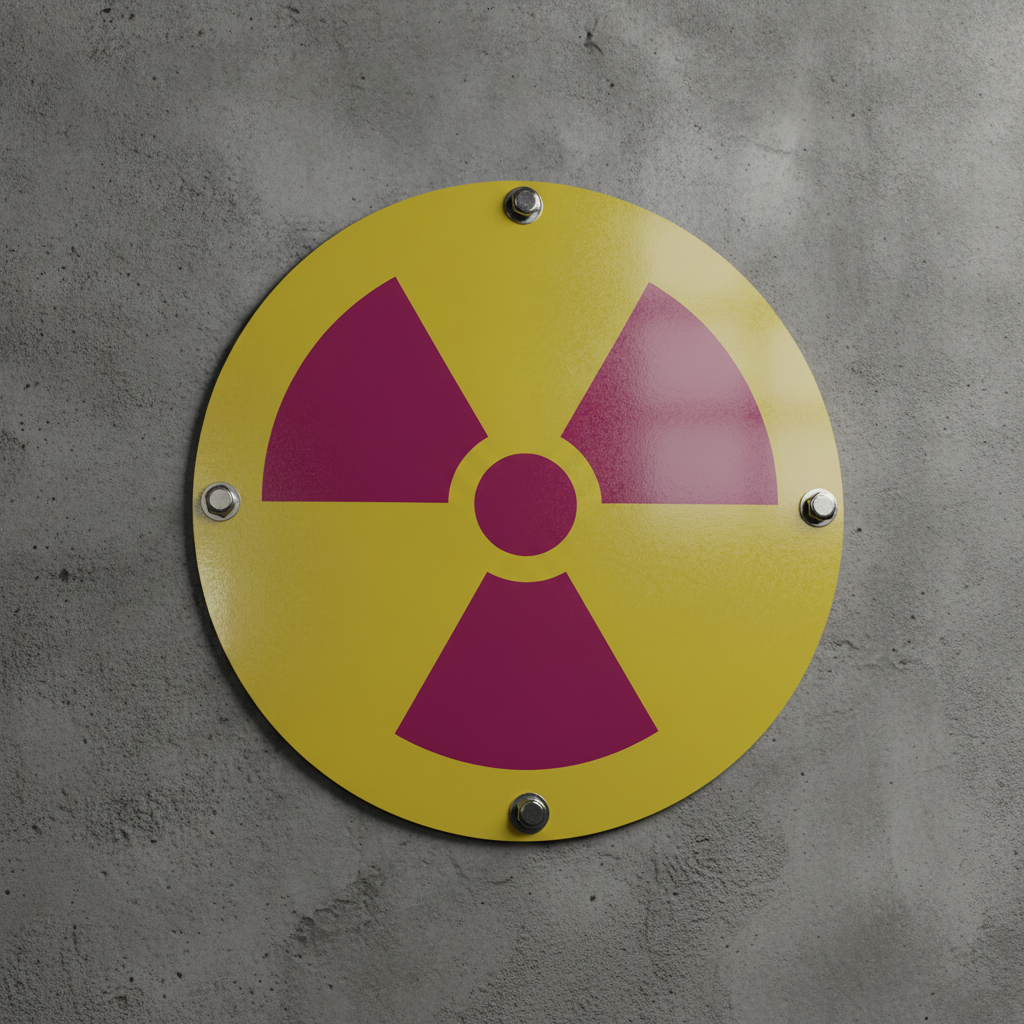
A radiation sign is a safety sign that features the trefoil symbol—three blades around a center—typically in black or magenta on yellow. It warns of ionizing radiation or radioactive materials and is posted at entries, equipment, and areas where radiation may be present, guiding controls and PPE decisions.
The radiation trefoil is a visual shorthand for ionizing radiation risk. People recognize it instantly, which is the point: warn first, then inform. In U.S. workplaces, you’ll often pair the symbol with a signal word (Caution, Warning, or Danger) and a short, specific message about the hazard and required actions.
- Symbol anatomy: Three equally spaced blades around a center on a high‑visibility yellow field.
- Color convention in the U.S.: Black or magenta trefoil on yellow, providing high contrast for quick recognition.
- Typical components: Signal word, symbol, concise hazard statement, consequence statement (optional), and action/required PPE.
- Primary purpose: Make the risk unmistakable before someone crosses a threshold or energizes equipment.
In our experience supporting nuclear medicine suites and non‑destructive testing (NDT) bays, the most effective signs keep words tight and outcomes clear—no clutter, no jargon. That’s why VisionMarker’s warning sign collection favors large symbols, legible lettering, and tough substrates that stay readable.
Why radiation signage matters for U.S. facilities
Radiation signage prevents accidental exposure, improves wayfinding for controls and PPE, and supports regulatory compliance. Proper signs at access points and devices reduce near‑misses, help audits run smoothly, and build a visible safety culture workers trust.
Radiation risk isn’t intuitive. Without clear warnings, new contractors and visitors may unknowingly cross into controlled areas. Consistent, easy‑to‑spot radiation hazard signs provide a frontline barrier against exposure and a backstop during inspections.
- Human factors: People scan for color and shape first. The trefoil’s contrast and geometry catch attention faster than words.
- Wayfinding value: Signs guide people to interlocks, dosimetry, and PPE stations before they commit to entry.
- Audit readiness: Documented placement and legible condition show your program is active and maintained.
- Cross‑shift consistency: Durable materials sustain readability across temperature swings, humidity, and cleaning cycles.
We’ve seen facilities reduce entry errors after standardizing on high‑contrast panels and consistent placement heights. Equally important, leaders reported fewer “Where do I badge?” questions once signage aligned with pedestrian flow and door hardware.
How standards and sign systems work (plain language)
U.S. facilities rely on harmonized systems: an attention‑getting signal word, the radiation trefoil, and a concise message. Color conventions and symbol use align with widely adopted safety sign practices, helping teams match hazard severity to “Caution,” “Warning,” or “Danger.”
Think of radiation signage as a layered system. The signal word indicates severity, the trefoil encodes the radiation hazard category, and the message instructs the reader on controls. While different codes and standards exist, most U.S. workplaces converge on similar visual rules for color, hierarchy, and brevity.
- Signal word tiers:
- Caution: Potential hazard; minor to moderate injury if ignored.
- Warning: Serious hazard; could cause severe injury.
- Danger: Immediate, life‑threatening hazard; use only for the most severe cases.
- Icon + text pairing: The trefoil anchors recognition; the text clarifies the scenario (e.g., “Radiation Area—Authorized Personnel Only”).
- Legibility cues: High contrast, simple fonts, and adequate whitespace improve reading at a glance.
VisionMarker’s safety signs are engineered for harsh settings and consistent readability. Explore our Danger sign category for the highest‑severity use cases, and see radiation‑specific options like Caution: X‑Ray—Authorized Personnel Only to match door‑level risks.
Types of radiation signs and when to use each
Use “Caution” for lower‑level controlled areas, “Warning” for serious hazards requiring active controls, and “Danger” where immediate, life‑threatening exposure exists. Pair the trefoil with a short directive such as “Authorized Personnel Only” or “Dosimeter Required.”
Selecting the right radiation hazard sign starts with matching severity to signal word. Equally important is tailoring the message to the door or device in front of the reader.
Common scenarios
- Caution—Radiation Area: For rooms with controlled but present ionizing radiation. Example: imaging prep rooms with shielding.
- Warning—High Radiation Area: For spaces where dose rates can be significant during operation. Example: NDT exposure rooms during active shots.
- Danger—Very High Radiation: Reserved for extreme conditions near sources/interlocks. Example: accelerator vaults at specific operational states.
- Equipment panels: Trefoil plus directive near key switches, shutters, or interlocks.
- Storage/transport: Containers or carts holding sealed sources need persistent symbol visibility.
Message building blocks
- Hazard: “Radiation Area,” “X‑Ray On,” or “Radioactive Material.”
- Restriction: “Authorized Personnel Only,” “Do Not Enter When Light Is On.”
- Requirement: “Dosimeter Required,” “PPE Required,” “Interlock Must Be Engaged.”
For fast ordering, see VisionMarker’s Caution: Radiation Area and category‑level options in Warning and Danger. Our team supports custom wording for complex workflows, ensuring messages match your procedures.
Best practices: placement, size, and durability
Place radiation signs at eye level on every approach to a controlled area, on relevant equipment, and on storage points. Use high‑contrast panels with protective laminates, select sizes readable from approach distance, and inspect quarterly to confirm condition and visibility.
Placement checklist
- Every entry point: Post on primary and secondary doors; repeat inside as needed for internal barriers.
- Approach visibility: Ensure an oncoming person sees at least one trefoil before reaching the handle.
- Consistent height: Mount within a common eye‑level band so readers don’t hunt for the message.
- Lighting: Avoid glare; keep signage outside door‑sweep zones and away from strong reflections.
- Redundancy: Pair door signs with small decals at interlocks, e‑stops, and control panels.
Size and legibility
- Choose size by distance: Select letter heights and symbol sizes that read at your longest approach.
- Simple fonts: Sans‑serif type with generous spacing improves quick recognition on moving approaches.
- Whitespace: Don’t crowd the panel; keep the message scannable in under two seconds.
Durability decisions
- UV and chemical resistance: Use substrates and laminates designed for frequent cleaning and bright lighting.
- Fasteners and adhesives: Choose bolt‑mount for rough masonry; use industrial adhesive for smooth doors and cabinets.
- Environmental fit: In washdown areas, prefer sealed‑edge materials and rounded corners.
VisionMarker engineers panels for outdoor exposure, moisture, and chemicals, and we validate readability after repeated cleaning cycles. Explore our fire safety products and fire signage guide for complementary emergency wayfinding that supports your overarching warning sign program.
Standards alignment check (severity tiers and symbol use)
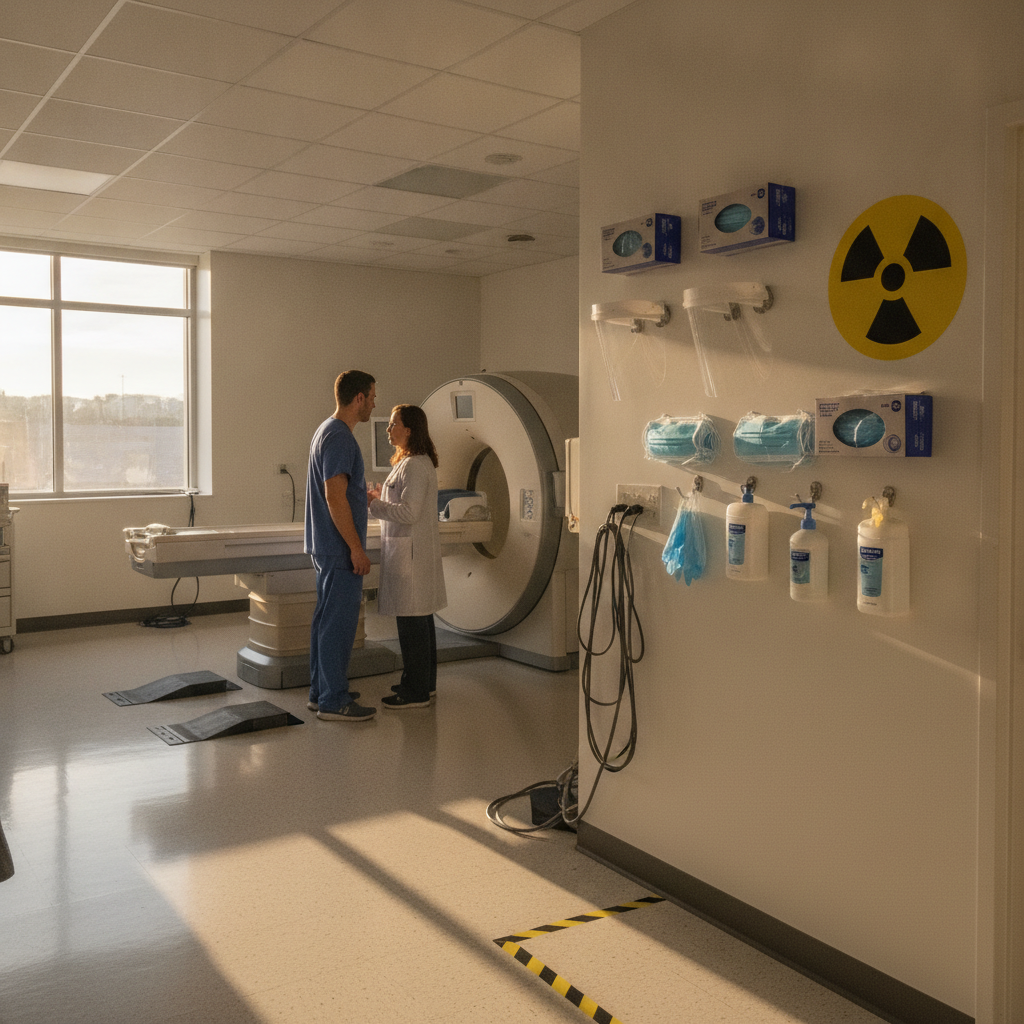
Match your sign’s signal word to hazard severity, keep the radiation trefoil prominent, and use concise directives. This alignment brings your program in step with widely adopted U.S. safety sign practices and simplifies training, audits, and cross‑facility consistency.
While standards evolve, the day‑to‑day for EHS is simpler: use recognized colors, a consistent signal‑word hierarchy, and a trefoil that dominates the design. Keep wording short and action‑oriented. Maintain a living inventory with documented placements and inspection intervals.
| Signal Word | Typical Use | Icon Priority | Message Style |
|---|---|---|---|
| Caution | Controlled areas; lower exposure risk in normal use | High—large trefoil, clear contrast | Directive + restriction (e.g., Authorized Personnel) |
| Warning | Serious hazard; active controls/PPE required | High—trefoil + strong signal panel | Directive + condition (e.g., When Light Is On) |
| Danger | Immediate, life‑threatening exposure possible | Highest—trefoil dominates | Do‑not‑enter or interlock condition |
Need help classifying a doorway or device? Our team regularly assists U.S. facilities with message mapping and sign selection so your radiation hazard sign inventory remains consistent and defensible.
Tools, materials, and resources from VisionMarker
Build a durable radiation signage program with laminated aluminum or high‑performance plastic, industrial adhesives or bolt mounts, and consistent, ANSI‑aligned layouts. VisionMarker offers ready‑to‑post options and custom wording to match your exact procedures and controls.
- Ready‑to‑post panels: Pre‑designed symbols and messages save time for common doorways and equipment.
- Custom wording: Tailor directives like “Dosimeter Required,” “Badge In/Out,” or “Interlock Must Be Engaged.”
- Material options: Rigid aluminum for long life; flexible plastics for curved cabinets; laminated finishes for abrasion resistance.
- Mounting kits: Adhesive‑backed panels for smooth surfaces; bolt‑mount hardware for concrete block and steel.
- Program support: Inventory lists, placement maps, and annual refresh planning.
Browse radiation‑specific options such as Caution: Radiation Area and related high‑severity categories under Danger and Warning. For adjacent risks at the same doorway, pair with prohibited area sign guidance to control dual‑hazard entries.
Step‑by‑step rollout: from audit to posting
Audit each room and device, classify severity, choose the correct signal word and message, and install at consistent height on every approach. Document placements with photos and set a recurring inspection to repair or replace faded or obstructed signs.
- Map assets: List rooms, doors, panels, storage points, and mobile carts with potential radiation.
- Classify severity: Align each location to Caution, Warning, or Danger based on operational states.
- Select messages: Keep text short; include restrictions and requirements.
- Choose materials: Match substrates to environment (washdown, sunlight, abrasion).
- Install consistently: Post at eye level, check approach visibility, avoid glare.
- Document: Photo each placement, log size, material, and mounting method.
- Maintain: Inspect quarterly, replace damaged panels, update maps after changes.
Teams that standardize this sequence see faster new‑hire orientation and fewer wayfinding errors. We provide templates for inventories and placement logs on request.
Case studies and examples (U.S. facilities)
Effective programs keep signs simple, consistent, and durable. The following mini‑cases show how U.S. facilities used high‑contrast trefoils, clear directives, and consistent mounting to reduce entry mistakes and streamline audits across shifts and contractors.
Outpatient imaging center
- Challenge: Visitors approached the control room instead of the waiting area, raising the risk of crossing a threshold.
- Action: Posted large trefoil panels at eye level and added a door‑adjacent “Do Not Enter When Light Is On” directive.
- Result: Fewer wrong‑door attempts and clearer staff direction during peak hours.
NDT bay in a fabrication shop
- Challenge: Temporary barricades blocked sightlines to small decals.
- Action: Upgraded to rigid, bolt‑mounted “Warning—High Radiation” panels on primary approaches and added interlock decals at switch boxes.
- Result: Improved visibility around mobile screens and carts during setups.
University research lab
- Challenge: Mixed signage styles confused rotating grad students and visiting technicians.
- Action: Standardized on consistent signal words and laminated materials across all rooms.
- Result: Faster onboarding and cleaner inspection reports.
Quick summary
Radiation signs rely on a bold trefoil, a precise signal word, and a short directive. Post them on every approach, keep designs uncluttered, and choose durable materials. Maintain with routine inspections so the message stays readable and your program stays audit‑ready.
- Use Caution/Warning/Danger to match severity; keep trefoil dominant.
- Install at eye level with a clear sightline from the approach.
- Choose materials that resist cleaning chemicals, UV, and abrasion.
- Document placements and refresh on a set schedule.
Local considerations for your area
- Align signage with U.S. workforce norms: prioritize English messaging; add bilingual panels only where your team needs them for comprehension.
- Account for seasonal glare in sunny regions: matte laminates and slight repositioning reduce reflections during summer afternoons.
- Consider contractor turnover: U.S. projects often rotate crews; keep messages simple and consistent across sites to reduce onboarding friction.
Radiation hazard sign FAQ
Facility teams often ask about wording, placement, and maintenance. Keep the trefoil large, pick the right signal word, mount at eye level on every approach, and inspect quarterly. When in doubt, standardize layouts and maintain a living map of all postings.
What should a radiation hazard sign say?
Pair the trefoil with a severity signal word and a short directive. Examples: “Caution—Radiation Area—Authorized Personnel Only,” or “Warning—High Radiation—Dosimeter Required.” Keep language concise so people can act fast at the doorway.
Where do you put radiation signs?
Post at every entrance to a controlled area, on devices with radiation sources, and on storage/transport containers. Mount at eye level along the primary approach, and add smaller decals at interlocks and control panels for redundancy.
How big should the sign be?
Size it to the viewing distance and approach speed. Larger symbols and letter heights help workers recognize the hazard sooner, especially in hallways or busy shop floors. Favor clean layouts with strong contrast and ample whitespace.
What materials last in harsh environments?
Choose laminated aluminum or high‑performance plastics with UV and chemical resistance. Use industrial adhesives for smooth doors and bolt‑mounts for masonry or steel. Specify rounded corners and sealed edges in wet or washdown spaces.
Can we standardize wording across multiple U.S. sites?
Yes. Build a message library for common rooms and devices, lock signal‑word choices by scenario, and use the same layouts everywhere. Keep an inventory and photo map so changes roll out consistently across facilities.
Key takeaways and next steps
Keep the trefoil big, the wording short, and the placement consistent. Document where every radiation hazard sign lives, inspect on a set rhythm, and use durable materials. When you need support, VisionMarker can recommend exact SKUs or produce custom variants quickly.
- Use the right severity tier: Caution, Warning, or Danger.
- Mount at eye level with a clear line of sight on approach.
- Pick materials that withstand cleaning, UV, and abrasion.
- Maintain an inventory and refresh plan for audit‑readiness.
- Explore ready‑to‑post panels like Caution: Radiation Area or request a custom layout.
Have a mixed‑hazard doorway? Pair radiation postings with adjacent warnings and restrictions. Our team can align your selections with your broader emergency wayfinding and warning sign programs.