Canada

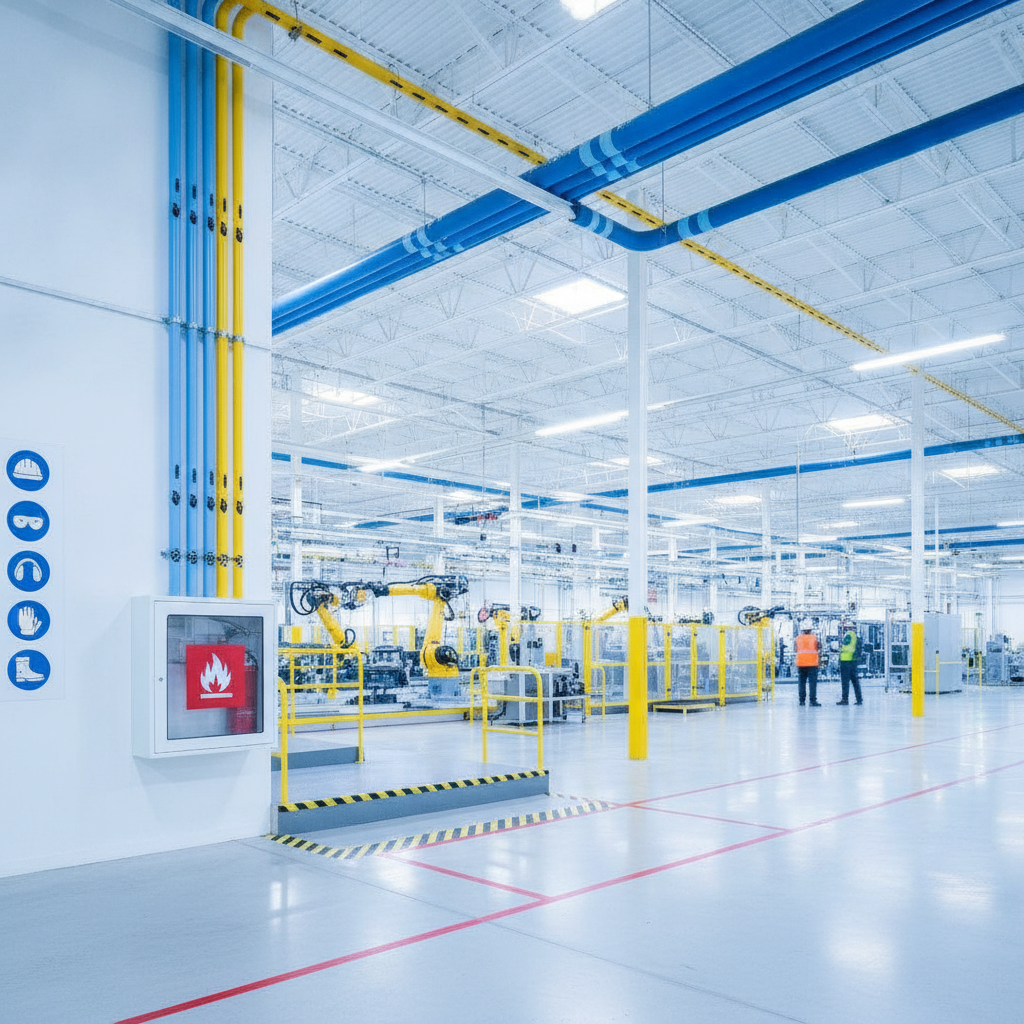
Workplace health and safety signs are standardized visuals that warn, instruct, and direct workers to reduce risk and support compliance. In the USA, OSHA and ANSI define formats and signal words, while NFPA and ASME address fire symbols and pipe identification. Durable, consistent signs shorten decision time and help prevent incidents.
By VisionMarker • Author: Dante de Felice • Last updated: July 12, 2026
| Founded | 1983 |
|---|---|
| Service area | USA and Canada |
| Core categories | Pipe Markers; Poster & Signs; Fire Protection Products; Labels & Stickers |
| Standards aligned | ANSI Z535; NFPA 170; ASME A13.1; NFPA‑99C; CGA C‑9‑2002; CAN/CGSB‑24.3‑12 |
| Sales model | Quote-based (contact for pricing) |
Overview
This guide translates OSHA/ANSI sign formats, NFPA fire symbols, and ASME A13.1 pipe markers into a practical facility program. You’ll see what categories matter, how to size and place signs for legibility, and where VisionMarker’s durable, standards‑aligned products reduce confusion on busy floors across the USA.
Since 1983, our team has walked boiler rooms at 2 a.m., traced unmarked lines across mezzanines, and helped EHS leaders fix small details that cause big delays. We favor clear symbols, short messages, and rugged materials that survive UV, washdowns, and chemicals.
Use the sections below to align wall signs, floor markings, and pipe IDs into a single, readable language your crews recognize under pressure.
What Workplace Health and Safety Signs Are Required by OSHA and ANSI
OSHA 29 CFR 1910.145 sets requirements for accident prevention signs and tags. ANSI Z535 specifies colors, signal words, and layouts; NFPA 170 standardizes fire and egress symbols; ASME A13.1 defines pipe marker content, colors, and arrows. Together, these create a consistent safety language.
How we implement standards in the USA:
- OSHA 1910.145: Establishes when to use accident prevention signs and safety tags. We mirror its intent using current ANSI Z535 formats.
- ANSI Z535 family: We use Z535.2 for environmental/facility signs, Z535.3 for symbol design/validation, and Z535.4 for equipment labels to keep wording and iconography consistent.
- NFPA 170: Fire and life safety symbols for exits, extinguishers, alarms, and hose cabinets for quick recognition, even in low visibility.
- ASME A13.1: Pipe identifiers must show media name, flow direction arrows, and color fields matched to service families.
Helpful internal primers: ANSI Z535 quick guide, NFPA 170 symbols guide, and ANSI pipe labeling tips.
The 5 Core Sign Categories Every Facility Needs
Cover five needs: hazard alerting (Danger/Warning/Caution), mandatory action (PPE and procedures), prohibition (restricted actions), emergency information (egress and fire equipment), and process/traffic control. The mix shifts by facility type; tailor the set to real risks and tasks.
Warehouse and distribution
- Focus: Forklift routes, keep‑clear aisles, dock edges, battery charging.
- Typical signs: Keep aisles clear, forklift traffic, entry prohibited, eye protection required at docks.
- Common mistake: Floor tape at intersections without matching wall cues. We pair wall signs and floor lines so messages read from multiple angles.
- Resource: See examples in our fire and safety signs guide.
Food and beverage processing
- Focus: PPE, sanitation, washdown survivability, slippery‑when‑wet areas.
- Typical signs: Face mask required, hand protection required, safety goggles mandatory, slippery when wet.
- Common mistake: Unlaminated vinyl fails under caustic washdowns. We specify laminated polyester labels or rigid plastic panels in high‑spray zones.
- Tip: Size text so crews can read across a 6–8 ft aisle (see viewing rule below).
Utilities and mechanical rooms
- Focus: Pipe markers (natural gas, chilled water supply/return, hot water), valve IDs, confined spaces.
- Typical signs: Entry prohibited at energized rooms, eye protection areas, and detailed pipe IDs.
- Common mistake: Missing flow arrows at tees and valves. Our Arrow Tape AT 388 series builds flow direction into the system so technicians don’t guess under time pressure.
- Product examples: Natural Gaz RM 989 E; Water RM 989 E; Chilled Water Supply RM 989 E; Chilled Water Return RM 989 E; Hot Water Supply RM 989 E.
| Risk scenario | Best format | Material pick | Placement |
|---|---|---|---|
| Forklift intersections | Warning sign + floor lines | Rigid plastic + high‑durability floor tape | Eye level ahead of intersection; tape at stop line |
| Washdown PPE | Mandatory action sign | Laminated polyester or rigid plastic | At room entry and point of use |
| Boiler room piping | ASME A13.1 pipe markers | High‑contrast wrap + Arrow Tape AT 388 | Valves, branches, penetrations, and intervals |
How to Choose the Right Sign Format for Your Hazard Type
Start with severity (Danger/Warning/Caution), add a validated symbol, and write a brief action‑oriented message. Then choose materials for the environment and size text for legibility using a rule of thumb: 1 inch of letter height per ~25 feet of viewing distance.
Format and message that get read
- Signal words: DANGER (imminent), WARNING (serious), CAUTION (moderate) using ANSI Z535.2/.4 layouts.
- Symbols: Use standardized icons consistent with your program; align with our safety symbols explainer.
- Message: State the hazard, possible consequence, and required action in one read.
Materials we recommend (based on environment)
- Outdoor, 5+ years UV: We spec .040 aluminum panels over vinyl; aluminum resists chalking and fading through multiple seasons.
- Washdown/chemicals: Laminated polyester or rigid PVC; adhesives rated for moisture and caustics outlast basic vinyl.
- Temporary or changeable: Magnetic or removable adhesive labels on equipment guards and carts.
For a structured walkthrough, review our ANSI Z535 quick guide and hazard markings guide.
Pipe Markers and Flow Identification: The Missing Layer Most Facilities Overlook
ASME A13.1 calls for media name, flow direction, and color fields matched to service families. Place markers at valves, branches, and penetrations, and at regular intervals on long runs. Use high‑contrast wraps so crews can read from typical approach angles.
If you’ve ever chased a leak through a hot mechanical room, you know the cost of guessing. We often find arrows missing at a three‑way valve or letters too small to read from the aisle. Our Arrow Tape AT 388 series (e.g., 388‑AT‑A16, 388‑AT‑B08, 388‑AT‑B13, 388‑AT‑B15, 388‑AT‑BP30) adds unmistakable direction cues, and our RM 989 E markers label common services such as Natural Gaz, Water, Chilled Water Supply/Return, and Hot Water Supply.
- Where to label: Near valves, tees, wall/floor/ceiling penetrations, plus every 25–50 ft on straight runs.
- Readable legends: As pipe OD increases, increase legend height. For mid‑size piping (about 2.5–6 in OD), we recommend ~1–1.25 in letters for aisle‑length reads.
- Color families: Keep water, steam, gas, and air families consistent facility‑wide to cut errors during LOTO.
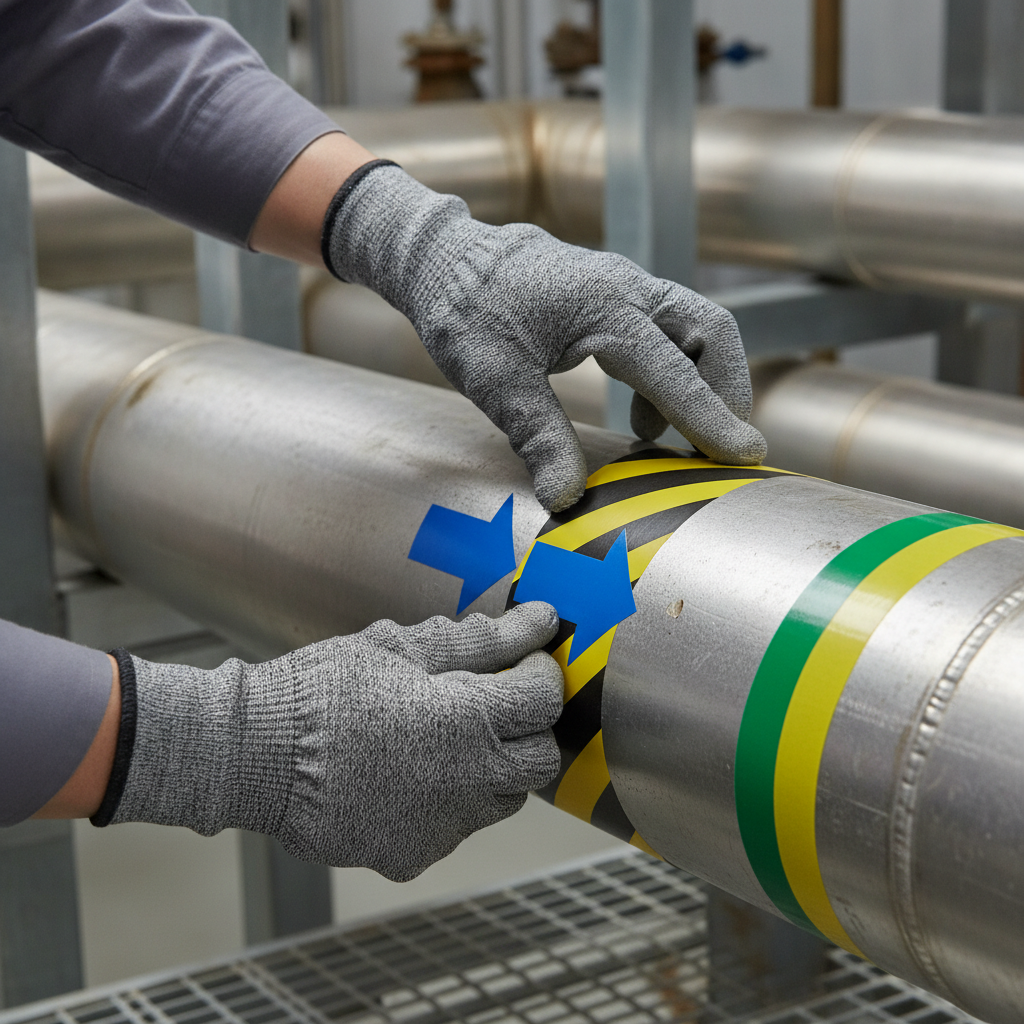
For integrated examples, see our hazardous waste pipe marker and pipe marker with arrow that combine media and flow on one label.
Need a field-ready plan? We map hazards, PPE points, egress routes, and pipe systems into a single signage standard. Start with our marking systems guide, then use the matrix above to prioritize installs.
Custom vs. Stock Signs: When Each Makes Sense
Stock signs cover common hazards and PPE rules fast. Custom signs solve site‑specific needs—unique chemical names, bilingual text, equipment IDs, or QR‑linked SOPs. Keep both in ANSI Z535 formats so crews read a consistent “language” across departments and sites.
Use stock for speed and coverage
- Widely recognized hazards and instructions (High Voltage, Eye Protection Required, Exit).
- Refresh cycles during audits—replace faded or damaged items immediately.
Use custom for precision
- Media‑specific pipe IDs (e.g., Chilled Water Return RM 989 E) and unique process steps.
- Bilingual or symbol‑heavy layouts for mixed‑language teams.
- Machine‑specific LOTO labels and QR codes linking to SOPs or PM checklists.
Our quote‑based process adapts to volume or specialized formats without compromising ANSI alignment.
Installation and Placement Rules
Mount signs in the line of travel and before the decision point. Center most wall signs around 60 in above finished floor, keep egress cues unobstructed, and size text for distance (≈25 ft per 1 in letter height). Re‑inspect quarterly and after layout changes.
Core placement practices
- Line of sight: Place where a moving person naturally looks—approach to doors, intersections, and equipment fronts.
- Legibility: Use the legibility index (≈25 ft per 1 in letter height) as a starting point; validate on the actual floor.
- Avoid conflicts: Don’t stack contradictory instructions on the same surface.
- Protect visibility: Keep exit and fire equipment signs clear of racks, pallets, and draped materials.
Program upkeep
- Audit cadence: Quarterly walk‑throughs and any time equipment moves.
- Change control: Add signage checks to Management of Change so procedures and IDs stay accurate.
- Training: Review what signal words and common symbols mean during toolbox talks.
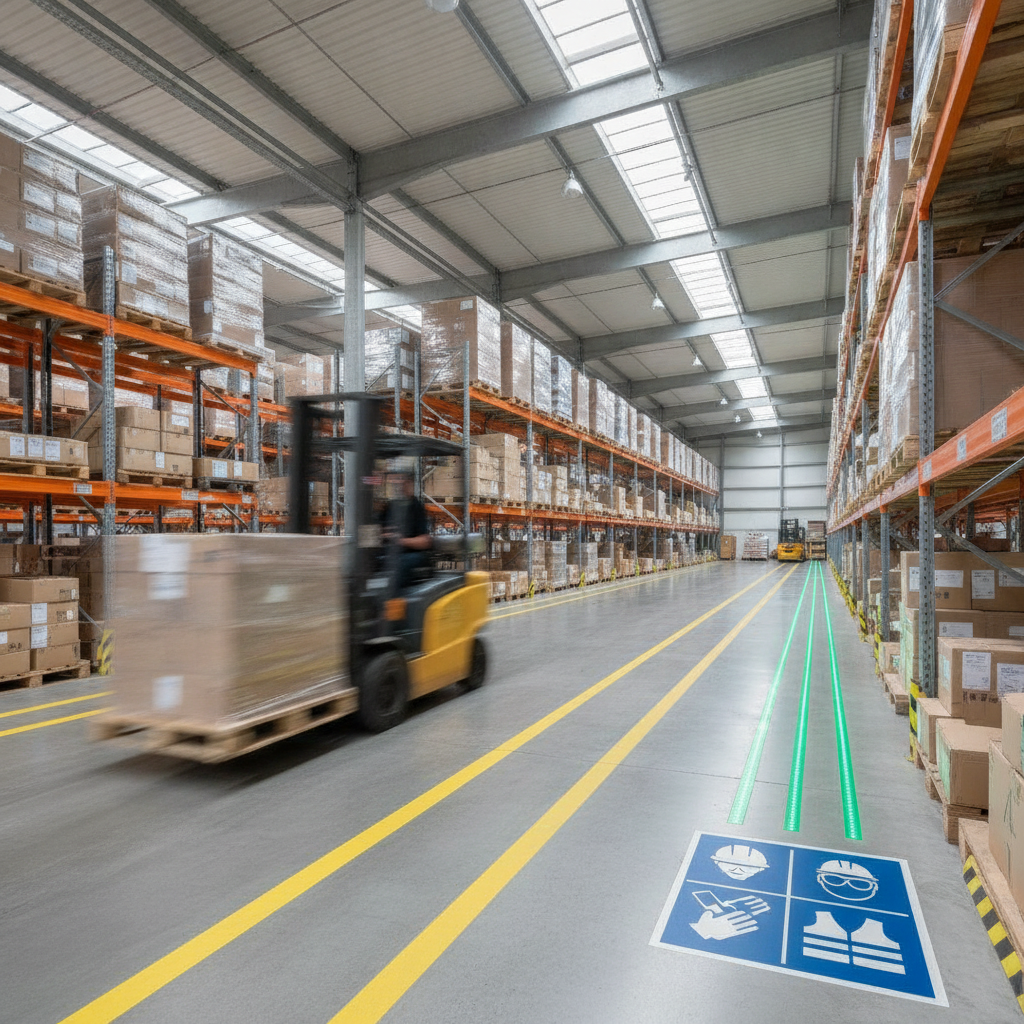
For life‑safety specifics, see our fire safety signs overview and fire and safety symbols guide.
Frequently Asked Questions
These quick answers reflect what facility managers and EHS leaders ask us most. They’re grounded in ANSI, NFPA, and ASME practices we implement across USA sites.
Which sign colors and signal words should we use?
Follow ANSI Z535 conventions: red DANGER for imminent hazards, orange WARNING for serious risks, and yellow CAUTION for moderate hazards. Use blue for mandatory actions (PPE) and green for safety equipment and exits. Keep wording short and action‑oriented.
How big should letters be for visibility?
Use a practical rule of thumb: about 1 inch of letter height for every 25 feet of viewing distance. Validate on your floor under real lighting and sightlines. For tall mezzanines or long aisles, increase size or add repeaters.
Where do pipe markers go to meet ASME A13.1?
Label at valves, branches, and wall/floor/ceiling penetrations and repeat at intervals on long runs. Include media name, flow arrows, and color fields matched to service families. Increase legend size as pipe OD increases to keep reads reliable.
Do we need both wall signs and floor markings?
Yes. Layering improves recognition. Wall signs deliver rules and hazards at eye level; floor lines and arrows guide forklifts and pedestrians. Use the same colors and symbols so workers get one message from multiple cues.
Key Takeaways
- Use ANSI Z535 formats, NFPA 170 symbols, and ASME A13.1 markers together so crews read one consistent system.
- Tailor coverage by facility type: forklift routes in warehouses, washdown‑ready signs in food plants, and robust pipe IDs in mechanical rooms.
- Spec materials for the environment—aluminum outdoors, laminated polyester in washdowns—and size text using the 25 ft per 1 in rule.
- Label pipes at valves, branches, penetrations, and intervals; add Arrow Tape AT 388 for unmissable flow direction.
- Audit quarterly and after changes; replace anything faded, blocked, or conflicting.
Ready to tighten your program? Explore our ANSI Z535 quick guide, align life‑safety with fire and safety symbols, and bring pipe IDs up to standard with pipe labeling tips.