Canada

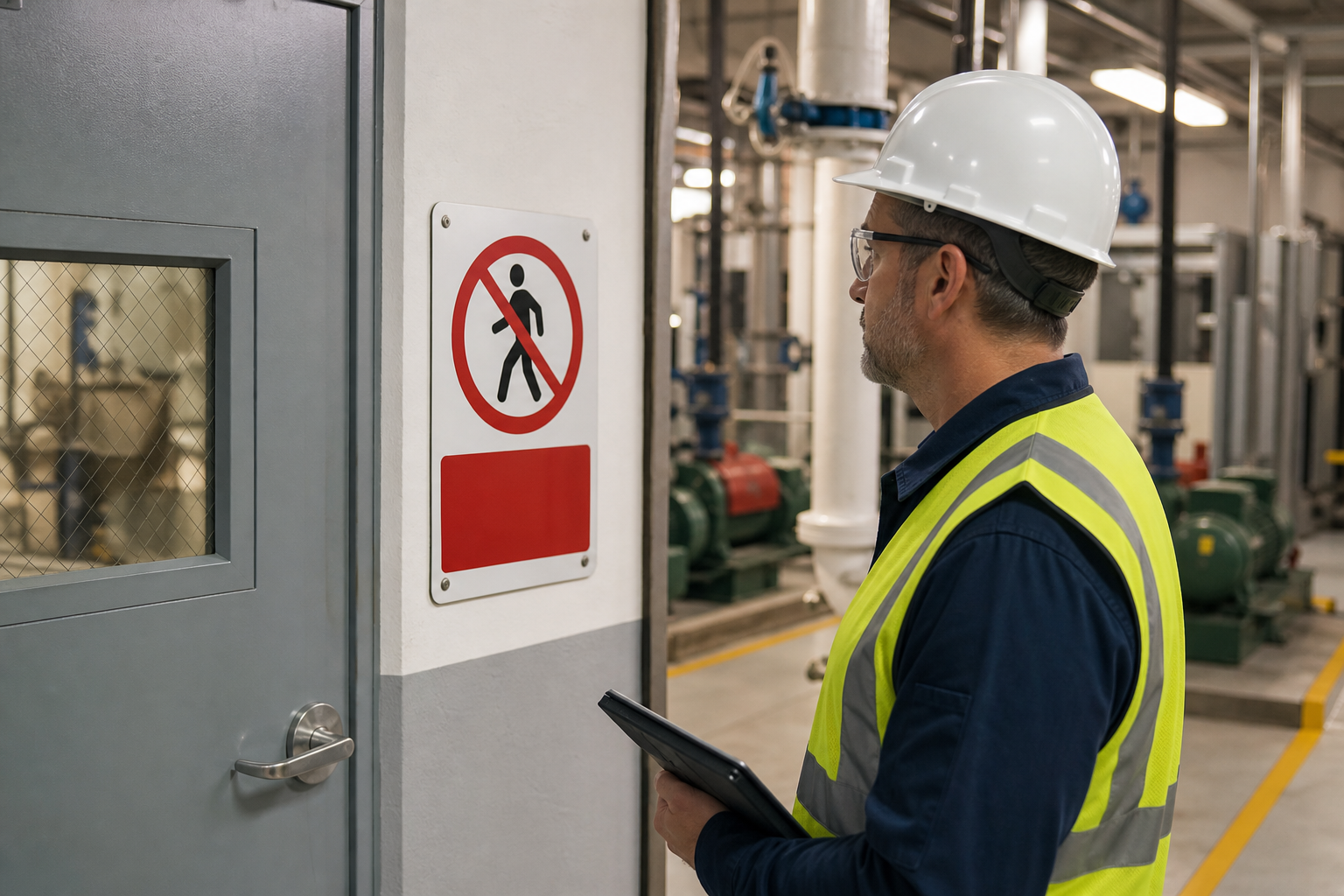
The right entry restriction sign depends first on what you are controlling. A sign on a mechanical-room door, fenced work area, or restricted facility zone serves a different purpose from a roadway DO NOT ENTER sign. Before choosing a product, classify the location, define who may enter, identify the hazard or authorization condition, and then select wording, symbols, material, and placement that people can understand quickly.
First Decide: Facility Access Control or Roadway Traffic Control?
This is the most important distinction in an entry prohibited signage project. Facility signs communicate internal access rules, site restrictions, or hazard warnings. They may appear on doors, gates, fences, equipment enclosures, or entrances to controlled rooms.
Roadway signs regulate vehicle movement where a route operates as a roadway, ramp, or other traffic-control environment. The official MUTCD guidance for the DO NOT ENTER sign identifies specific roadway conditions, including where a two-way roadway becomes one-way and certain interchange or channelized roadway locations.
| Location or condition | Primary communication need | Message direction | Verify before ordering |
|---|---|---|---|
| Room, door, gate, or fenced area | Restrict access to a facility area | Entry Prohibited, No Entry, or Authorized Personnel Only | Who may enter and whether a reason or access condition should be stated |
| Permit-required confined space | Warn about a specific serious hazard and entry controls | Danger or hazard-specific wording, such as permit-required confined space, do not enter | Site procedure, permit program, and applicable safety requirements |
| Internal vehicle route or work zone | Control movement within the facility | Traffic-control wording selected for the route and operating conditions | Whether the area is treated as a roadway by the responsible authority |
| Public roadway, ramp, or access intersection | Prevent prohibited vehicle entry | Applicable MUTCD traffic sign | Traffic-control authority and current MUTCD requirements |
If a location sits between these categories, involve the facility compliance team, traffic-control authority, or another responsible reviewer before specifying the sign. A generic internal sign should not be assumed to replace a required roadway control.
Compare the Main Entry Restriction Messages

These phrases are not interchangeable in every setting. Choose the message that describes the actual rule, then use supporting text to answer the next question a worker, visitor, driver, or contractor is likely to have: “Why can’t I enter?” or “What must I do before entering?”
“Entry Prohibited” for a Clear General Restriction
Entry Prohibited is a direct choice when people should not enter a room, zone, or work area. It works well as a broad access restriction, particularly when supported by text such as Authorized Personnel Only, Badge Required, or Permit Required.
Use this wording when the facility wants to prohibit entry rather than merely suggest caution. Review whether the sign should identify the responsible department, access method, or condition that would allow entry.
“Authorized Personnel Only” When Access Depends on Permission
Authorized Personnel Only communicates a permission-based restriction. It is more specific than a general prohibition when trained employees, maintenance staff, contractors, or badge holders may enter under defined conditions.
This wording may suit security zones, maintenance areas, electrical rooms, or controlled equipment spaces, but the facility’s access policy should determine who qualifies as authorized. If authorization requires a badge, escort, permit, or supervisor approval, state that condition when it matters to safe operation.
Hazard-Specific Wording for Confined Spaces and High-Risk Areas
A generic restriction may not communicate enough information where entry exposes people to a named hazard or controlled procedure. Identify the hazard and required control rather than relying only on “No Entry.”
For permit-required confined spaces, OSHA gives “DANGER – PERMIT-REQUIRED CONFINED SPACE, DO NOT ENTER” as an example of suitable warning language at or near an entrance. Review the OSHA confined-space rulemaking guidance and your site’s permit program before approving wording. The sign should support, not replace, the facility’s training, entry procedures, and controls.
“DO NOT ENTER” for Roadway and Traffic-Control Conditions
DO NOT ENTER is familiar and highly visible, but that does not make it the right choice for every door or restricted room. In the United States, the MUTCD R5-1 sign addresses specified roadway conditions. Use the applicable traffic-control sign when vehicles could enter a prohibited roadway, ramp, or route governed by those requirements.
For a mechanical room, chemical storage area, or fenced maintenance zone, consider facility access-control wording instead. If vehicles and pedestrians share the route, document how the area operates and ask the responsible compliance or traffic-control reviewer whether roadway sign requirements apply.
Choose Text, Symbols, or Both
A prohibition symbol can help people recognize a restriction quickly, especially where workers speak different languages or approach the sign while moving through a busy facility. Text remains important when the distinction matters, such as whether entry is never allowed, allowed only to authorized personnel, or permitted after a specific procedure.
Use a consistent symbol-text pairing across similar areas. Keep the main restriction prominent, use strong contrast, and avoid adding so much supporting copy that the primary message becomes difficult to see from the approach path. VisionMarker’s guidance on safety symbols discusses how symbols, signal words, and text can work together across industrial signage.
Consider the reader’s situation. A person approaching a door may have time to read a short explanation. A driver nearing a restricted route may need a larger, simpler traffic message. A worker entering a high-risk area may need the hazard, required PPE, permit condition, or emergency instruction stated explicitly.
Match the Message to the Location
- Mechanical rooms: Use Entry Prohibited or Authorized Personnel Only, then add a badge, maintenance, or authorization condition if applicable. Confirm whether the room contains a hazard that needs separate warning language.
- Chemical or confined spaces: Identify the hazard and entry control rather than relying on a broad no-entry message. For confined spaces, coordinate the sign with the permit program and required danger wording.
- Security zones: Use Authorized Personnel Only, Badge Required, or a similar access condition when permission is the central rule.
- Equipment areas: State whether entry is prohibited during operation, maintenance, or a specific process. A sign should not imply that a machine is safe to approach when additional lockout or isolation procedures apply.
- Internal vehicle routes: Decide whether the message controls vehicles, pedestrians, or both. Do not assume a door-style entry sign provides adequate roadway control.
These are planning examples, not automatic legal classifications. The facility’s hazard assessment, operating procedures, and applicable local requirements should determine the final message.
Select Materials for the Site Environment
Sign performance depends on the environment as much as on the wording. An indoor office corridor, an outdoor gate, and a chemical-processing area place different demands on the face, substrate, adhesive, and mounting hardware.
- Clean indoor locations: Prioritize clear graphics, suitable rigidity, and a mounting method that fits the door, wall, or panel.
- Outdoor or UV-exposed areas: Specify materials and finishes designed for sunlight, weather, and moisture.
- Washdown or damp areas: Consider moisture exposure, drainage, edge sealing, and compatible hardware.
- Chemical-cleaning or industrial areas: Identify the chemicals, concentration, cleaning method, and frequency. Ask whether the face, laminate, adhesive, and substrate suit those conditions.
- High-traffic areas: Consider impact, abrasion, tampering, and visibility from the normal approach distance.
VisionMarker positions its industrial signage and identification products for demanding environments, emphasizing resistance to UV exposure, moisture, and chemicals. Confirm those characteristics against the actual site conditions rather than skipping an environment review.
Check Placement Before You Install
A correctly worded sign can fail if people see it too late or cannot read it from the approach path. Before installation, walk the route as an employee, visitor, contractor, or driver would, depending on the audience.
- Identify every normal approach to the restricted entrance, route, room, or zone.
- Check whether the sign is visible before a person reaches the decision point.
- Assess viewing distance, sign size, lighting, glare, and contrast.
- Look for doors, gates, stored materials, vehicles, pipes, equipment, or temporary barriers that could block the message.
- Confirm that the mounting surface is suitable and that opening the door or gate will not hide the sign.
- Check whether the restriction changes during shifts, maintenance, deliveries, or emergency conditions.
After selecting the message and material, use this entry prohibited sign installation sequence to organize proofing, mounting, visibility checks, and final verification.
Install, Test, and Maintain the Sign
Approve the final proof before mounting. Confirm the exact wording, symbol treatment, colors, size, and supporting instruction against the site’s approved sign schedule.
Use hardware and installation methods suited to the surface and environment. Once installed, inspect the sign from each relevant approach. Check for glare, shadows, obstructions, peeling edges, impact damage, fading, and changes to the doorway or route.
Document the sign location and condition during facility walkthroughs. Replace signs when the message is no longer legible, the restriction changes, or construction and equipment make the original placement ineffective.
Prepare a Better Quote Request
A complete request helps a supplier recommend suitable options and reduces clarification cycles. Include the following information for each sign group:
- Project and location: Building, room, route, gate, or equipment area.
- Quantity: Total signs and whether several sizes or messages are required.
- Primary message: Entry Prohibited, Authorized Personnel Only, DO NOT ENTER, or hazard-specific wording.
- Supporting text and symbols: Badge, permit, PPE, hazard, contact, or authorization instructions.
- Approximate size or viewing distance: Include a recommendation request if the correct size is unknown.
- Environment: Indoor, outdoor, UV exposure, moisture, washdown, chemicals, heat, abrasion, or impact.
- Substrate and finish: Request options suited to the documented conditions.
- Mounting: Door, wall, fence, pipe, panel, post, or gate, plus preferred hardware if known.
- Proof and approval: State whether artwork, a digital proof, or a sign schedule is required.
- Timing: Requested delivery window and installation or shutdown constraints.
- Standards review: Identify standards, internal specifications, or authority requirements.
A useful request could state: “Eight indoor mechanical-room signs, Entry Prohibited with Authorized Personnel Only, mounted to metal doors, intermittent chemical cleaning, symbol-plus-text layout, durable chemical-resistant option requested, proof required before production.” Add actual dimensions, hardware preferences, and site requirements when available.
Final Selection Checklist
- Classify the location as facility access control, hazard restriction, internal traffic control, or roadway traffic control.
- Choose wording that states the actual restriction and add the authorization or hazard condition when needed.
- Decide whether text alone or symbol-plus-text will be clearest.
- Review the approach path, viewing distance, lighting, obstructions, and decision point.
- Match the face, substrate, adhesive, and hardware to sunlight, moisture, chemicals, impact, and cleaning.
- Confirm the final proof with the responsible facility, EHS, security, or traffic-control reviewer.
- Install, test from each approach, document the location, and replace signs when conditions change.
Frequently Asked Questions
Does an entry prohibited sign replace a DO NOT ENTER roadway sign?
Not automatically. An entry prohibited sign generally communicates an internal facility restriction, while the MUTCD DO NOT ENTER sign applies to specified roadway and ramp conditions. Determine how the route functions and verify the requirement with the responsible authority.
When should a restricted-area sign use danger wording?
Use hazard-specific danger wording when entry exposes people to a serious, identified hazard or controlled process that must be named. Permit-required confined spaces are one example. Coordinate the sign with site procedures and applicable requirements.
Should an entry prohibited sign include a symbol as well as text?
Often, a symbol can improve quick recognition, but it should support rather than replace necessary wording. Use a consistent symbol-text pairing and ensure the complete message remains legible from the normal approach distance.
What information should I include when requesting a quote?
Provide the quantity, wording, symbols, approximate size or viewing distance, environment, substrate, mounting surface, proof requirements, requested timing, and applicable specifications. Photographs or a site plan may clarify placement or exposure conditions.
How do I choose a sign material for chemical cleaning, moisture, or outdoor exposure?
Describe the actual exposure, including sunlight, moisture, cleaning chemicals, frequency, temperature, abrasion, and mounting surface. Ask for a material and finish recommendation based on those conditions.
Choose the Restriction First, Then Specify the Sign
The strongest entry prohibited signage decision starts with classification, not color or product format. Decide whether the sign controls access inside a facility, identifies a serious hazard, manages internal vehicle movement, or regulates a roadway. Then choose wording that explains the restriction, add a symbol when useful, and verify that people can see the message before reaching the decision point.
Material, mounting, proofing, and inspection complete the decision. A sign selected for clean indoor use may not suit UV, moisture, chemical, or impact exposure, and a durable sign still needs unobstructed placement and ongoing condition checks.
VisionMarker supplies signs, labels, pipe markers, and fire protection products across the USA and Canada through a quote-based website, giving facility and safety teams a place to provide their message, environment, mounting, and quantity requirements for review.
Key Takeaways
- Understanding the distinction between facility access control and roadway traffic control is crucial for effective signage.
- Utilizing hazard-specific wording enhances communication and ensures compliance with safety regulations.
- Choosing the right materials based on environmental conditions is essential for the longevity of signage.
- Proper placement and visibility checks can significantly impact the effectiveness of warning signs.
- Providing detailed information in quote requests streamlines the ordering process and ensures accurate product recommendations.