Canada

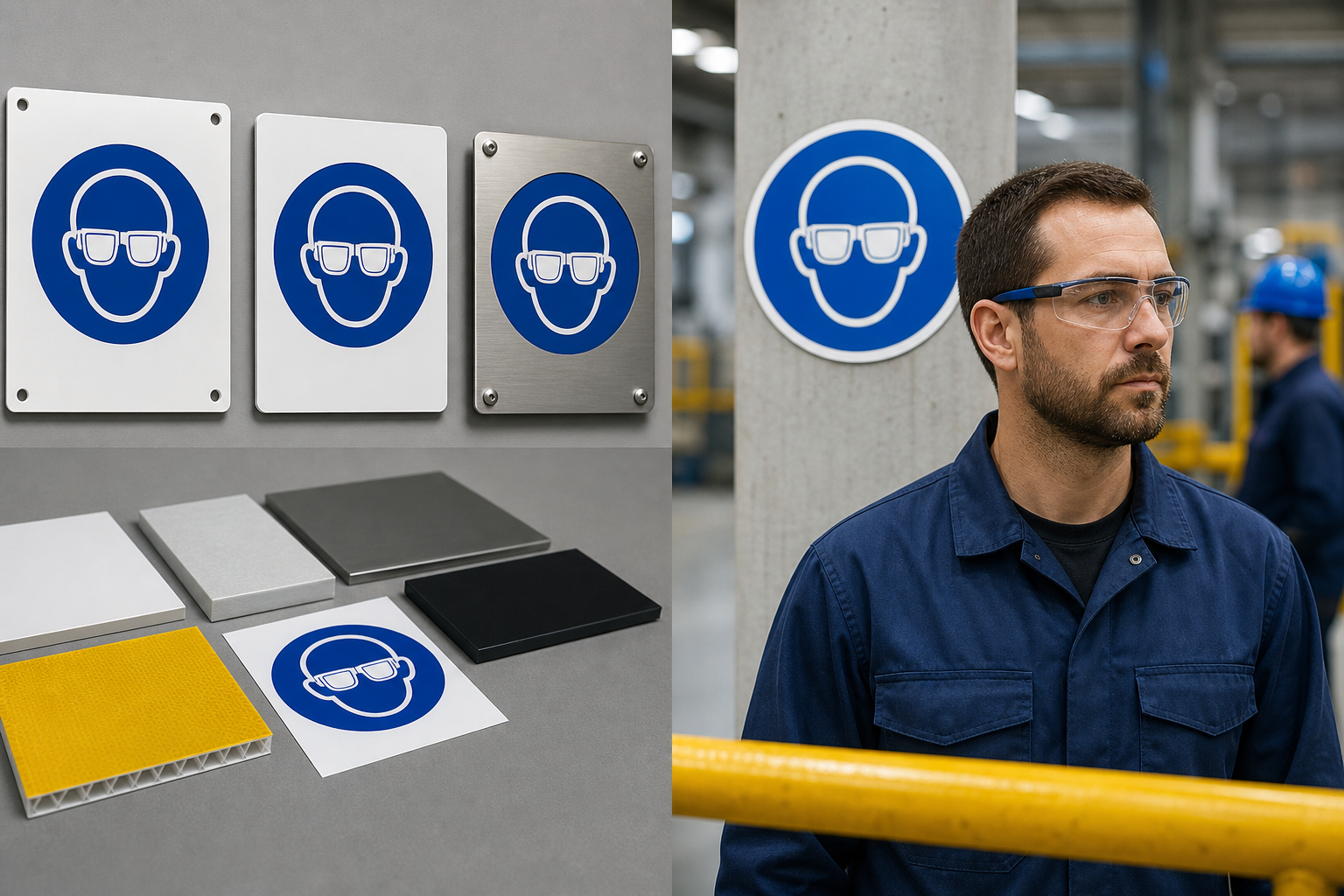
When posting “eye protection required” is legally triggered
OSHA requires employers to ensure employees use appropriate eye or face protection whenever they are exposed to hazards such as flying particles, molten metal, liquid chemicals, acids or caustic liquids, chemical gases or vapors, or potentially injurious light radiation. The general duty appears in OSHA’s overview on eye and face protection and in standards written for specific industries, including 29 CFR 1910.133 for general industry, 29 CFR 1926.102 for construction, and 29 CFR 1918.101 for marine terminals. A documented PPE assessment determines where eye protection is necessary and which protectors are appropriate, including accommodation for employees who wear prescription lenses.
Use OSHA’s guidance documents and the cited regulations when deciding whether signage is required in a given area. Citing those sources during your hazard survey helps justify signage choices to auditors and stakeholders and supports your written PPE program.
Which sign wording to use and how wording maps to hazards
Sign wording should match the hazard and the action you expect. Short, imperative phrases work best for visibility and compliance. Below are phrasing tiers and when to use each.
Direct imperative for controlled zones
- Eye protection required — Use where entry into a defined work zone consistently exposes anyone to eye hazards. This phrase is clear, concise, and easy to enforce.
- Eye and face protection required beyond this point — Use at boundaries where both eye and face protection are necessary, for example near grinding or chipping operations.
Hazard-specific warnings
- Welding area: eye protection and welding filter required — Use for fixed welding bays where radiant energy and sparks are present.
- Chemical splash hazard: splash goggles required — Use where corrosive liquids or aerosols create splash risk.
- Machining zone: safety glasses with side protection required — Use where high-velocity particles are the primary hazard.
Pictograms and bilingual text
Pictograms, such as the ANSI-style eye symbol, increase comprehension in mixed-language workforces. Add bilingual wording when your team includes non-English speakers. For a ready example that pairs strong wording with a pictogram, see VisionMarker’s product titled “danger eye protection mandatory in this section” which communicates the requirement clearly and is available as a quoteable item.
Sign materials compared: aluminum, engineered plastics, vinyl labels, and photoluminescent

Substrate choice affects longevity and legibility, especially in outdoor, chemical, or high-abrasion environments. Below are common options and the environments where each performs best.
Aluminum
- Durability: High. Resists warping and withstands UV, temperature swings, and many cleaners.
- Best for: Outdoor zones, yards, and permanent mounting near entrances.
- Considerations: Higher upfront cost, justified by long service life.
Engineered plastics (PVC, polyethylene)
- Durability: Good. Many engineered plastics offer UV and chemical resistance and are lighter than metal.
- Best for: Indoor production areas, damp environments, and uneven mounting surfaces.
- Considerations: Confirm chemical compatibility for strong solvents.
Vinyl labels and rolls
- Durability: Variable. High-quality, weatherproof vinyl with laminate performs well; thin vinyl degrades faster in UV or abrasive settings.
- Best for: Pipe markers, temporary zones, and curved surfaces on machines or pipes where conformability matters.
- Considerations: Choose a grade rated for UV, moisture, and chemical exposure if used outdoors or on process equipment.
Photoluminescent materials
- Durability: Good for emergency marking. They remain useful near egress routes and emergency stations.
- Best for: Emergency eyewash and safety shower locations where low-light visibility is required.
- Considerations: Not a substitute for day-visible signs at hazard boundaries.
For compliance-driven purchases, prefer ANSI-certified options and request material data sheets to confirm UV, moisture, and chemical resistance. VisionMarker lists ANSI-certified options and material details to help match substrates to harsh environments.
Placement, size, and visibility: where to post eye protection signs
Effective placement follows a rule-based approach: mark the hazard boundary, the approach path, and the control point where PPE is inspected or issued. Proper placement increases compliance and reduces conflict during inspections.
Basic placement rules
- At entrances and boundaries: Post signs at all normal access points so a worker sees the requirement before entering.
- At the point of work: Place a reminder on or adjacent to the machine, bench, or equipment creating the hazard.
- At PPE stations: Mount signs near storage or issuance points so workers see the requirement when picking up equipment.
Size, mounting height, and sight lines
- Sign size: Increase letter height for longer sight distances. Use letters that remain legible from the typical approach distance.
- Mounting height: Mount so the center of the message sits between 48 and 60 inches above the walking surface for typical visibility, and adjust for seated operations or obstructed sight lines.
- Line of sight: Avoid placement behind racks, doors, or safety barriers. If obstruction is unavoidable, add secondary signs along approach paths.
Frequency for large zones
On large production floors or yards, repeat signs at regular intervals and at every major access point. Combine signage with floor tape or painted boundary lines to create a visible separation between safe and protected areas.
Alternatives and complements: when to use general PPE notices or task-specific signs
A general “PPE required” sign may suit mixed-hazard areas where multiple protections are needed, but it can reduce clarity. Use this decision guide to choose the right approach.
- Choose “eye protection required” when eye hazards are the dominant or most critical risk and you want simple enforcement.
- Choose “PPE required” where several protections are equally necessary and you will follow up with task-specific instructions or a PPE matrix at the entry point.
- Combine signage: Post a general PPE notice plus a small, task-specific sign that lists required items for the specific work. This improves compliance and reduces confusion.
Procurement checklist and how to request a compliant quote

Industrial suppliers often price signs by material, size, quantity, customization, and certification. When requesting a quote, include the following so suppliers can provide accurate, compliance-focused pricing.
- Quantity of each sign and approximate application frequency.
- Exact wording, pictograms, and languages required.
- Preferred material or environmental challenges: outdoor, chemical exposure, abrasion, salt spray, or UV exposure.
- Mounting method: adhesive, rivets, brackets, or magnetic backing.
- Certification requirements: ANSI or other standards as needed.
- Artwork or logo to include and any corporate color needs.
- Desired lead time and delivery location.
VisionMarker operates a quote-based B2B model for many items and shows ANSI-certified options and material choices on product pages. For an example item or to start a quote, review “danger eye protection mandatory in this section” or request a tailored quote through the VisionMarker site.
Common objections and practical responses
Below are common stakeholder objections and practical replies grounded in OSHA guidance and PPE assessment practice.
- “Signs alone will solve it”, response: Signs are an essential prompt but must be part of a broader PPE program that includes hazard assessment, training, fit and maintenance of eyewear, and supervision. OSHA recommends a PPE assessment and appropriate training to ensure effectiveness.
- “Prescription glasses protect workers”, response: Prescription glasses may not provide side protection or chemical splash resistance. OSHA requires employers to provide compatible eye protection or protectors that fit over prescription lenses when necessary, and signage should reflect the protective standard required for the task.
- “Durable materials are too expensive”, response: Upfront cost is often balanced by longer service life and fewer replacements in harsh environments. Request material data and lifecycle cost comparisons from suppliers to justify the investment.
Quick checklist and sample ‘eye protection required’ wordings
Use this field checklist during a signage survey.
- Conduct a PPE hazard assessment for each work area, documenting eye hazards and exposure routes, as recommended in OSHA PPE guidance.
- Decide wording: select a direct imperative, hazard-specific phrase, or combined message with pictogram and language variants.
- Select material: match substrate to UV, chemical, and abrasion needs.
- Plan placement: mark boundaries, approaches, and PPE stations, and confirm sight lines from common entry paths.
- Create a procurement brief with size, quantity, mounting, and certification details, then request quotes.
Sample wordings to copy into your procurement brief:
- Eye protection required beyond this point
- Eye and face protection required for all personnel
- Welding area: welding filter and eye protection required
- Chemical splash hazard: splash goggles required
- PPE required: eye protection, hearing protection, and hard hats
Frequently asked questions
When does OSHA require employers to post an “eye protection required” sign
OSHA requires employers to ensure employees use appropriate eye or face protection when exposed to eye hazards. Employers should post signage when a hazard assessment shows that exposure will occur on entry to a work zone. See OSHA’s eye and face protection overview and the regulation 29 CFR 1910.133 for the regulatory basis and implementation details.
What wording is best for areas where workers wear prescription glasses
Specify the required protection and accommodation. For example: “Prescription safety glasses or over-the-glass protectors required” or “Eye protection that fits over prescription lenses required.” Ensure the selected protectors meet the task hazard, as OSHA addresses compatibility with corrective lenses in the regulation.
Which sign material lasts longest outdoors near chemicals or salt spray
Marine-grade aluminum and high-performance engineered plastics with chemical-resistant inks and laminates generally provide the best long-term performance near salt spray or chemical exposure. Ask suppliers for material data sheets and ASTM or ANSI durability ratings to confirm suitability.
Is a general “PPE required” sign enough instead of an “eye protection required” sign
A general PPE notice can be acceptable in mixed-hazard areas, but it may reduce clarity. Use a general notice only when supplemented by a PPE matrix or task-specific instructions at the point of work. When eye hazards dominate, a direct “eye protection required” sign is clearer and easier to enforce.
What information should I include when requesting a quote for custom eye protection signs
Provide quantity, exact wording, pictograms and languages, preferred material and environment conditions, mounting method, required certifications such as ANSI, artwork files, desired lead time, and delivery address. Including these items speeds accurate pricing and material recommendations from suppliers.
For product examples, ANSI-certified options, or to request a quote for custom signage, visit VisionMarker or the example product page for danger eye protection mandatory in this section.
Key takeaway: match wording to the hazard, choose materials for the environment, and place signs where they are seen before entry. Combine signage with a documented PPE program and a supplier quote that specifies ANSI certification and material data to support long service life and compliance.