Canada


Definition: what eye protection safety means
Plain-language definition
Eye protection safety is the practice of identifying eye and face hazards, providing task-appropriate protective eyewear, and using clear signage and controls so workers are protected from chemical splashes, flying particles, infectious droplets, radiant energy, and other hazards. Employers are responsible for assessing hazards, supplying suitable PPE, and training workers to use it. OSHA establishes the employer duty to provide necessary eye and face protection when hazards could injure the eyes or face (Eye and Face Protection – Overview | OSHA).
Primary hazard categories that trigger protection
- Mechanical impact and flying debris from cutting, grinding, chipping, and material handling.
- Chemical splashes or corrosive liquids during mixing, transfer, or cleaning operations.
- Infectious droplets and body fluids in health, laboratory, or emergency response settings.
- Radiant energy and intense light from welding, brazing, or laser work.
- Dust, fumes, aerosols, and small particulates that can abrade or irritate the eye surface.
When eye protection is required: legal triggers and workplace examples
OSHA standards and where to read them
OSHA requires employers to ensure employees use appropriate eye or face protection where hazards exist. Standards apply across general industry, construction, and maritime. Facility managers can review legal requirements and practical hazard recognition resources on OSHA’s standards and solutions pages (Eye and Face Protection – Standards | OSHA and Eye and Face Protection – Hazards and Solutions | OSHA).
Common job tasks that require eye protection
Examples that typically trigger mandatory eye protection include welding and cutting, grinding and chipping, handling corrosive chemicals, operating powered machinery that throws particles, cleaning with pressurized liquids, lab work with biological agents, painting and solvent use, and first-response activities where exposure to bodily fluids or aerosols is possible. When a task can produce splashes, high-speed fragments, or intense light, require PPE before the work begins.
Common types of eye protection and when to use them
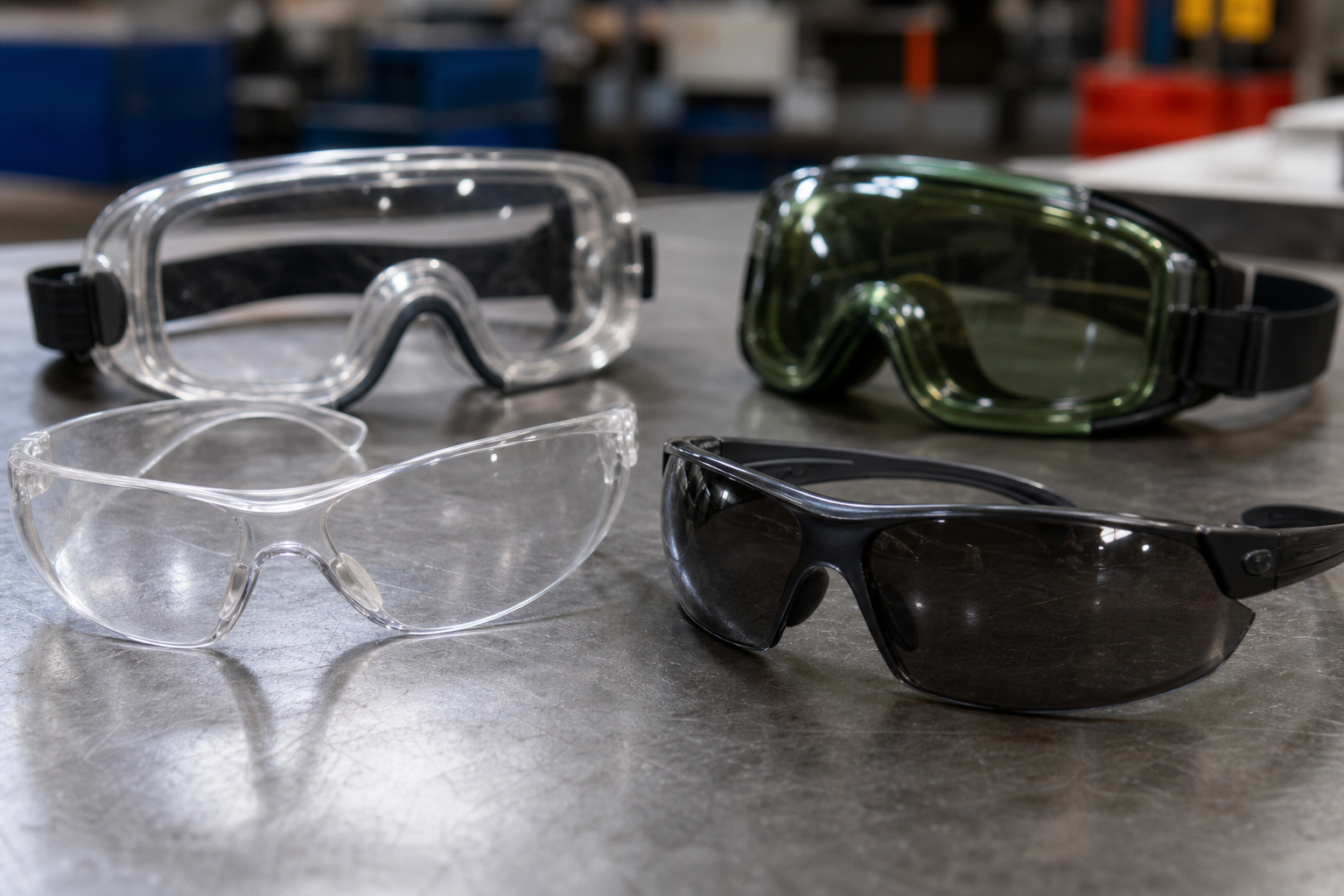
NIOSH and CDC list several classes of protective eyewear. Each class serves different hazards and has limitations; choose based on the specific exposure and task.
Safety spectacles
Safety spectacles look like glasses but meet impact standards and often include side shields for lateral protection. Use them for light impact, general-purpose tasks, and when workers need comfortable, all-day protection. They do not seal against splashes.
Goggles
Chemical splash goggles provide a seal or partial seal around the eyes and are available in direct-vented or indirect-vented styles. They are appropriate for splash, dust, and small-particle hazards. NIOSH emphasizes fit and a good seal when goggles are used for splash or aerosol exposures (Eye Safety for Workers | NIOSH).
Face shields
Face shields protect the entire face from splashes and larger debris but are not a substitute for goggles or spectacles for high-velocity impacts or fine particles. Combine a face shield with goggles or safety spectacles when small-particle or splash protection is also needed.
Full facepiece respirators
Full facepiece respirators protect both respiratory system and eyes where airborne contaminants and eye exposure coincide. Use certified respirators when respiratory hazards require PPE and follow a written respiratory protection program for fit testing and maintenance.
When prescription eyewear needs a certified solution
Regular prescription glasses and contact lenses do not protect against workplace splash or impact hazards. Use safety-rated prescription eyewear or properly sized overspecs that meet impact and splash standards when corrective lenses are required (Eye Protection for Infection Control | NIOSH).
Fit, comfort, and compatibility with other PPE
Fit checks and adjustment tips
Proper coverage, comfort, and peripheral vision matter for protection and worker acceptance. Quick fit checks include ensuring spectacles sit close to the face without large gaps, goggles form a comfortable seal, straps are snug but not painful, and headgear does not shift PPE during typical movements. Verify vision through the PPE and test for fogging or obstruction before starting work.
Prescription eyewear and overspecs
When workers need corrective lenses, choose safety-rated prescription glasses or overspecs that are compatible with the task. Overspecs must allow a secure seal with goggles if splash or aerosol protection is required. Work with an eye-care provider or PPE supplier to confirm ratings and fit for your workers.
Combining eye protection with respirators and helmets
Check compatibility before procurement: goggles must seal around the face when half-mask respirators are used, and face shields or helmets must not create gaps that allow particles or liquids to reach the eyes. Try combinations during tool-box talks so workers can confirm comfort and task performance.
Signage and labeling: what to post, where, and why durable materials matter
Short compliant messages that support enforcement
Clear, concise sign copy strengthens compliance. Effective messages include “Eye protection required beyond this point” and “Danger: Eye protection mandatory in this section.” Place signs where workers first encounter a hazard and at the point of operation. VisionMarker offers dedicated eye protection signage such as the product titled “danger eye protection mandatory in this section” to simplify procurement and maintain consistent messaging (danger eye protection mandatory in this section).
Placement checklist
- Entrances to areas with eye hazards, for example welding bays, chemical storage rooms, and machine shops.
- At machine guards and near processes that create temporary hazards, such as grinding stations and saws.
- PPE distribution points, locker rooms, and tool cribs so workers know where to obtain required eyewear.
- On mobile equipment and temporary work zones where unexpected hazards may appear.
Materials and durability criteria
Signs used outdoors or in harsh industrial conditions should resist UV, moisture, and chemical exposure so messages remain readable and enforceable. Industrial-grade options include rigid aluminum, laminated polyester, and high-density plastics engineered for long service life. Choose ANSI-aligned design and high-contrast text for legibility in low light and at distance. VisionMarker publishes material specifications to help buyers match signs to site conditions (VisionMarker).
How to choose the right signs and eye PPE: a decision checklist
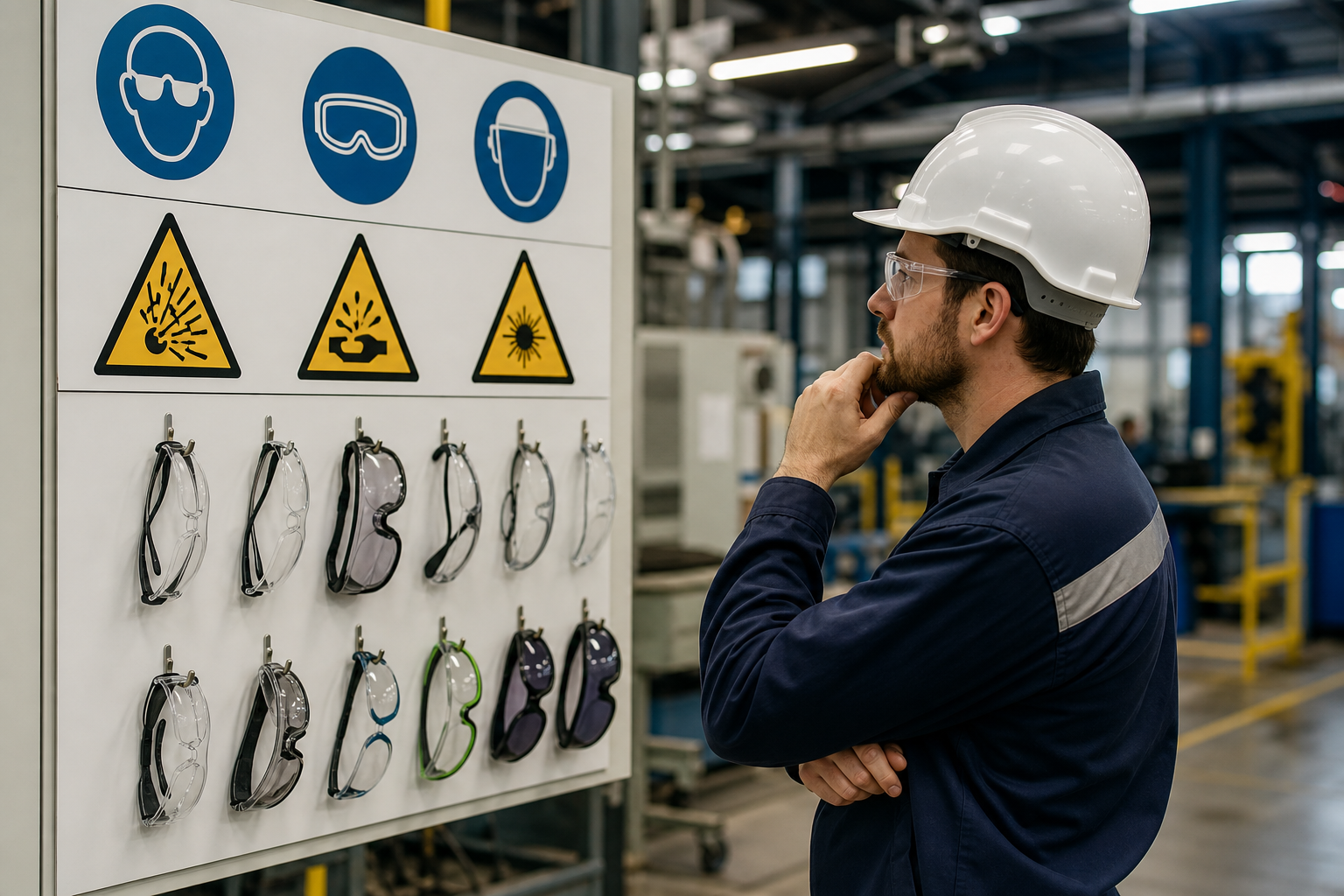
Use this five-step checklist to match hazards to protection and signage.
- Identify the hazard: impact, splash, aerosol, radiation, or dust.
- Select PPE rated for that hazard: impact-rated spectacles for fragments, sealed goggles for splash, face shields for large debris, or full facepiece respirators when respiratory and eye hazards coincide (NIOSH).
- Confirm fit, comfort, and compatibility with prescription eyewear, respirators, and helmets through hands-on trials.
- Choose sign copy and placement to notify workers before exposure, and select durable materials rated for UV, moisture, and chemical resistance (danger eye protection mandatory in this section).
- Train workers, document the PPE decision, inspect PPE regularly, and revisit choices after any process change.
Hazard-to-PPE mapping examples:
- High-speed metal fragments: impact-rated safety spectacles plus side shields.
- Chemical splashes: non-vented or indirect-vented chemical goggles plus face shield for heavy splashes.
- Welding light: welding filter lenses and appropriate face protection rated for radiant energy.
- Aerosolized biological agents: sealed goggles or full facepiece respirator, per infection control guidance.
When tradeoffs occur, prioritize protection over convenience but seek comfortable models and anti-fog solutions to increase consistent use.
Common objections and misconceptions, answered
Are regular glasses enough?
No. Regular prescription glasses and contact lenses do not meet impact or splash protection standards and are not adequate for most workplace hazards. Certified safety spectacles or goggles are required where hazards are present, as advised by OSHA and NIOSH (NIOSH, OSHA).
How can I improve worker compliance?
Improve compliance by making the right PPE available and comfortable, using clear signage at entry points, training on the specific risks, and involving workers in selection to find acceptable models. Reinforce rules with supervision, positive feedback, and periodic refresher training.
Do signs replace PPE?
No. Signs communicate requirements and support enforcement, but they do not provide physical protection. Signs should be part of a layered approach that includes hazard controls, PPE distribution, and training.
Cross-border considerations: Canada and regional standards to check
VisionMarker serves customers in the USA and Canada and references North American standards for signage and materials. Managers working across borders should confirm provincial, territorial, or state regulations and any site-specific program requirements. When in doubt, consult local regulatory guidance and product specifications for ANSI and regional compliance on supplier sites like VisionMarker (VisionMarker).
Frequently asked questions
Are regular prescription glasses enough for eye protection safety at work?
No. Regular prescription glasses and contact lenses do not provide adequate protection against workplace impact or splash hazards. Use certified safety spectacles or goggles when hazards exist, as advised by NIOSH and OSHA (NIOSH, OSHA).
Which type of eye protection should I use for chemical splash hazards?
Chemical splash hazards require goggles that provide a seal around the eyes or a combination of goggles and face shield depending on exposure. Choose indirect-vented or non-vented chemically resistant goggles and follow manufacturer compatibility guidance (NIOSH).
Where should eye protection safety signs be posted in a facility?
Post signs at entrances to hazardous areas, at points of operation such as welding bays and machine shops, and at PPE distribution points. Place signs where they are visible before a worker enters a hazard zone to support compliance and enforcement.
How do I choose durable signs that last in outdoor and corrosive environments?
Select materials rated for UV, moisture, and chemical resistance, and choose ANSI-aligned designs for legibility. Work with suppliers that publish durability specifications and offer industrial-grade materials suitable for your environment, such as the products available at VisionMarker (VisionMarker).
What can I do if workers refuse to wear required eye protection?
Address refusal by confirming the PPE matches the hazard and is comfortable, retraining on the risk and rules, involving workers in selection, and enforcing policies consistently. Use signage, supervision, and documented corrective actions as part of your safety program.
Eye protection safety is simple in concept but essential in practice: identify hazards, provide and verify the right PPE, and use clear, durable signage to remove ambiguity. For compliant, industrial-grade eye protection signage and custom solutions, request a product quote or browse eye protection signs such as the danger eye protection mandatory in this section product page.