Canada


Executive summary: the top red flags to stop a bad purchase
Before you approve an order, run this quick scan. Each red flag below signals risk to compliance, durability, or effectiveness in an emergency.
Top 7 red flags
- No verifiable standards claims or evasive language about compliance.
- Vague material descriptions such as “industrial grade” without datasheets.
- No sample photos of installed signs or poorly documented references.
- Quotes that omit lead times, installation scope, or warranty terms.
- Sign sizes and contrast not tied to viewing distance or mounting height.
- No maintenance or replacement schedule offered for exterior or harsh locations.
- Vendor refuses to supply test reports for UV, adhesive, or chemical resistance.
How to use this checklist
Run the top 7 checks during vendor prequalification, include them in RFP scoring, and perform the same checks on site after installation. Use the walkdown checklist later in this article for procurement and maintenance handoffs.
Vendor credibility red flags and what to demand
Red flags to spot
Vendors that cannot put standards claims in writing or who avoid showing installed-work photos are risky. Look for missing product datasheets, no traceable client references, and inconsistent answers about manufacturing or supply chain. A credible vendor will provide clear documentation and evidence of installed work.
What to ask and request
- Request product datasheets that name substrate, thickness, adhesive, and finish.
- Ask for third party test reports or internal lab results for UV and chemical resistance.
- Request three recent client references with contactable facility managers and photos of installed signs.
- Ask the vendor to confirm the exact standard claim in writing and the document that supports it.
Sample RFP wording to copy: “Provide product datasheets, UV and chemical resistance test reports, and three installed-site references. State the specific clause and edition of any standards claimed. Include warranty terms and lead time ranges.”
How to validate claims
Cross-check certificates and test reports against the vendor website and the product datasheet. If a vendor claims ANSI certification, ask for the certificate and the certifying body. For proprietary or custom claims, require a signed statement that permits verification under NDA if necessary.
VisionMarker publishes product categories and standards alignment that can help you confirm vendor statements about standards and durability. For example product options and typical specifications, see the VisionMarker fire protection resource VisionMarker fire protection resource.
Compliance and standards red flags you cannot ignore
Standards to check for
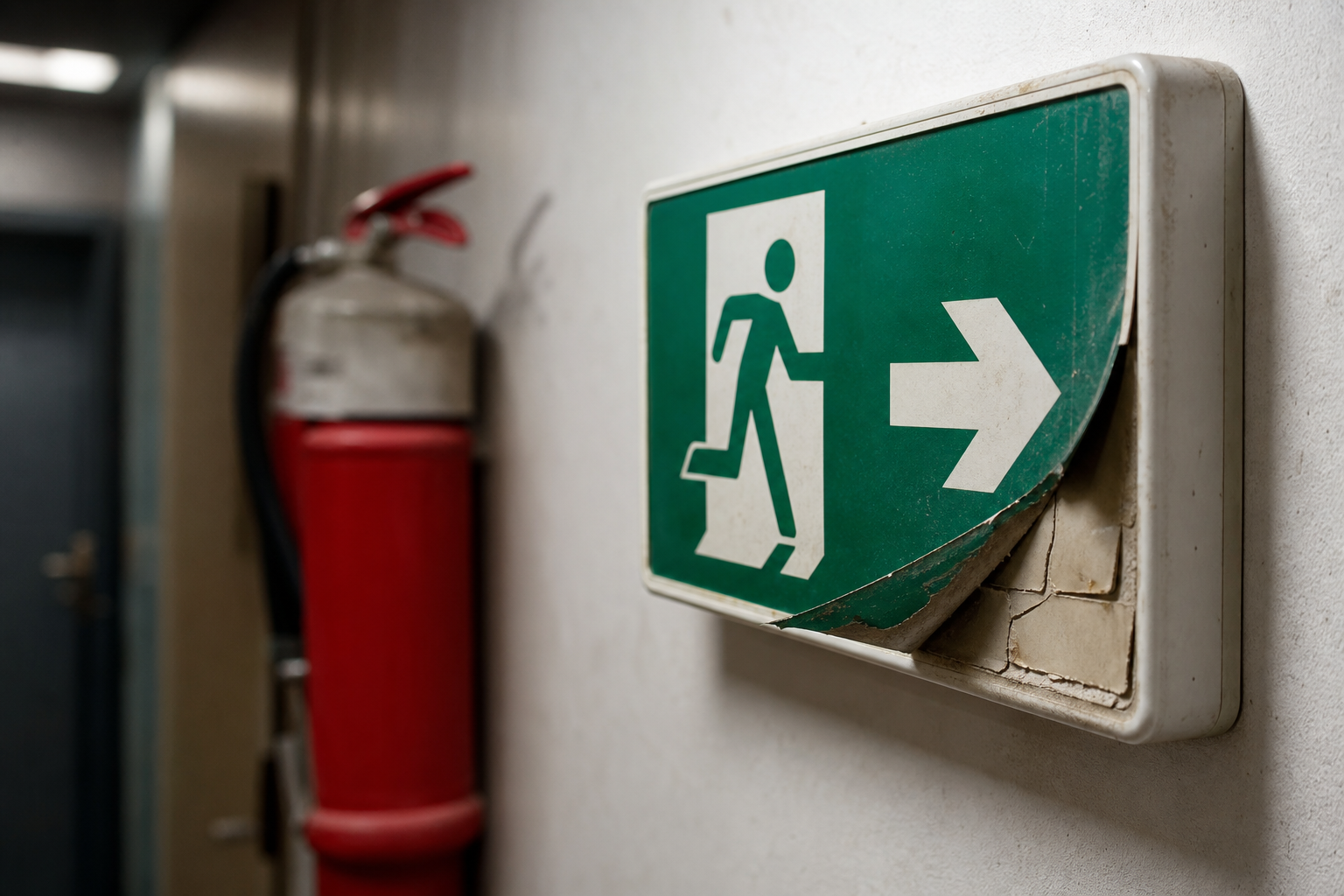
Fire safety signage and piping identification are commonly governed by NFPA 170 for fire safety symbols, ASME A13.1 for pipe marking, and ANSI guidelines for sign legibility. In Canada, check CAN/CGSB specifications. These standards are referenced by vendors and used by authorities during audits.
Red flags
- Vendor uses broad phrases like “meets code” without naming the standard or edition.
- Compliance claims that conflict with local jurisdictional requirements or Canadian standards when buying in Canada.
- No ANSI or NFPA references where those standards are commonly expected for fire signage.
How OSHA expects employers to manage fire safety
OSHA guidance requires employers to address fire safety through planning, assignment of responsibilities, training, and evacuation procedures. Use the OSHA fire safety overview and hazards guidance when building procurement specifications to ensure signs and procedures meet workplace expectations and documentation needs for audits. See official OSHA guidance for more detail OSHA fire safety overview and OSHA hazards and possible solutions.
Product durability red flags: materials and testing that matter
Material red flags
A product description that omits substrate type, adhesive chemistry, or finish is a red flag. Claims like “weatherproof” or “industrial strength” are meaningless without data. Ask for specific materials such as aluminum, name-brand laminates, or specified films, and request datasheets showing thickness and performance ratings.
Environmental failure signs
Common real-world failure modes are color fading from UV, edge lift from poor adhesive on painted or oily surfaces, and label softening or ink bleed from chemical exposure. If the vendor cannot provide evidence that products survived similar environments, treat that as a disqualifier.
What to request
- Material datasheets for substrate, laminate, and adhesive.
- UV and salt spray test reports where signs are outdoors or near marine exposure.
- Chemical resistance test reports for signage used in chemical plants or washdown areas.
- Sample panels or onsite mockups to validate adhesion and legibility before full production.
Demand written expected service life for the environment in question and compare vendor warranties to that expectation. If you require durable fire protection signage, use the VisionMarker fire protection resource to match material choices to environment and expected lifespan VisionMarker fire protection resource.
Placement, visibility, and maintenance red flags
Placement red flags
- Signs offered without a mounting plan that specifies height and orientation.
- Mounting hardware or adhesive not recommended for the actual surface condition.
- Absence of a plan to keep paths and line of sight clear of obstructions.
Visibility red flags
Poor contrast, small text, or text not sized to the viewing distance will render a sign ineffective in an emergency. Vendors should provide sign dimensions based on intended viewing distance and ambient light. If they cannot, score that as high risk.
Maintenance red flags
No recommended inspection or replacement interval is a red flag. Exterior or chemically exposed signs need scheduled checks and a record of replacements. Ask the vendor for a maintenance schedule and include sign condition checks in preventive maintenance rounds.
OSHA emphasizes that signage must remain legible and accessible as part of an overall fire safety program. Include signage condition checks in training and emergency planning OSHA hazards and possible solutions.
Procurement red flags and exact questions to use in sourcing

Red flags in quotes
- Quotes that do not break out materials, fabrication, installation, and taxes.
- No stated lead time or a vague statement that lead times are “subject to change” without ranges.
- Warranty that excludes environmental failure without explanation.
Exact questions to ask
Use these questions during RFPs or vendor interviews. They are concise and evidence oriented.
- Which specific standards and editions do your products meet for fire signage?
- Can you supply the product datasheet and certificates that support those claims?
- Do you have third party or internal test reports for UV and chemical resistance?
- Can you provide three recent installed-site references in similar environments?
- What substrate, laminate, and adhesive are used for exterior fire signs?
- What is the expected service life in direct sunlight and how was that determined?
- Do you offer onsite mockups or sample panels before full production?
- What is your standard warranty and what does it exclude?
- Can you provide documented installation procedures and mounting hardware recommendations?
- What are your lead times for production and for installation in our region?
- How do you handle replacements for signs damaged during the warranty period?
- Will you supply as-built photos and installation reports after completion?
- Do you offer inventory or reorder programs for phased rollouts?
- Are change orders charged by item, and how are unit costs affected?
- Can you sign an NDA to provide proprietary test results if needed?
Common vendor objections and how to evaluate them
If a vendor says they “do not publish test reports,” ask if they can share reports under NDA. If lead times vary, require an agreed range and remedies for delays. If a vendor resists giving client references, that is a red flag and should lower their score.
On-site red-flag checklist and next steps to verify compliance
Quick walkdown checklist
Use this during pre-purchase site visits or to audit installed work. Answer yes or no to each item.
- Signage matches the ordered product datasheet and certificate.
- Signs are mounted at intended heights and visible from required approach distances.
- Text size and contrast are legible at the expected viewing distance.
- No obstruction blocks access to or view of emergency signage.
- Mounting surface is compatible with the adhesive or hardware used.
- Exterior signs show no early UV fading or edge lift.
- Signs in chemical or washdown areas show no adhesive failure or ink bleed.
- Installation photos and as-built documentation are filed in procurement records.
- Vendor provided maintenance and replacement schedule is included in PM rounds.
- Certificates, test reports, and client references are stored with the purchase order.
What to keep in procurement records
- Product datasheets and material specifications
- Certificates of compliance and test reports
- Installation photos and as-built reports
- Warranty documents and quoted lead times
- Maintenance schedule and replacement plan
Next steps
When you are ready to get a vendor review or a quote, gather your facility plan, list of required sign locations, and a short summary of environmental stressors. VisionMarker accepts quote requests and can review plans for appropriate fire protection signage and materials. See the VisionMarker fire protection resource for product examples and specification guidance VisionMarker fire protection resource and visit the VisionMarker site to request a consultation VisionMarker.
Frequently asked questions
What documentation should a vendor provide to prove NFPA or ANSI compliance
Ask for the specific standard edition and a certificate or declaration of conformity that cites the clause or test method used. Where available, request laboratory test reports or third party certifications that directly support the claimed standard.
How can I tell if a fire safety sign will survive outdoors or in a chemical area
Require material datasheets and UV or chemical resistance tests. If the vendor cannot provide test reports or sample panels for your environment, do not accept a generic “weatherproof” claim.
What placement and size rules stop a sign from being effective during an emergency
Sign size and text height must match viewing distance and mounting height. Ensure signs are not blocked, are mounted at recommended heights, and have contrast that remains legible under expected lighting conditions. Request vendor sizing recommendations in writing.
Which red flags in a quote indicate hidden lifecycle costs for signage
Unclear warranty exclusions, missing installation scope, no replacement pricing, and absence of maintenance plans all indicate potential hidden costs. Ask vendors to provide lifetime ownership estimates or maintenance pricing.
Do OSHA rules require specific fire safety signs or only employer-managed programs
OSHA expects employers to manage fire safety through planning, training, and evacuation procedures. While OSHA references specific standards and expects signage to support emergency plans, employers must ensure signs are legible, accessible, and part of the overall program. See official OSHA guidance for employer responsibilities OSHA fire safety overview.
For consumer-facing prevention tips and public education resources, consult the CPSC fire safety center and public health guidance from MedlinePlus CPSC fire safety and MedlinePlus fire safety.
Ready to validate your plan or request a quote? Upload your facility plan or request a consultation with VisionMarker to get a standards-focused review and a quote for compliant fire protection signage. Start at VisionMarker the official website.