Canada

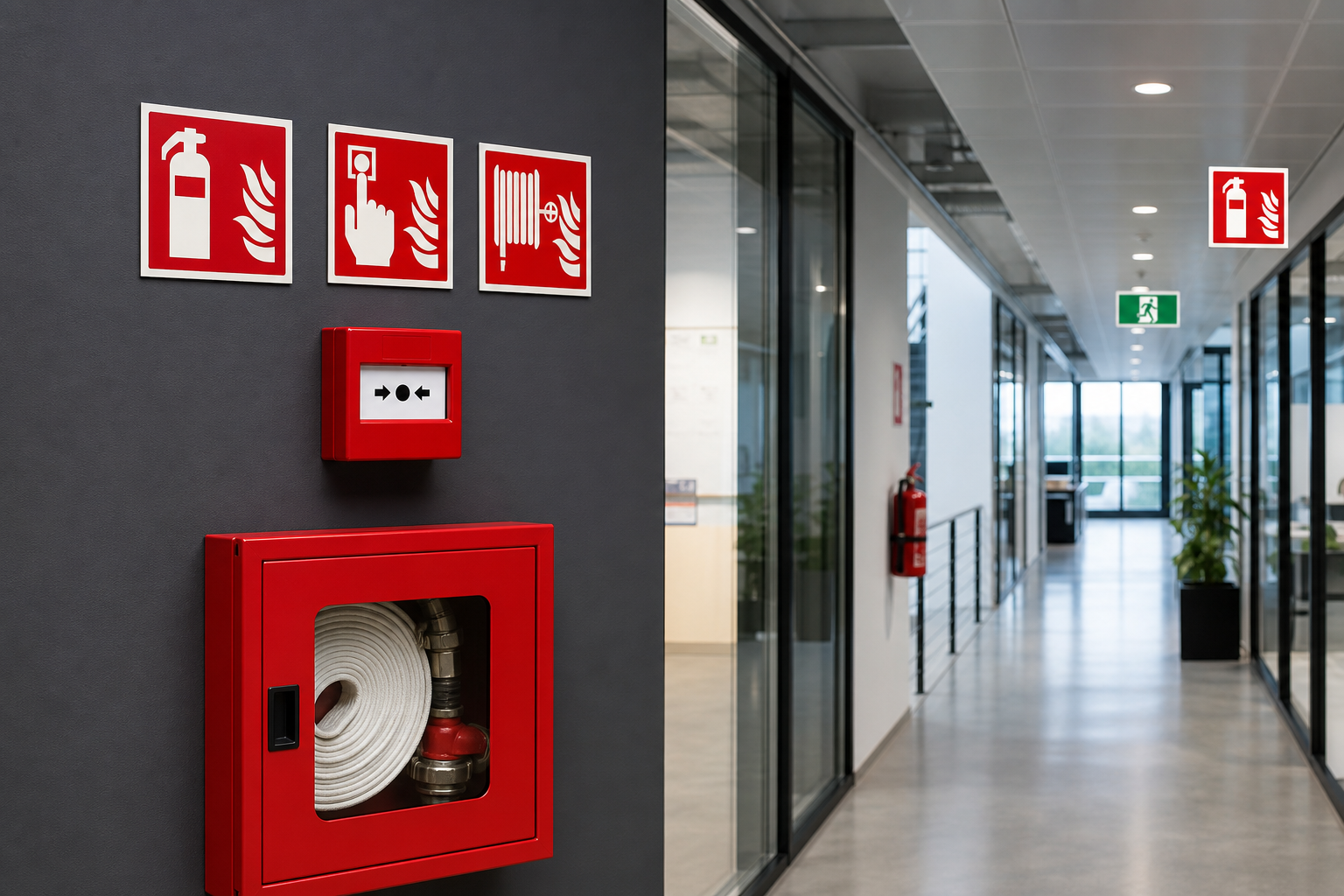
Choosing the right fire prevention signs means more than buying red rectangles. You must align symbol sets with code requirements, pick materials that resist sunlight and chemicals, place signs where target audiences can see them, and set up a procurement list that yields accurate quotes. This article compares ANSI Z535 and ISO 7010, maps common sign types to the codes you should check, and gives practical rules for materials, mounting, placement, customization, procurement, and maintenance. For product examples and templates see the VisionMarker fire signage hub.
Which standard should you use: ANSI Z535 or ISO 7010
Two symbol systems dominate commercial practice. ISO 7010 provides an international, pictogram-led set of fire equipment and emergency symbols built to be understood across languages. The ISO 7010 F-series is commonly referenced when facilities need consistent pictograms for equipment locations and emergency actions, and U.S. buyers often evaluate ISO 7010 alongside ANSI options.
What ANSI Z535 emphasizes
ANSI Z535 is a family of standards that drives the U.S. market toward color, contrast, signal words, and supplementary text to convey hazard and safety information. Facilities that prioritize conformity with U.S. workplace safety practices, or that must meet local building and fire code interpretations, will often specify ANSI-style layouts and colors to match other facility signage and procedures.
What ISO 7010 emphasizes
ISO 7010 emphasizes standardized pictograms on colored fields so that equipment, exits, and hazards read the same across borders. If you manage multi-national sites, welcome non-English speakers, or want a single pictogram set for fire equipment identification, ISO 7010 pictograms are purpose built for that use.
When to use both or a site mix
Many sites apply a hybrid approach. For exit and means-of-escape signage you may need to follow local fire and building codes, OSHA rules, or ADA guidance, while using ISO pictograms for equipment locations and ANSI layouts for instructional panels. Document the chosen standard for each sign type so auditors and authorities having jurisdiction see a consistent rationale.
Common fire prevention sign types and the code checks you must run
Start by listing the sign types you need. The most common fire prevention and emergency signs are equipment identification, means-of-escape and exit, assembly points, “No Smoking” or hot work restrictions, and wildfire prevention notices at site boundaries or trailheads. Equipment-location and escape signs are the highest priority because they directly guide action in an emergency.
Sign type to standard quick checklist
- Fire extinguisher and fire-fighting equipment: symbol-led signs that identify equipment locations, often using ISO or ANSI-style pictograms and text.
- Fire exit and means-of-escape: commonly regulated by NFPA, OSHA, local building codes, and ADA, so confirm local rules before ordering signs.
- Assembly point signs: clear pictogram and site name, placed where personnel can gather safely outside the hazard zone.
- Wildfire prevention and public education signs: placed on major access routes and approaches to high use areas after asking why the sign is needed and who it should reach.
Before you finalize orders, run these local authority checks: confirm exit sign specifications with your local building official or fire marshal, verify any NFPA requirements that apply to your occupancy type, and check whether ADA or provincial accessibility rules affect wording, height, or tactile requirements.
Materials and durability: choosing signs for outdoor and industrial conditions
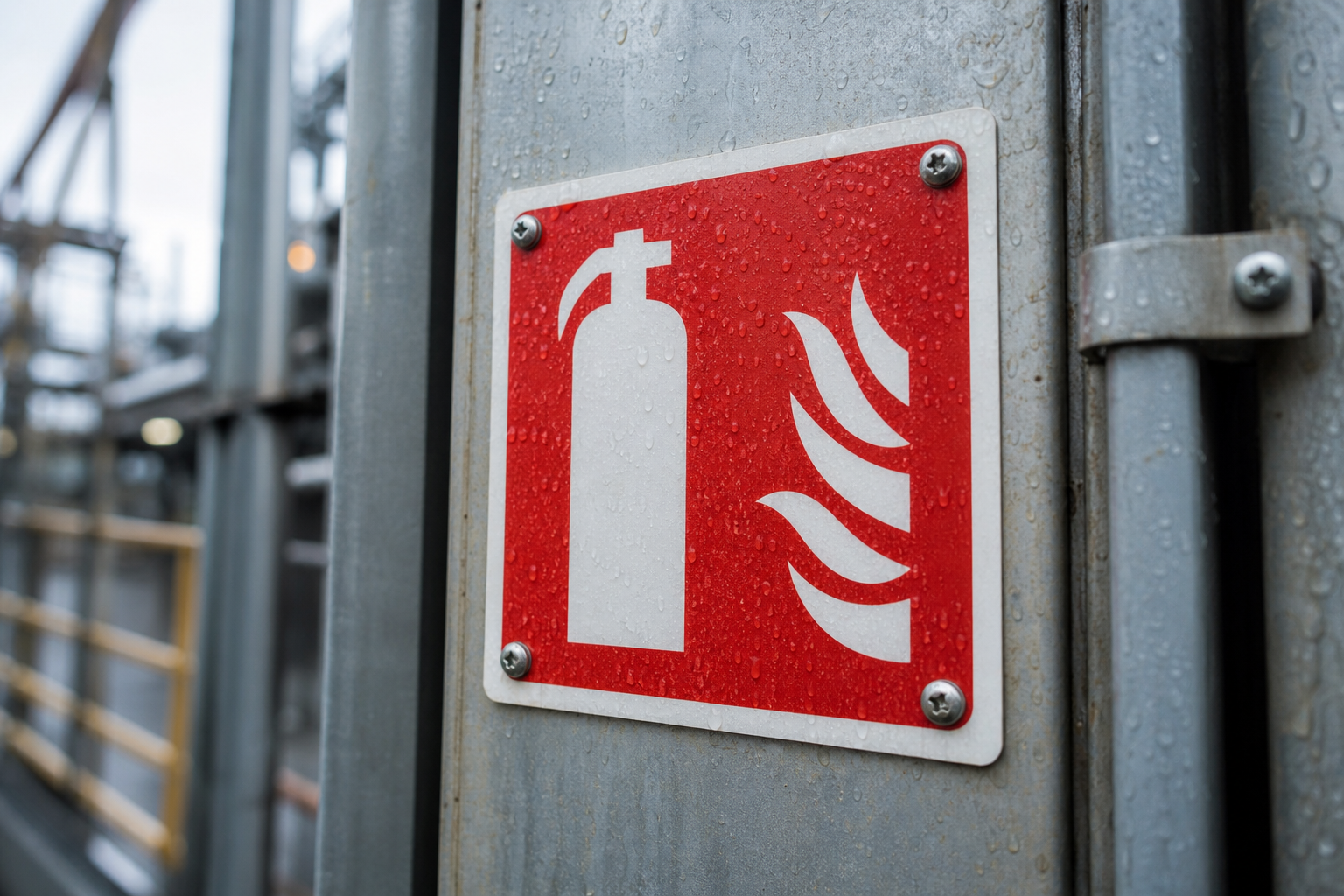
Material selection determines how long a sign stays legible. Typical options include coated aluminum for long life and rigidity, high-performance rigid plastics for impact resistance, laminated vinyl for flexible or curved surfaces, and photoluminescent substrates for low-light escape routes. Choose a substrate and coating that resist UV, moisture, and the chemicals present on your site. VisionMarker positions its products for durability in harsh environments, and many suppliers now offer weatherproof customization options that balance lifetime and cost.
Best picks by exposure level
- Sheltered indoor: satin-finish rigid plastic or aluminum with UV-stable inks.
- Unshaded outdoor: coated aluminum with fade-resistant inks, or high-performance laminated vinyl over aluminum for larger panels.
- Chemical splash or washdown areas: chemical-resistant plastic or anodized aluminum with a protective laminate.
Photoluminescent and illuminated options
Photoluminescent signs provide passive night visibility for escape routes. Where code requires illuminated exit signage or where power is available, consider LED-illuminated exit signs. For equipment location signs, photoluminescent backgrounds can help in low-light incidents, but confirm local code acceptance before relying on them for required means of egress markers.
Mounting and fixing considerations that affect longevity
Use stainless hardware in corrosive atmospheres, continuous extruded frames for large panels, and tamper-resistant fasteners where vandalism is possible. Proper mounts reduce sign vibration and fatigue that cause delamination. When you need examples of durable materials and templates, review suppliers that specialize in industrial fire protection signage.
Visibility, size, and placement best practices for high-readability
Design and placement must match the viewer, viewing distance, and the context in which the sign is read. Effective fire communication materials are highly visual, durable, and installed on well maintained mounts. Use the following practical rules adapted from fire communication guides.
A quick check: sightlines, lighting, and sight distance
- Ask who needs to see the sign, from where, and at what speed they will be moving when they see it. For example, an assembly point sign for drivers needs larger characters than a panel read by pedestrians.
- Ensure contrast and minimum text heights so the main message is readable at the intended distance. Directional arrows improve clarity where routes are not obvious.
- Confirm lighting or photoluminescent performance if visibility in darkness is necessary.
Mounting height and orientation by sign type
- Equipment location signs: mount at eye level or above the equipment so the sign is immediately adjacent to what it identifies.
- Exit route and directional panels: mount where the sign begins the line of sight for the escape path, and place arrows consistently for continuity.
- Wildfire prevention signs and public notices: place on approach routes and major access points where incoming traffic will see them before entering the protected area.
Customization and templates: keep design consistent and audit-ready
Customization is useful for site names, asset IDs, or specific instructions, but standardize the elements that affect compliance and readability. Keep symbol set, colors, minimum symbol and text sizes, and contrast rules consistent across the site. A single-template approach for each sign category reduces procurement complexity and speeds replacement.
Template elements to standardize across a facility
- Symbol set and color scheme, using either ISO pictograms or ANSI colors where required.
- Minimum symbol and text sizes tied to viewing distance.
- Material and coating choices per exposure level to reduce mixed lifetimes and frequent replacement.
Standard templates make audits easier and help maintain a consistent visual language across buildings and outdoor areas.
Procurement checklist: what to include in a quote request

To get accurate quotes, send suppliers a consolidated sign inventory and site context. Many suppliers use a quote-based pricing model, so a clear request shortens lead time and reduces questions.
Sign inventory template to send to vendors
- Location name and identifier, floor or zone, and a short map reference where relevant.
- Sign type and preferred standard or symbol set, for example ISO 7010 or ANSI Z535.
- Requested size, material preference, mounting method, and quantity per item.
- Any site-specific customization text, asset IDs, or serial numbering requirements.
Questions to ask suppliers
- Which standards do the signs comply with and can you supply certificates or templates?
- What fade and chemical resistance warranties are offered, and can you provide material data sheets?
- Are samples available and what are typical lead times for production and delivery?
Attach a site map, standard templates, and target installation dates to get faster, more accurate quotes. For practical procurement examples and product options see the VisionMarker fire signage hub.
Maintenance, inspection triggers, and replacement schedule
Plan routine inspections and document results. Communication materials remain effective only if they are legible, mounted, and reflect current site conditions. Fire communication guides recommend inspecting signs for readability, mounting integrity, and overall condition as part of your regular safety rounds.
Routine inspection checklist and frequency
- Visual check for fading, peeling, and delamination, and confirmation that wording and symbols are still legible from the required viewing distance.
- Hardware and mount checks to confirm the sign is secure and oriented correctly.
- Functional checks for illuminated or photoluminescent signs to confirm adequate output.
Replace signs immediately if legibility or reflective and photoluminescent performance is compromised, or if mounting failures present safety hazards.
Common objections, trade-offs, and how to decide
Here are realistic objections and simple decision rules.
- Objection: ANSI versus ISO confusion. Decision: confirm local code or authority having jurisdiction first, then pick the system that meets code and the needs of your audience, and document that choice for auditors.
- Objection: durable materials cost more. Decision: compare lifecycle cost. A more durable sign often reduces replacement cycles and field labor cost, which can make it the lower cost option over three to five years.
- Objection: conflicting local code interpretations. Decision: prioritize the AHJ ruling and record any requested deviations in writing.
Use a simple rubric to prioritize: compliance risk, exposure severity, visibility needs, budget, and maintenance capacity. If you want sample templates and product options to compare, review the VisionMarker fire signage hub for reference.
Frequently asked questions
How do I know whether local code requires ANSI or ISO symbols for a specific sign
Start by asking your local building official or fire marshal, because exit and means-of-escape signage is commonly regulated by NFPA, OSHA, local building codes, and ADA requirements. Use their guidance to decide whether ANSI, ISO, or a hybrid approach is required for each sign category.
What materials last longest for outdoor fire prevention signs exposed to sunlight and chemicals
Coated aluminum with UV-stable inks and a protective laminate is typically the longest lasting for unshaded outdoor use. In chemical splash areas consider chemically resistant plastics or anodized aluminum with protective coatings. Ask suppliers for material data sheets and expected outdoor lifetime estimates for your climate.
Are photoluminescent signs required for all escape routes and exits
Photoluminescent signs are useful for low-light conditions, but requirements vary by code and jurisdiction. Some codes mandate illuminated exit signage or specify photoluminescent performance levels. Confirm with your authority having jurisdiction before relying on photoluminescent signs for required means of egress.
What basic information should I send suppliers to get an accurate fire sign quote
Provide a consolidated list with location identifiers, sign type, preferred symbol set, sizes, materials, mounting method, and quantities. Attach a site map and target installation date to reduce back-and-forth and speed quotes. Use the inventory template in this article to standardize requests.
How often should I inspect fire prevention signs and what triggers immediate replacement
Inspect signs during routine safety rounds, typically quarterly or aligned with other safety inspections, and after events that could damage signs. Replace a sign immediately if text or symbols are no longer legible, if reflective or photoluminescent performance is compromised, or if mounts are unsafe.
For product options and to request a quote, visit VisionMarker or contact a specialist through the VisionMarker fire signage hub.