Canada

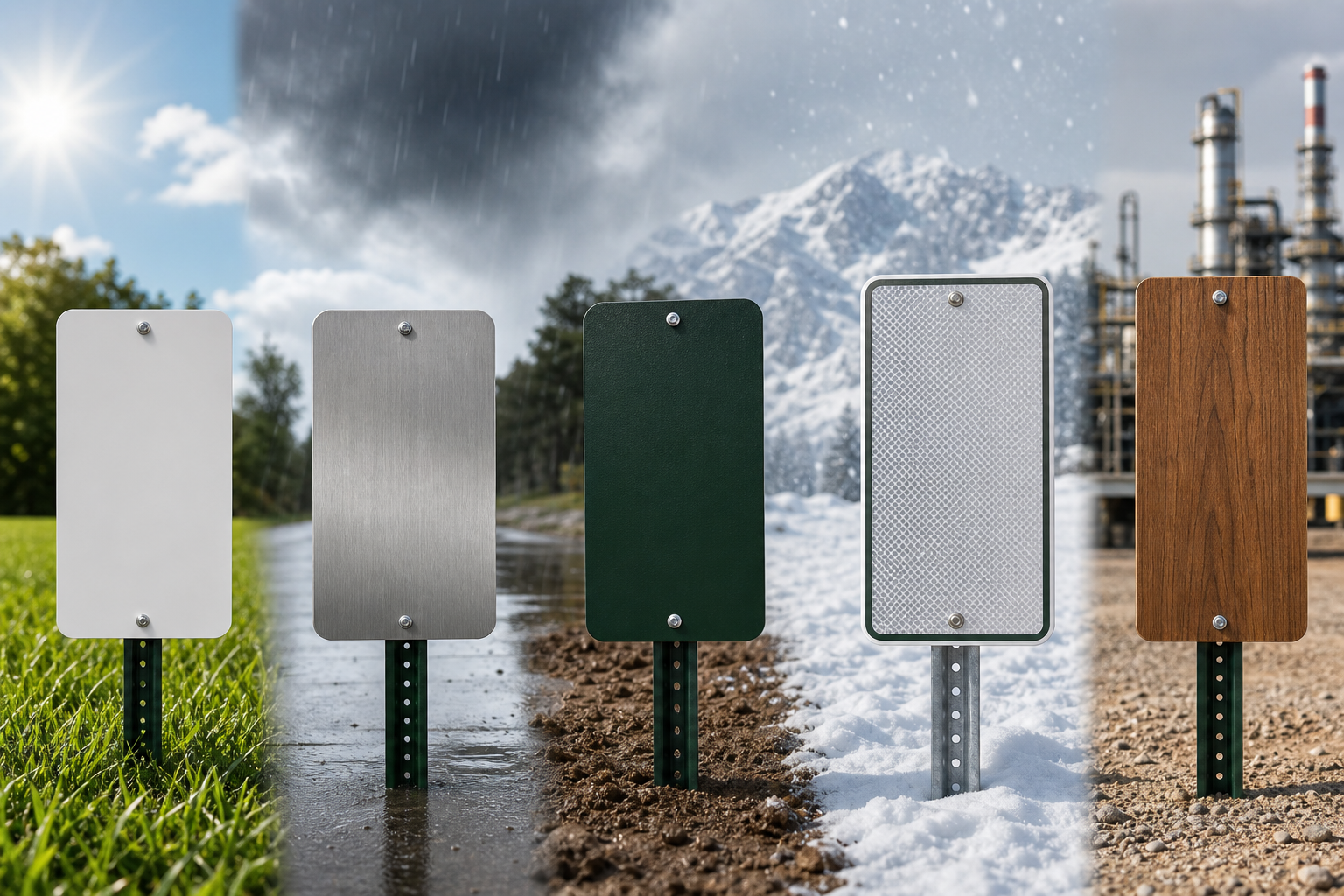
Facility managers and EHS leaders need outdoor safety sign materials that survive weather, chemicals, and abuse while keeping messages readable and standards compliant. This article compares common substrates against consistent decision criteria, explains which material fits each use case, and includes a site survey checklist you can use before requesting an ANSI or NFPA aligned quote from VisionMarker. For related first-party details, review Build a Workplace Safety Signage Program Step by Step.
Decision criteria: the attributes that determine the right outdoor safety sign material
Use the same set of attributes when comparing options. Durability covers expected service life and mechanical strength. UV resistance affects fading of inks and sheeting. Moisture and chemical resistance matter for tanks, process yards, and salt air. Vandal and impact resistance matter in public or high-traffic zones. Temperature cycling and freeze and thaw tolerance matter in extreme climates. Weight affects mounting and shipping costs. Mounting compatibility describes how the material accepts fasteners, posts, or adhesive. Maintenance includes cleaning and reapplication needs. These criteria reflect government sign guides and material recommendations from recognized suppliers, which advise matching substrate to exposure and impact risk for best life and value BradyID, SafetyBuyer.
Aluminum sheet signs: best for permanent, rust proof wayfinding and regulatory posts
Why it works. Solid aluminum sheet resists rust and handles wide temperature swings predictably, which makes it a top choice for permanent posts, roadway signs, and regulatory notices. Metal substrates do not rely on a plastic body that can absorb moisture or delaminate under freeze and thaw cycles, and they hold fasteners securely AlphaGraphics, 4OVER4.
- Pros: long term stability, rust proof, predictable thermal expansion, good for large or thin profile signs.
- Cons: higher initial cost than short term plastics, can dent under heavy impact, requires edge finishing for aesthetics.
- Mounting: bolts, U channel posts, and rivets work well. Use rubber washers where dissimilar metals meet to avoid galvanic corrosion.
- Best for: permanent wayfinding, parking and regulatory signs, posted safety orders and site rule signs.
Aluminum composite material ACM: a lightweight, rigid option for long term graphics
Why it works. ACM panels have two thin aluminum skins bonded to a polymer core. That combination gives flatness, stiffness, and lighter weight than solid metal, while offering a moisture resistant core for many exterior applications. ACM is commonly used for building mounted signage and larger panels where smooth, flat graphics are a priority HM Print & Design, Taylor.
- Pros: lightweight, easy to route and finish, excellent flatness for full color graphics.
- Cons: core exposure at cut edges can trap moisture if not sealed, not as rigid as thick aluminum in thin gauges.
- Mounting: panel mounting systems, standoffs, or framed installations work best. Edge sealing and proper backing extend service life.
- Best for: building signage, branded wayfinding, exterior graphic panels where weight matters.
Polycarbonate: the vandal resistant choice for high impact or high risk zones
Why it works. Polycarbonate is an exceptionally tough thermoplastic that resists impact and cracking. When graphics are printed subsurface or laminated under the polycarbonate face, the message is protected from abrasion and graffiti removal chemicals. For high-traffic doors, process yards, and areas prone to vandalism or rock strikes, polycarbonate preserves legibility and resists shattering better than most plastics SafetyBuyer, BradyID.
- Pros: excellent impact resistance, can be printed beneath the surface, UV stabilized options available.
- Cons: higher material and fabrication cost, can scratch if exposed to sharp abrasive cleaning chemicals.
- Mounting: mechanical fasteners with backing plates prevent stress cracking. Use protective coatings if chemical exposure is expected.
- Best for: high impact zones, safety signs on equipment enclosures, locations with frequent contact or vandal risk.
HDPE and other rigid plastics: good chemical resistance for tanks and chemical yards

Why it works. High density polyethylene and similar rigid plastics provide good chemical and moisture resistance while remaining impact tolerant. They are commonly specified where solvent, fuel, or corrosive vapor exposure is present. Government sign guidelines list HDPE and polypropylene among common routine outdoor sign materials and note they weather well, though their softness makes them easier to damage than harder plastics USBR sign guide, Taylor.
- Pros: strong chemical resistance, good for moderately exposed sites, lower cost than polycarbonate.
- Cons: softer surface may scratch and show wear from abrasive cleaning or vandalism.
- Mounting: use through bolts with backing plates to distribute load and avoid pull through on softer plastics.
- Best for: tank tags, chemical storage yard signage, utility areas, and where solvent exposure limits other choices.
Rigid PVC and corrugated plastic coroplast: when to choose short term or medium term panels
Why it works. Corrugated plastic, often called coroplast, is a cost effective, lightweight option for short term or seasonal signage such as site notices and yard signs. Rigid PVC or composite board lasts longer than coroplast and can work for a few years outdoors when printed with UV stable inks and laminated. Vendors recommend matching these materials to the desired service window, and using lamination and edge sealing to extend life 4OVER4, USBR.
- Pros: low cost, lightweight, easy to ship and install for temporary messages.
- Cons: coroplast has limited life in long term sun and wind; PVC can warp in prolonged heat without backing.
- Mounting: stakes, frames, or simple post brackets. Use UV ink and laminate for longer outdoor exposure.
- Best for: construction signs, short term directional signs, event and campaign messaging.
Adhesive decals and labels: low profile options for equipment, tanks, and curved surfaces
Why it works. Adhesive backed materials are the best option when you need a low profile marker for curved tanks, valves, panels, or pipes. Decals must be specified with adhesives compatible with the target surface and environment. Suppliers recommend adhesive labels for clean, smooth surfaces and warn that adhesion fails on porous, soiled, or extremely cold surfaces US SafetySign & Decal.
- Pros: conformable to curved surfaces, minimal profile, cost effective for high volume small markers.
- Cons: adhesion depends on surface prep, temperature, and chemical exposure; not suitable for rough or dirty substrates.
- Mounting: clean, dry surface with recommended primer when needed. Test a sample in the expected environment when chemical exposure is present.
- Best for: pipe markers, valve tags, equipment labels, and panels where a bonded label is preferred to hardware mounting.
Which material fits each common use case
Map materials to facility scenarios using the decision criteria above. For permanent wayfinding and roadside regulatory signs choose aluminum or ACM for multi year service and predictable behavior AlphaGraphics. For ASME A13.1 piping identification on exterior runs consider durable decals for curved pipes and rigid panels where posts are needed, and verify color and legend sizing against the standard at the time of purchase VisionMarker. Use polycarbonate or heavy aluminum in high impact or vandal prone zones. Specify HDPE or chemically resistant plastics for tanks and solvent exposed yards USBR. For temporary construction or event signage choose coroplast or PVC with cost and expected life in mind 4OVER4.
Cost, lifecycle, and maintenance tradeoffs to expect

Initial material cost and fabrication rates are only part of the equation. Aluminum and ACM cost more upfront but often lower maintenance and replacement frequency make them more economical over a multi year lifecycle. Coroplast and inexpensive PVC are cheaper to replace, which suits short campaigns. Polycarbonate carries higher material and fabrication cost but reduces replacement after vandal incidents. Estimate total cost of ownership by projecting replacement intervals and maintenance labor rather than purchase price alone 4OVER4, BradyID.
Installation, mounting, and reflectivity considerations
Match fasteners and mounting hardware to substrate to prevent cracking and galvanic issues. Edge sealing and proper backing extend ACM life. For reflective messages request the sheeting specification and test data from your supplier if night visibility is required. Government sign guidelines and sign vendors recommend planning fastener patterns and backing plates for plastic substrates and performing a small adhesion test for decals on chemical exposed surfaces USBR, US SafetySign & Decal.
Common objections and how to evaluate them
Aluminum is expensive. Evaluate expected life and replacement labor. If a sign must remain legible for many years, aluminum or ACM will often cost less to manage than repeated coroplast replacements. Will plastic fade or crack too fast? Choose UV stable materials and lamination, and select polycarbonate or HDPE for higher chemical and impact resistance SafetyBuyer. How do I prove compliance? Material choice does not guarantee compliance. Confirm message size, color, placement, and legend content with the relevant ANSI, NFPA, or ASME standard and ask your vendor to verify the final product against that standard VisionMarker.
Quick selection checklist and site survey questions before you request a quote
- Which standard or message is required, for example ANSI, NFPA, ASME A13.1?
- Mounting surface and condition, for example painted steel post, concrete, tank, or curved pipe.
- Full exposure profile, including direct sun, salt air, chemical vapors, and wind load.
- Expected temperature range and freeze and thaw cycles at the site.
- Vandal or impact risk, for example public access or heavy equipment corridors.
- Required reflectivity or night visibility, if any.
- Desired expected lifetime and maintenance budget.
- Approximate quantities and sign sizes to estimate total cost.
Collect these items and request a standards aligned quote from VisionMarker. VisionMarker documents and product pages indicate compliance with North American signage standards and support customized, quote based procurement for facilities in the USA and Canada USBR.
FAQ
What is the most durable material for permanent outdoor safety signs?
For permanent, multi year outdoor signage, aluminum sheet and aluminum composite material are typically the most durable choices because they resist rust and handle temperature swings predictably. For high impact areas consider polycarbonate for added vandal and impact resistance AlphaGraphics, SafetyBuyer.
When should I choose polycarbonate over aluminum for an outdoor sign?
Choose polycarbonate when impact, vandalism, or shattering risk is primary. Polycarbonate protects graphics when printed subsurface and resists cracking better than many plastics. If corrosion or pure long term dimensional stability is the main concern, aluminum may be a better fit SafetyBuyer, BradyID.
Can adhesive decals be used on chemical tanks and how long will they last outdoors?
Adhesive decals can be used on tanks if the adhesive is compatible with the tank material and with any chemical exposure. Lifespan varies with surface prep, temperature, and solvent exposure. Always request a recommended adhesive formulation and perform a field test before full deployment US SafetySign & Decal, USBR.
How does material choice affect compliance with ANSI, NFPA, or ASME A13.1 requirements?
Material choice affects durability and mounting, but compliance depends on message content, color, size, placement, and visibility, not substrate alone. Verify the finished sign against the relevant standard and ask your supplier to confirm that the product meets the standard requirements VisionMarker.
What information should I provide to a supplier when requesting a quote for outdoor safety signs?
Provide the required message and standard reference, mounting surface, full exposure conditions, temperature range, vandal risk, desired reflectivity, expected lifetime, and approximate quantities. Suppliers will use this information to recommend substrate options and finishing specs VisionMarker, USBR.
Ready to order ANSI and NFPA compliant outdoor safety signage? Contact VisionMarker to request a quote and share your site survey information.