Canada

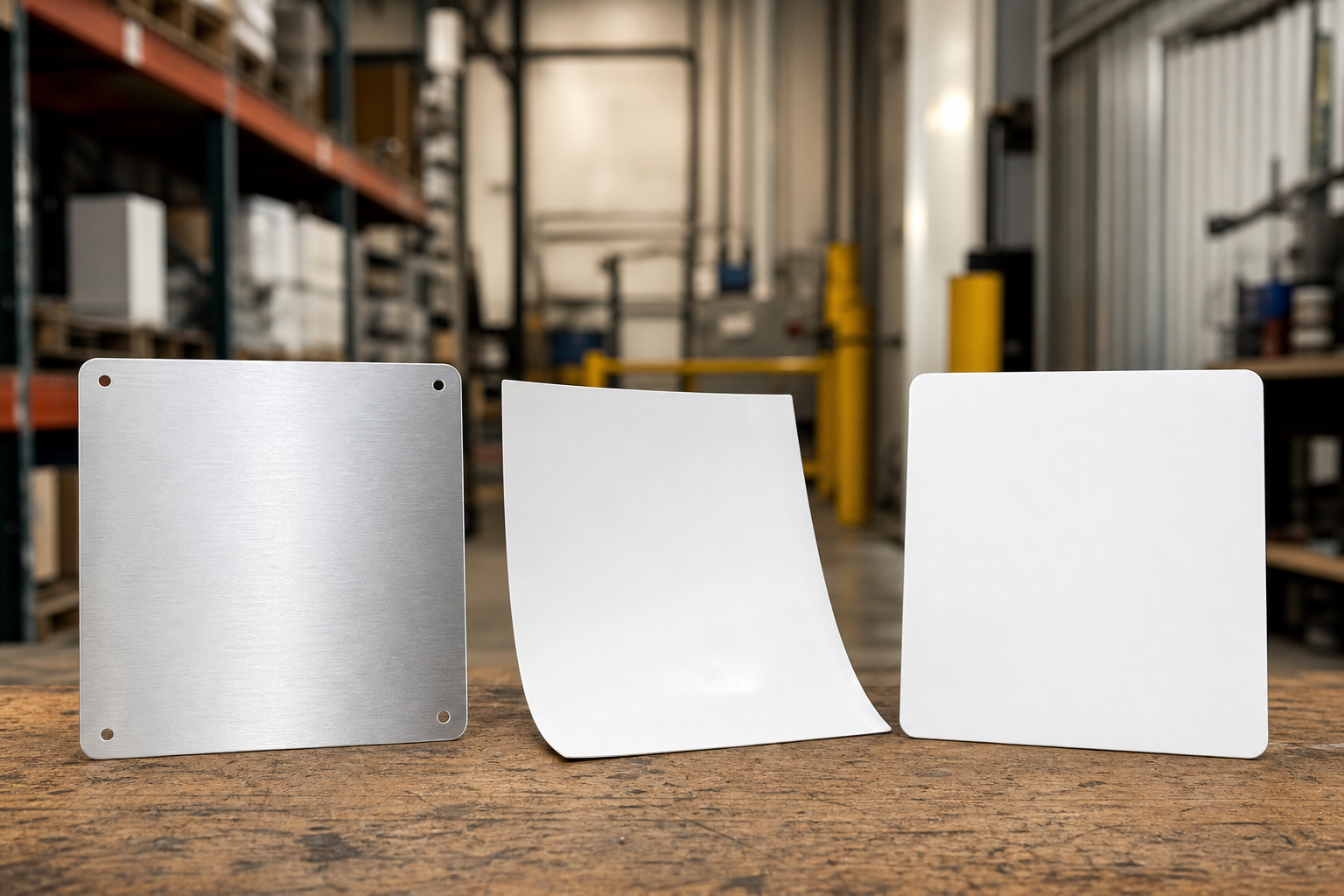
Choosing the right backing and face material for safety signs matters more than appearance. The wrong choice raises maintenance costs, reduces visibility at critical moments, and can complicate compliance with codes such as ASME A13.1 and NFPA 170. This safety sign material comparison evaluates the common options used in industrial facilities and gives clear “who this fits” guidance so you can specify the correct material for outdoor exposed, sheltered outdoor, indoor high-traffic, temporary, and high-visibility night situations. For related first-party details, review Workplace Health and Safety Signs: Make Rules Clear in.
Fast decision checklist
Start here if you need an immediate answer. Copy this checklist into a purchase request or site tag plan.
- Long-term, exposed outdoor signs: choose aluminum with appropriate retroreflective sheeting or durable finish.
- Sheltered outdoor or semi-exposed areas: rigid plastic delivers a good cost to durability balance.
- Indoor, high-traffic areas: rigid plastic or acrylic for impact resistance and easy cleaning.
- Short-term or low-cost indoor labeling: self-adhesive vinyl works where weather and heavy abrasion are not expected.
- Nighttime vehicle corridors and roadways: specify retroreflective sheeting over a rigid backing for required visibility performance, as used in traffic signage programs described by the FHWA.
- Pipe markers or fire signage tied to standards: refer to your applicable codes and include ASME A13.1, NFPA 170, or the Canadian standards when you request materials and certs.
Material profiles: what each option is and how it behaves
Aluminum
Aluminum is a rigid metal backing commonly used for long‑life outdoor signs and highway signage. It accepts retroreflective sheeting and resists warping, which makes it the leading choice where mechanical strength and consistent flatness matter. The FHWA explains how retroreflective sheeting is applied to rigid sign backings and notes aluminum as the most common durable backing for outdoor work.
Pros: excellent mechanical strength, flat surface for sheeting, corrosion-resistant grades available. Cons: higher initial cost than plastic, requires edge protection to avoid dents.
Rigid plastic (PVC, PET, or polycarbonate)
Rigid plastic refers to panels from about 1 mm to several millimeters thick used for general safety signage. Rigid plastic balances cost and durability and is available in outdoor UV-stabilized grades. It is easy to drill, mount, and replace, and it works well for indoor and sheltered outdoor locations where impact resistance and ease of installation matter.
Pros: versatile, economical, easy to install. Cons: less mechanical strength than aluminum and can creep under prolonged heat.
Self-adhesive vinyl
Self-adhesive vinyl is a flexible face material often used for decals, labels, and short-term signs. It is the most economical option and works well indoors or in sheltered outdoor locations when an outdoor-rated film and lamination are chosen. Vinyl is not as robust under constant UV, moisture, or chemical exposure unless specified as premium outdoor film.
Pros: low cost, fast application, useful for temporary or high-volume labeling. Cons: limited long-term outdoor durability unless a premium film is chosen and properly laminated.
Acrylic
Acrylic provides a premium face with a high-end finish. It is stiffer and more scratch resistant than many rigid plastics and is often chosen for interior areas where aesthetics matter. Acrylic is less common for heavy industrial outdoor use unless paired with protective treatments.
Pros: crisp finish, good indoor durability. Cons: can crack under impact and is costlier than standard rigid plastic.
Foam board
Foam board is a lightweight, low-cost substrate for temporary, indoor signage. It is intended for short-term use and controlled environments and should not be specified where moisture, humidity, or abrasion are present.
Pros: very low cost and easy to cut. Cons: poor weather and mechanical resistance.
Retroreflective sheeting and composite systems
Retroreflective sheeting is the performance layer applied to a rigid backing to return light to its source, which is necessary for nighttime visibility in vehicle corridors. The FHWA describes glass bead and microprism sheeting types that provide night visibility when mounted to rigid backings. For any application where night visibility is required, specify the appropriate class of retroreflective sheeting and a compatible rigid backing.
Side-by-side comparison by buyer criteria

Below is a consistent evaluation across the decision criteria facility buyers use: durability and mechanical strength, weather and UV resistance, visibility including night performance, compliance suitability, installation options, and cost-to-life.
- Durability and mechanical strength: Aluminum scores highest for impact resistance and long-term flatness. Rigid plastic is good for moderate impact. Acrylic is scratch resistant but brittle under strong impact. Foam board and vinyl perform worst under heavy mechanical stress.
- Weather and UV resistance: Aluminum with proper finish and outdoor-grade rigid plastics resist UV and moisture well. Vinyl requires specifying outdoor-rated film or lamination for long-term outdoor exposure. Foam board is unsuitable for wet or UV-exposed settings. For manufacturer comparisons see sign materials references.
- Visibility and night performance: For daytime visibility, high-contrast printing on any substrate is acceptable. For night-time visibility in vehicle areas, retroreflective sheeting over a rigid backing is the accepted method used for highway and facility signs, as documented by the FHWA.
- Compliance suitability: Compliance depends on sign content, location, contrast, and visibility. If a standard such as ASME A13.1 or NFPA 170 calls for retroreflectivity or specific material performance, choose materials that can be fitted with the required sheeting or finish. VisionMarker emphasizes standards alignment for piping identification and fire signage.
- Installation options: Aluminum and rigid plastic accept drilling and mechanical fasteners. Vinyl is typically applied with adhesive and is useful where drilling is not possible. Acrylic can be drilled with care but is more brittle. Consider the mounting substrate and whether adhesive, rivets, standoffs, or magnetic mounts will be used.
- Cost-to-life tradeoff: Vinyl is lowest upfront but may need replacement sooner in exposed environments. Rigid plastic gives a mid-level lifecycle cost. Aluminum is higher initial cost but often has lower replacement frequency in exposed, high-value installations.
Decision matrix summary: aluminum for exposed, high-stress, or retroreflective needs; rigid plastic for general-purpose indoor and sheltered outdoor use; self-adhesive vinyl for temporary or low-cost indoor labeling; acrylic when appearance matters indoors; foam board for very short-term indoor use.
Compliance considerations and when to consult code authorities
Materials interact with compliance requirements in three ways: text and icon legibility, color and contrast, and visibility characteristics such as retroreflectivity. If your sign will be used as a pipe marker under ASME A13.1 or as fire signage governed by NFPA 170 or NFPA-99C, document which standard applies and include that reference in the procurement spec. Request supplier documentation that shows materials meet the specified standard.
When night visibility is necessary, retroreflective sheeting must be specified and matched to the backing. The FHWA documentation on sign materials describes the role of retroreflective sheeting in achieving night visibility on rigid backings; consult the authority having jurisdiction if your facility faces roadway or vehicle access where specific reflectivity classes are required.
Checklist before you finalize material selection:
- Identify the applicable codes and standards for the sign type and location.
- Confirm required retroreflectivity or other visibility performance with your AHJ.
- Specify UV and chemical resistance if the site experiences solvent exposure or harsh cleaning agents.
- Request written material data sheets and ANSI or standards documentation from the supplier.
Installation and maintenance implications
Mounting and upkeep decisions affect total cost of ownership as much as substrate choice. Consider these practical points when specifying materials and installation methods.
- Mechanical fasteners: Aluminum and rigid plastic accept screws, rivets, and standoffs. Pre-drill to recommended diameters and use washers where vibration is present.
- Adhesives: Vinyl and some thin rigid plastics can be attached with acrylic adhesives or double-sided tapes. Use weather-rated adhesives outdoors.
- Edge protection: For thin aluminum, protect exposed edges from impact. For vinyl, ensure edges are sealed or laminated to prevent peeling in wet environments.
- Cleaning: Use mild detergent and a soft cloth for most plastics and coated aluminum. Avoid abrasive cleaners on acrylics to prevent surface scratching.
- Inspection: Schedule visual checks for peeling, fading, or mechanical loosening. Replace vinyl and foam board at the first signs of delamination in outdoor exposures.
Which material fits which facility scenario

- Long-term outdoor exposed: Aluminum with a durable finish and, when needed, retroreflective sheeting. Recommend requesting material data sheets and confirming finish with the supplier.
- Sheltered outdoor: UV-stabilized rigid plastic offers a cost effective balance. Order an outdoor-grade panel and confirm mounting type.
- Indoor high-traffic: Rigid plastic or acrylic for impact resistance and easy cleaning. Choose thicker panels or protective lamination where forklift contact is possible.
- Temporary or short-term: Self-adhesive vinyl or foam board where low cost and quick application matter. Specify easy removal adhesives to protect surfaces.
- High-visibility at night: Retroreflective sheeting applied to a rigid backing, typically aluminum, and matched to the performance class required by the site’s AHJ.
- ASME A13.1 pipe marking: Use materials that accept the required color bands, legend sizing, and optional retroreflective sheeting for utility corridors. VisionMarker offers pipe markers and piping identification solutions aligned with ASME A13.1 specifications for buyers who need compliant products.
Specification checklist and how to get a quote
Copy this checklist into your procurement or purchase order request to get an accurate quote and material recommendation.
- Sign text and symbols, including exact legend and size.
- Mounting location and substrate description, including exposure category: exposed outdoor, sheltered outdoor, indoor high-traffic, or temporary.
- Required standards references: ANSI, ASME A13.1, NFPA 170, NFPA-99C, CAN/CGSB-24.3-12, or site-specific AHJ notes.
- Night visibility requirement: retroreflective sheeting class if applicable.
- Preferred mounting method: adhesive, screws, standoffs, magnets, or rivets.
- Quantity, size, color matching needs, and any artwork files or CAD for placement proofs.
- Request material data sheets, UV and chemical resistance data, and sample swatches where required.
To request samples or a custom quote, include the checklist items above when you contact suppliers. VisionMarker lists its product categories and standards alignment on its website and can provide product-level advice when you request pricing or samples through the contact flow. Contact VisionMarker: the official website.
Frequently asked questions
Which material is best for long-term outdoor safety signs?
Aluminum is generally the best choice where long-term outdoor exposure and mechanical stability are required, particularly when you pair it with weather-resistant coatings or retroreflective sheeting for night visibility. For a summary of common sign materials and their outdoor use cases, see the sign materials comparison by Go Big Signs and the material guidance from SafetyBuyer.
Do I need retroreflective sheeting for night visibility and vehicle corridors?
Yes. When the sign must be legible to drivers at night, retroreflective sheeting applied to a rigid backing is the accepted method to achieve reliable night visibility. The Federal Highway Administration describes how sheeting material provides nighttime visibility on rigid backings.
Can self-adhesive vinyl be used outdoors and how long will it hold up?
Self-adhesive vinyl can be used outdoors when you choose an outdoor-rated film and proper lamination, but it remains a lower-cost option best suited to sheltered or short-term outdoor exposures. If durability is a priority, select outdoor-grade films or move to rigid plastic or aluminum.
How do material choices affect compliance with ASME A13.1 or NFPA 170 requirements?
Compliance depends on legibility, color, size, and in some cases visibility class, not on a single substrate. If a code requires retroreflectivity or specific mounting, select a material that accepts the required sheeting or finish. Always document the applicable standard in your procurement spec and request supplier documentation to confirm compliance capability.
How can I get material samples and a custom quote from VisionMarker?
Prepare the specification checklist above and contact VisionMarker through its website with your artwork and site details. VisionMarker provides product guidance across piping identification, poster and signs, fire protection, and labels and stickers, and can respond with samples and a quote based on your listed requirements.
Key sources and references used in this comparison include industry sign material comparisons and the Federal Highway Administration guidance on retroreflective sheeting applied to rigid backings. For practical product selections and standards alignment visit supplier product pages and request data sheets when you prepare your specification. Further reading: Go Big Signs — sign materials comparison, SafetyBuyer — choosing the right material, FHWA — sign materials.