Canada

What you need to know before choosing a marking method
Choosing the right marking method starts by matching facility needs to method strengths. Decide first on traffic load, cleaning and washdown regimes, chemical exposure, visibility needs, and how much planned downtime you can tolerate for installation or cure time. Also assign who will inspect and maintain markings and how often. Even the most durable markings require scheduled upkeep to remain effective. For related first-party details, review Hazard Markings Guide: Avoid Costly Errors in.
Use a warehouse safety checklist and periodic audits to capture those constraints. General checklists and inspection guidance can help identify hazards and maintenance items to inform your selection. See the warehouse safety checklist from ShopIBT and material handling and inspection guidance from the Texas Department of Insurance for practical resources and examples.
Tape, paint, decals, and floor signs compared
This comparison summarizes best uses, pros and cons, installation time, expected lifespan, and repairability for the four common marking approaches.
Vinyl and industrial tape
Best uses: temporary to semi-permanent aisle lines, pedestrian walkways, 5S color coding, quick retrofits, and areas where downtime must be minimal.
- Pros: Fast installation, low downtime, immediate use after placement, available in anti-slip and reflective versions, and good for 5S color schemes.
- Cons: Edges can peel in heavy forklift traffic, moisture or chemical ingress can lift adhesive, and service life is shorter than well-applied paint in very high abrasion zones.
- Installation time: Hours for large areas; adhesion depends on proper floor cleaning.
- Expected lifespan: Months to several years depending on traffic and product grade.
- Repair: Easy patching or replacement of sections.
Painted lines
Best uses: long-term aisle delineation, high-abrasion forklift lanes, and permanent layout changes where long life and abrasion resistance matter.
- Pros: High abrasion resistance when correct industrial coatings are used, lower lifecycle cost in heavy traffic, and a smooth profile that resists forklift wheel catch.
- Cons: Requires surface preparation, cure time, and possible ventilation or VOC controls; harder to change layout quickly.
- Installation time: From a day to several days depending on prep and cure times.
- Expected lifespan: Several years before significant rework in high-wear zones.
- Repair: Spot repairs or full relines; curing conditions affect adhesion.
Adhesive decals and floor signs
Best uses: localized hazard messages, equipment ID like charging stations, temporary reconfiguration, and areas needing printed legends or pictograms.
- Pros: Rapid deployment, printed messaging and symbols, available with anti-slip overlays, and cost-effective for targeted messaging.
- Cons: Durability varies widely; heavy abrasion shortens life and adhesives can fail on rough or wet floors.
- Installation time: Minutes to hours for single decals.
- Expected lifespan: Months to years depending on traffic and protective overlay.
- Repair: Replace the entire decal or overlay.
Freestanding floor signs and markers
Best uses: temporary hazards, construction zones, spill response, and visitor routing where you do not want adhesive or paint.
- Pros: No floor preparation, instantly removable, and useful in dynamic areas or during maintenance.
- Cons: Can be moved or bumped by equipment and not suitable for permanent lane delineation.
- Installation time: Immediate.
- Expected lifespan: Depends on device materials; typically long if stored properly.
- Repair: Replace the unit if damaged.
Vinyl and industrial tape: best practices
Select industrial-grade tapes such as PVC, acrylic-backed, or specialized anti-slip products for warehouse floors. Clean and degrease the floor thoroughly before application, allow proper adhesion time, and press firmly along edges to minimize lift. For aisles where forklifts make frequent turns choose tape with chamfered edges and consider applying a clear anti-slip overlay to protect printed legends. If a permanent layout is likely, use tape only as an interim solution while planning painted lines.
When in doubt about product grades and specification matching for harsh environments, consult standards-aligned product lines from experienced suppliers and test sample patches before a full rollout.
Painted lines: when paint wins

Choose industrial floor paints when the marking will be permanent and subjected to heavy abrasion. Proper surface prep is critical: remove contamination, repair cracks, and profile the concrete so coatings bond. Consider two-component epoxy or polyaspartic systems for chemical resistance and rapid return to service. Expect scheduled downtime for prep and cure; plan work in phases to avoid full shutdown. Paint is often the lowest-maintenance choice in heavy-traffic forklift aisles despite higher initial downtime.
For inspection guidance and integrating marking maintenance into your safety program, use established equipment and inspection checklists to capture failure modes and repair triggers. The Texas Department of Insurance provides practical checklists for equipment inspections and maintenance planning.
Standards, color coding, and what to check for compliance
No single federal rule prescribes floor marking colors across all facilities, but industry conventions and site-specific standards are widely used. 5S and lean programs commonly use yellow for aisleways and red for hazards, and pedestrian walkways are often green or white. Map your chosen colors to internal procedures and emergency routes. For piping and fire-related signage you may need to align with ASME A13.1 and NFPA 170 recommendations, so coordinate floor marking color choices with your signage and pipe identification plans.
Because local codes and facility policies differ, treat color schemes as a functional convention rather than a universal legal requirement and consult safety leadership or local authorities for site-specific compliance.
Which material to use by warehouse zone
- Receiving and staging: Tape for flexible temporary layouts, decals for equipment zones. Replace with paint when patterns stabilize.
- Pallet storage and racking aisles: Painted lines for long-term lane definition, tape for quick adjustments near docks.
- Forklift aisles: Industrial paint or high-grade tape with anti-slip overlay; use painted wheel paths in very high-traffic corridors.
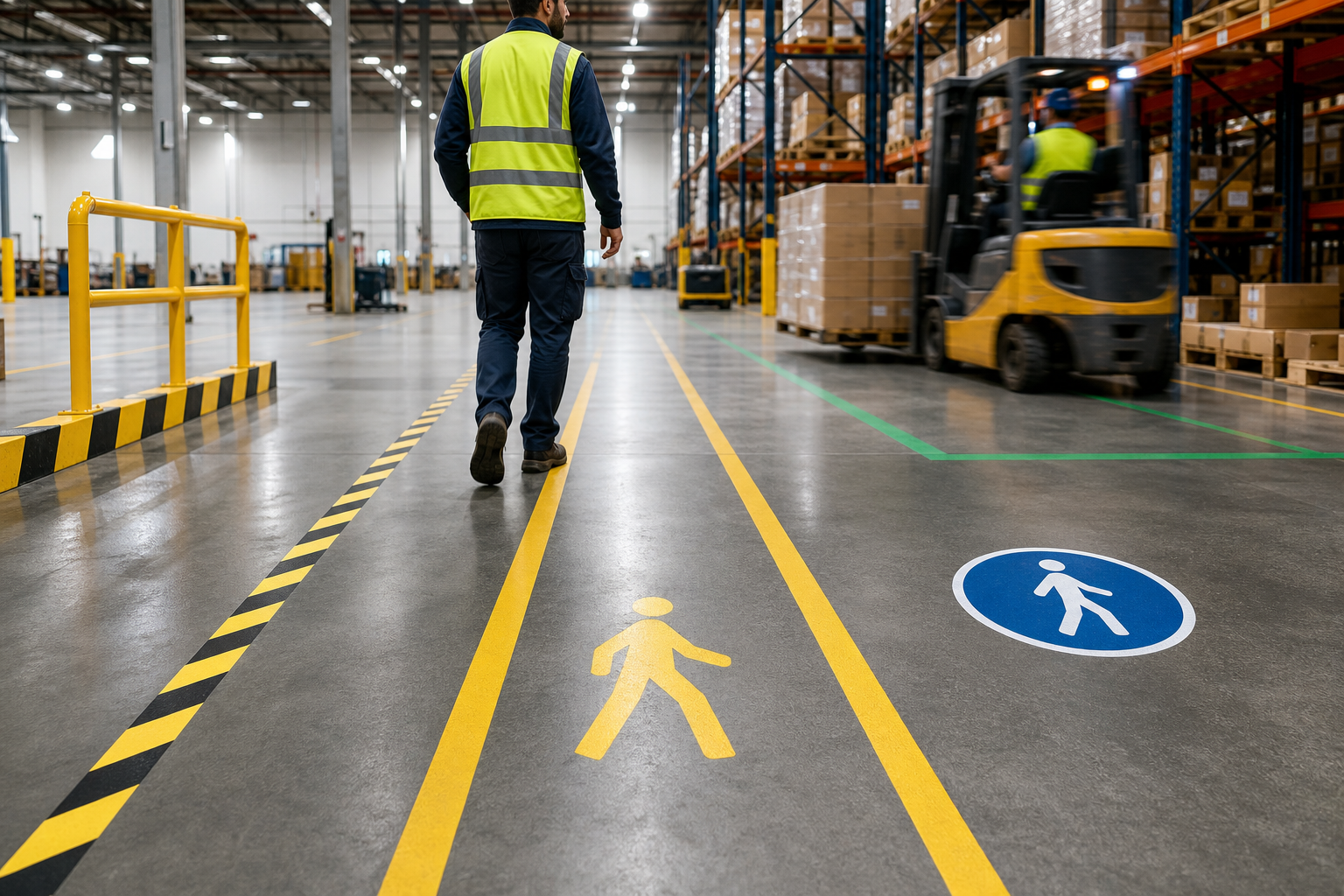
- Pedestrian walkways: Contrasting tape with protective overlay or painted walkways with clear legends to separate foot traffic from vehicle zones.
- Charging stations and battery areas: Adhesive decals with printed instructions and anti-slip coating for targeted messaging.
- Emergency egress and access to safety equipment: Permanent signs and painted demarcations to ensure long-term visibility; coordinate with fire protection signage standards as needed.
Installation, maintenance, and inspection best practices

Follow a predictable cadence for inspections: daily visual checks in active zones, weekly checks for wear and edge lift, and quarterly audits for layout accuracy and legibility. Create repair triggers such as more than 10 percent edge lift, fading below 70 percent contrast, or exposed seams that present a wheel hazard. Schedule installation in off-shifts or phased segments to reduce downtime and use quick-cure paints when possible to minimize lost productivity.
Document every repair and replacement in your safety log. Regular cleaning with manufacturer-recommended chemicals prevents adhesive breakdown and paint degradation. Include floor marking condition on equipment inspection forms so maintenance teams act proactively. Refer to established safety checklists to prioritize repairs and capture inspection items.
Cost drivers, lifecycle comparisons, and a decision matrix
Total cost of ownership depends on material cost, installation labor, downtime, repair frequency, and safety risk from degraded markings. Use this quick decision matrix to choose a method:
- If downtime is the binding constraint and you need immediate results: choose industrial tape or decals.
- If long-term abrasion resistance and minimal maintenance matter most: choose industrial paint or epoxy coatings.
- If you need printed messaging in specific spots: use decals with anti-slip overlays.
- If layout will change often or the area is temporary: use tape or freestanding signs.
When multiple zones require different solutions, mix methods and standardize color and legend across the site to avoid confusion. For multi-zone rollouts or specialty materials, request a custom quote to compare lifecycle costs and warranty coverage from suppliers such as VisionMarker.
Project planning checklist and on-site audit template
Quick six-step rollout timeline for a mid-size warehouse:
- Assemble stakeholders: EHS, operations, maintenance, procurement, and site leadership.
- Audit current markings with a short template: zone, material, condition, visibility score, and repair action.
- Define colors and legends mapped to procedures and emergency routes.
- Select materials per zone and obtain sample patches to validate adhesion and wear resistance.
- Schedule phased installation during low-activity windows; communicate temporary restrictions to staff.
- Document inspection cadence, assign ownership, and plan budget for periodic refreshes.
Use inspection templates from established safety resources to identify equipment and floor hazards during audits and to prioritize repairs.
When to request a custom quote from VisionMarker
Request a custom quote when any of these apply: you plan a multi-zone standardized rollout, you require specialty anti-slip or chemical-resistant materials for washdown areas, or you need an ANSI or NFPA-compliant signage package integrated with pipe markers and floor markings. VisionMarker can provide standards-aligned products and quote support for combined signage and marking programs. Start at VisionMarker to request assistance and samples.
Frequently asked questions
How do I choose between floor tape and paint for high-traffic forklift aisles?
Use paint or industrial epoxy for the most durable option in heavy forklift corridors. Tape can work short term or where layout flexibility is required, but expect more frequent replacement under constant wheel impact. If downtime is the limiting factor, install tape temporarily and schedule painted lines during planned maintenance.
What inspection schedule keeps warehouse markings effective and compliant?
Perform daily visual checks in active zones, weekly checks for edge lift or fading, and quarterly audits that score visibility and condition. Record findings and act on predefined repair triggers to prevent hazards. Use standard checklists to capture inspection items and prioritize work.
Are there color schemes I must follow to meet OSHA or ANSI guidance?
No single OSHA mandate prescribes a universal floor color scheme. Use consistent color conventions that match your procedures and emergency plans, and consult site-specific regulations for fire and piping identification where ASME A13.1 or NFPA 170 may apply. For compliant signage and product choices, work with suppliers that document standards alignment.
How much downtime should I plan for when repainting or relining aisles?
Expect at least one shift for surface prep and painting for moderate runs, and longer if extensive repairs or full curing is required. Fast-curing systems reduce downtime but may increase material cost. Phase work so most operations continue while a section cures.
When is it worth ordering a custom marking solution instead of off-the-shelf tape or decals?
Order custom solutions when you need integrated signage packages for compliance, specialty anti-slip films for washdown or chemical exposure, large multi-zone consistency, or printed legends unique to your procedures. A custom quote lets you compare lifecycle cost and warranty options.
Key takeaway: match method to zone, plan inspections, and budget for lifecycle costs rather than only upfront price.
Request a custom quote from VisionMarker to validate materials, request samples, and compare lifecycle cost for your warehouse marking project.