Canada

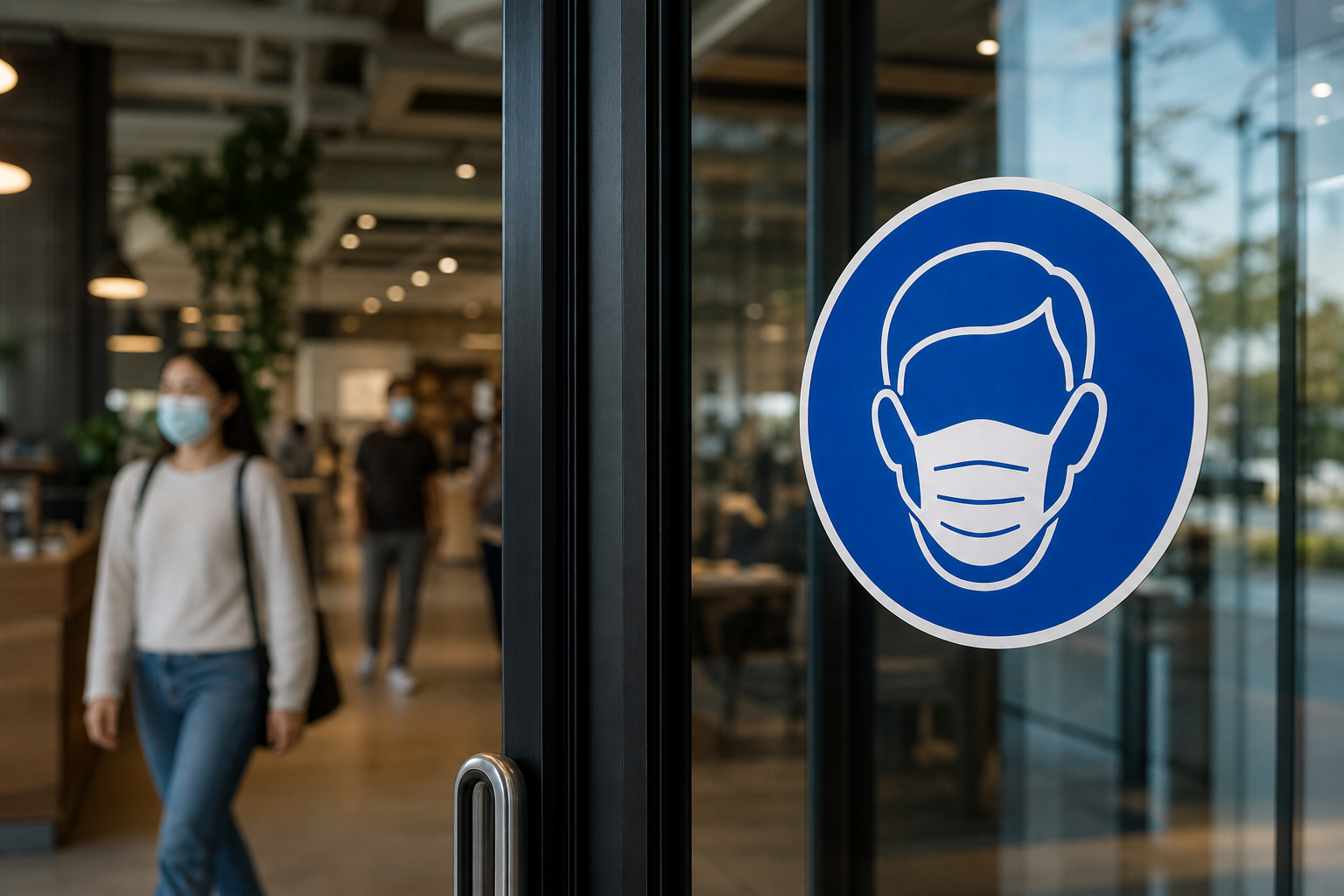
What a face mask required sign is
A face mask required sign is a short, visible notice that tells people entering a space that a face covering must be worn. These signs usually pair a clear mask pictogram with concise text such as “Face mask required” or “Mask required beyond this point.” The visual cue speeds comprehension, reduces language barriers, and helps employees and visitors immediately understand expectations.
Common wording and symbols
Keep wording brief and direct. Common examples are “Face mask required,” “Masks must be worn at all times,” and “Please wear a face covering inside.” A mask pictogram or universal symbol improves recognition in multi language or noisy settings. If a site intends to enforce the rule, add a short enforcement line such as “No entry without face covering” or “Staff will refuse service if not masked.” Avoid dense paragraphs on the face of a sign; use additional signage or handouts for detailed policy and accommodation procedures.
Sign intent: policy notice versus legal order
Signs can communicate either an internal policy or a legal mandate. A policy notice states what the business expects of customers and staff. A legal order denotes a mandate issued by a government authority. Because mask rules vary by locality and over time, managers should be careful not to imply a universal legal requirement when the sign represents a company policy or a temporary local order.
When organizations should post face mask required signs
Post face mask required signs when one or more of the following apply: a local, state, or provincial mask order is active; your organization adopts a mask policy for infection control or operational safety; you operate in healthcare, long term care, or clinical settings; you manage public transit or high density waiting areas; or you run a temporary event where sustained close contact is likely.
The Centers for Disease Control and Prevention notes that people may choose to mask at any time and recommends masks in certain settings, while local authorities may impose mandates in others. Because of that distinction, check current local public health guidance before relying on signage to represent a legal requirement CDC guidance on mask use.
Legal limits and ADA accommodation considerations
Businesses often implement mask requirements for workplace health and safety, but enforcement depends on jurisdiction and sector rules. Before presenting signage as evidence of a legal mandate, verify any applicable local or state orders. The CDC guidance linked above clarifies the difference between recommendations and orders.
Can a business require masks?
In many jurisdictions a private business may require masks on its premises, subject to local laws and sector specific rules. The scope of enforcement varies, and managers should confirm whether a posted sign reflects a legally enforceable order or an internal policy.
Handling accommodation requests
The Americans with Disabilities Act may require reasonable accommodations for people who cannot wear masks because of disability. Treat such statements as accommodation requests, not automatic denials. Implement a documented intake process, offer alternative service options where feasible, and consult legal counsel for recurring or complex cases. The Texas State Law Library provides a practical overview of how businesses should approach mask policies and ADA obligations Texas State Law Library guidance. Record requests and the offered accommodations to demonstrate a consistent process.
Placement, visibility, and wording best practices

Effective placement and consistent wording make signs useful. Use the same pictogram and short text throughout the facility so people see one clear instruction at every decision point.
High-impact locations
- Main public entrances and vestibules so people see the requirement before entering the space
- Reception counters and check-in desks where interactions begin
- Elevators, stairwells, and narrow corridors that concentrate people
- Production floors, break rooms, locker rooms, and other staff congregation areas
- Loading docks, vendor entrances, and transport hubs where outside visitors enter working zones
Wording templates
Select wording that matches your intent and enforcement plan. Examples below are templates to adapt to your policy and legal review:
- Retail or reception — “Face masks required beyond this point. Please put on a face covering before entry.”
- Industrial or production floor — “Face masks required on the production floor. All personnel must wear approved face coverings while present.”
- Clinical or health setting — “Face coverings required in this facility. Please wear a mask to protect patients and staff.”
If you allow exceptions, add a short line consistent with your accommodation policy such as “Exceptions permitted for documented medical conditions. Ask staff for assistance.” Ensure staff know how to respond and who to contact for accommodation evaluation.
Materials and durability: choosing signs for industrial settings
Match sign materials to the environment and maintenance routines. Common choices include:
- Rigid plastic or acrylic — cost effective for indoor use and simple wipe-down cleaning.
- Aluminum — strong, corrosion resistant, and suitable for exposed outdoor sites or wash-down areas.
- Weatherproof vinyl — flexible for temporary sites, reusable when mounted on backing, and suitable for outdoor use when UV stable.
- Laminated prints — extra surface protection for frequent cleaning and disinfecting.
- Adhesive-backed labels — good for curved pipes, doors, or irregular surfaces where permanent attachment is required.
When specifying materials, consider expected lifespan, sun exposure, cleaning frequency, and contact with solvents or sanitizers. Ask suppliers for UV stability and chemical resistance ratings if the sign will be outdoors or subject to heavy cleaning. VisionMarker offers ANSI aligned and weatherproof options built for UV, moisture, and chemical resistance suitable for industrial and outdoor placements VisionMarker signage and materials. For an off the shelf option see the durable “caution face mask required” sign and request a quote for custom sizes or materials caution face mask required.
Operational approaches and enforcement steps
Signage should be part of a broader operational plan that includes staff training, communication templates, and alternatives for customers or employees who cannot wear masks. A simple, documented enforcement workflow reduces conflict and keeps responses consistent.
- Post clear signage at entry points and check-in counters.
- Train staff to offer a polite reminder and an option such as a disposable mask or alternative service (curbside, appointment off hours).
- If a person claims an exemption, follow the accommodation intake process and offer reasonable alternatives.
- Document incidents that require escalation and involve management or security only when safety is at risk.
Where enforcement may intersect with labor agreements or union rules, involve human resources and legal counsel before applying disciplinary measures. Signage alone rarely ensures compliance; pair it with clear policies, staff support, and operational options.
Common objections and how to respond

Managers frequently encounter objections. Anticipate these and provide short, consistent responses that focus on safety and service.
- Customer refuses to wear a mask — Offer alternatives such as curbside service, scheduled appointments, or online ordering. Calmly point to the posted sign and policy, and explain the safety reason.
- Claimed disability exemption — Treat as a request for accommodation. Offer alternative service or a private interaction, and document the interaction per your policy.
- Perceived overreach — Explain the business rationale, cite any local health guidance or internal safety policies, and escalate to management when needed.
Maintain a courteous tone, de-escalation training, and a documented process so staff feel supported when enforcing the policy.
Where to get compliant, durable face mask required signs
Buyers can choose stock signs, custom prints, adhesive labels, or mixes depending on facility needs. For industrial sites prioritize materials with UV and chemical resistance and ask suppliers about standards alignment. VisionMarker supplies stock and custom signage options, emphasizes ANSI certification and multi standard compliance, and offers weatherproof materials designed for outdoor exposure and industrial cleaning. See the stock “caution face mask required” sign or contact VisionMarker for a quote and custom sizing caution face mask required and VisionMarker.
Local verification reminder
Mask rules change and differ by city, county, state, and province. Before posting signs that assert a legal mandate verify current local orders and public health guidance. The CDC explains the distinction between recommendations and local requirements, and resources such as the Texas State Law Library discuss how businesses should approach policy and ADA implications. Consult local public health officials or legal counsel before relying on signs as your only enforcement tool CDC guidance on mask use Texas State Law Library guidance.
Frequently asked questions
Can a business require customers or employees to wear a face mask?
Yes. Many private businesses adopt mask policies for safety, but the ability to enforce those policies depends on local laws and sector specific rules. Verify current jurisdictional orders before representing a sign as evidence of a legal mandate. See the CDC guidance for the difference between recommendations and orders CDC guidance on mask use.
How should I handle a customer or employee who says they are exempt for disability reasons?
Treat the statement as a request for reasonable accommodation under the ADA. Follow your documented intake process, offer alternative service arrangements where possible, and consult legal counsel for complex situations. Keep a record of the interaction and any accommodations you provide. The Texas State Law Library offers a practical overview of business mask policies and ADA considerations Texas State Law Library guidance.
Where should I place face mask required signs for maximum effectiveness?
Place signs at main entrances, reception areas, elevators, loading docks, and other high traffic zones where people decide whether to enter. Use consistent pictograms and wording and provide an accommodation contact line if exceptions are permitted.
Are face mask required signs legally enforceable on their own?
No. A sign states a policy or notice, but enforceability depends on the underlying legal authority such as a local order or employer rule. Maintain written policies and consult local rules to support any enforcement action.
What material should I choose for a face mask required sign used outdoors?
For outdoor placement choose weatherproof substrates such as aluminum or UV stable vinyl with lamination for added protection. Ask suppliers for UV and moisture durability information and compatibility with your cleaning agents. VisionMarker lists weatherproof and ANSI aligned options suitable for outdoor placement caution face mask required and on its main site VisionMarker.
Contact VisionMarker to request a quote or to order a durable, standards aligned “caution: face mask required” sign for your facility.