Canada

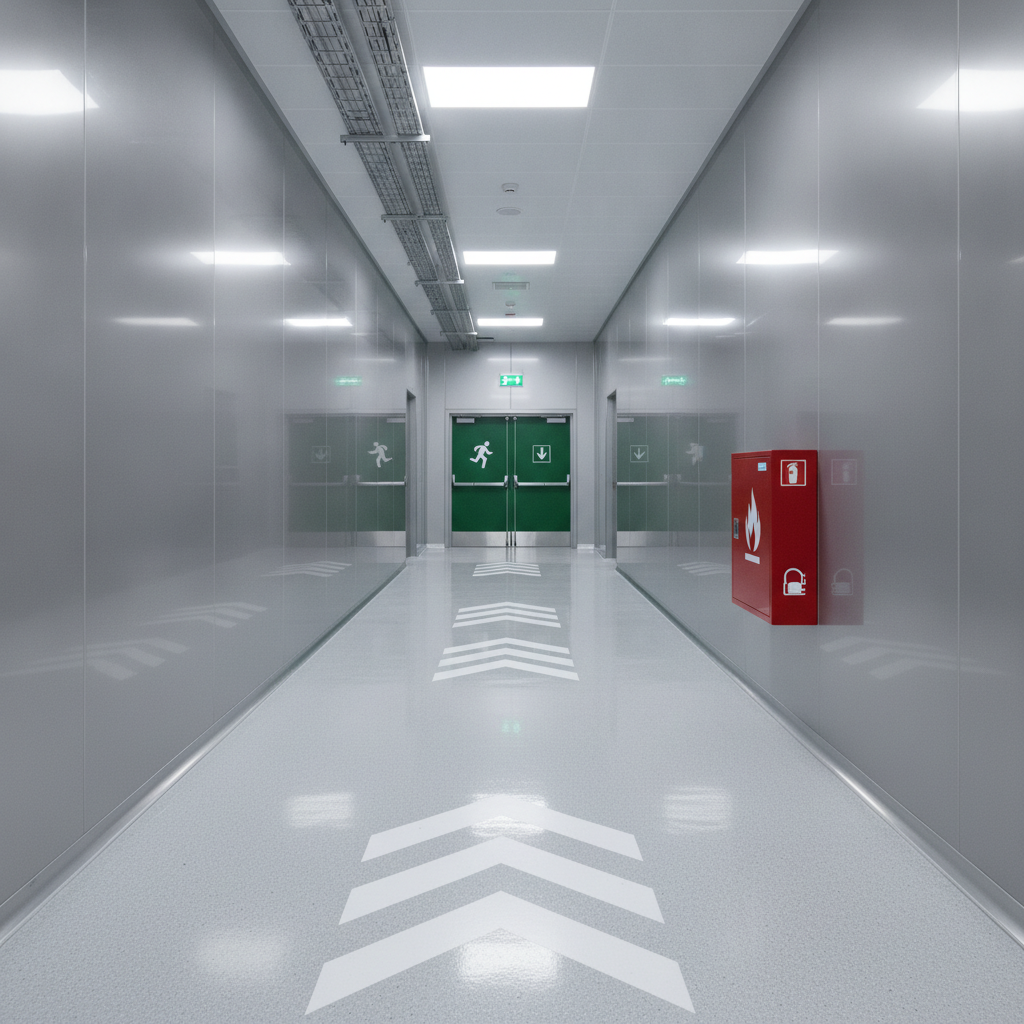
NFPA 170 signs are the visual standard for fire safety and emergency symbols. They present exits, fire equipment, alarms, and prohibited actions without words, so people act fast even in smoke or noise. For facility and EHS leaders, consistent NFPA 170 symbol use prevents hesitation, tightens drills, and strengthens audit evidence.
By VisionMarker • Last updated: 2026-07-10
| In business since | 1983 |
|---|---|
| Service area | USA and Canada |
| Core categories | Pipe Markers; Signs; Labels & Stickers; Fire Protection |
| Standards focus | NFPA 170, ASME A13.1, NFPA‑99C, CGA C‑9‑2002, CAN/CGSB‑24.3‑12 |
| Durability | Engineered for UV, moisture, and chemical exposure |
| Sales model | Quote‑based via website (contact for pricing) |
Overview
This guide translates NFPA 170’s symbol rules into practical choices: which symbols you need, where they go, how big they should be, and what materials survive real conditions. We also show how to align symbols with ASME A13.1 pipe markers, so responders can both find equipment and understand connected systems.
VisionMarker supports USA facilities with standards‑driven fire safety products and a deep catalog of fire and safety signs. Our team helps build sign schedules that stand up to inspections and day‑to‑day abuse.
What Are NFPA 170 Signs and Why They Matter
NFPA 170 defines a shared, text‑free symbol language for fire safety and emergencies. These pictograms make exits and critical equipment unmistakable, minimizing hesitation in drills and real events. The result: faster egress, fewer missteps, and smoother inspections across multilingual teams.
Our stance, after decades in the field: if you only fix one thing this quarter, fix your egress symbols. The running‑person icon with consistent arrows delivers the single highest ROI in reduced confusion. Everything else works better once people can orient themselves instantly.
For the standard itself and its scope, see NFPA’s code directory. For code‑integrated symbol references used by many jurisdictions, consult the 2021 Fire Safety and Emergency Symbols Code on UpCodes. For visual examples of symbol sets in the market, review the NFPA 170 symbol catalog from an established industry publisher.
Key Symbol Categories Defined by NFPA 170
NFPA 170 groups symbols into practical families: egress/direction, fire equipment, water supply, alarms/communications, actions, and prohibitions. Inventory by family. It prevents gaps, simplifies training, and eases multi‑site procurement because you buy complete kits instead of piecemeal icons.
- Egress & direction: running‑person, arrows, stairs, areas of refuge.
- Fire equipment: extinguishers, hose reels/cabinets, fire blankets, FDCs.
- Water supply: hydrants, standpipes, valves, sprinkler risers.
- Alarms & comms: manual pull, alarm bell, annunciator, emergency phone.
- Actions: break glass, assembly points, no‑elevator‑during‑fire.
- Prohibitions: no open flame, no smoking, restricted entry.
Practical tip from our installers: standardize arrow orientation building‑wide. Mixed arrow conventions are the fastest way to create doubt in a smoky corridor.
Where NFPA 170 Signs Must Be Posted: Facility Placement Rules
Place symbols where choices are made: at decision points along egress routes, at every turn, above or beside fire equipment, and at alarm points. Repeat often enough that a first‑time visitor can navigate without asking for help, even if visibility is compromised.
- Decision points: running‑person plus arrow before each turn; don’t wait for the final door.
- Equipment: mount extinguisher and hose symbols so they’re visible from approach angles, not hidden behind doors or racks.
- Vertical movement: pair do‑not‑use‑elevator with stair symbols at elevator lobbies and on every level.
- Alarm points: symbol at eye level by pull stations; keep 36 in. clear of seasonal inventory.
- Protected rooms: add prohibition/restriction symbols to pump, riser, or electrical rooms.
In our audits, the most common miss is under‑signing stairwells and over‑signing equipment rooms. People need wayfinding more than a second extinguisher icon in the same bay.
How to Choose Compliant NFPA 170 Signs: Material, Size, and Color Requirements
Pick substrates for your worst conditions, size symbols for real viewing distances, and ensure high contrast. Our field rules: 1 inch of symbol height per 25 ft of viewing distance, centerlines around 54–66 in., and reflective or photoluminescent options where emergency lighting is limited.
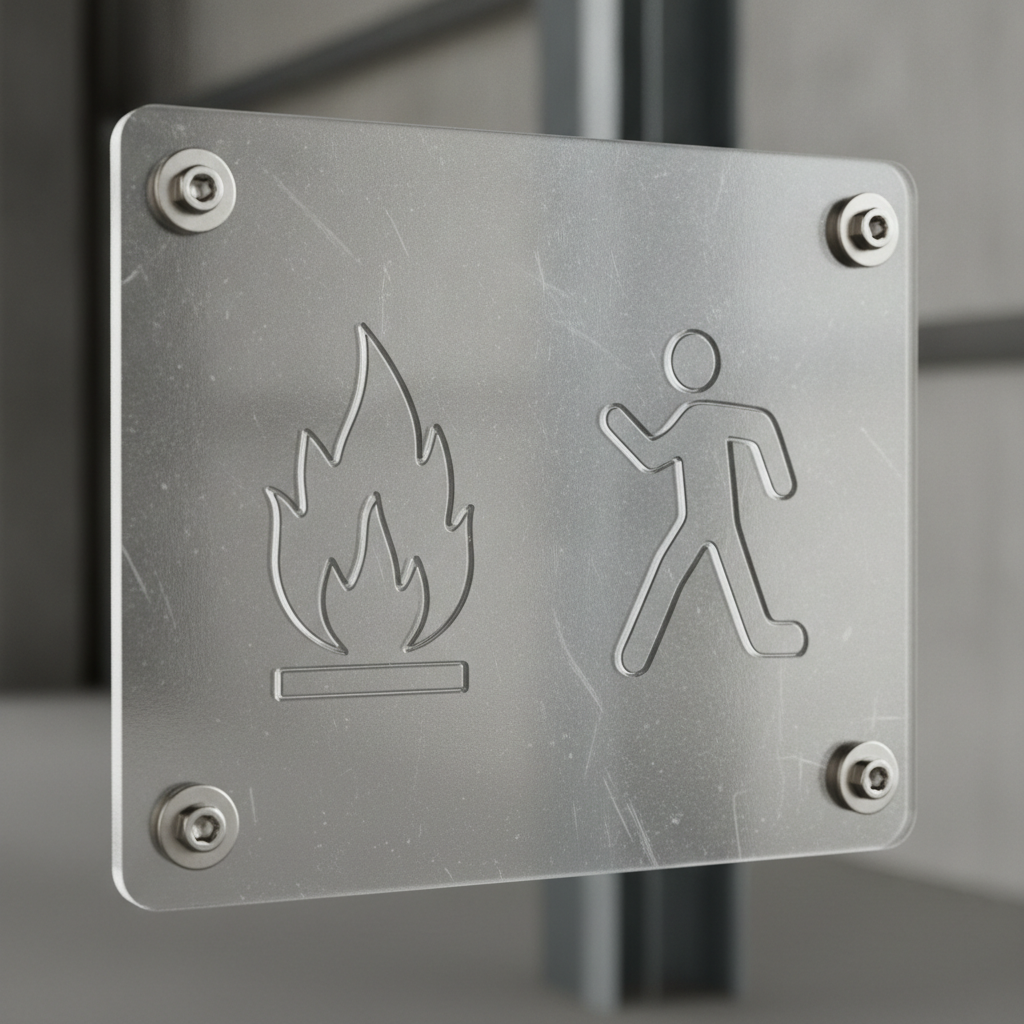
- Material selection: polycarbonate or aluminum with protective coatings for UV/moisture/chemical exposure; abrasion‑resistant finishes in high‑traffic zones.
- Sizing heuristic: target 1 in. symbol height per 25 ft viewing distance (our internal standard). In long bays (100–125 ft), we favor 4–5 in. symbols and repetition.
- Mounting height: keep symbol centerlines broadly between 54–66 in. for visibility over carts and rails; align building‑wide.
- Contrast: crisp symbol edges and clear negative space; avoid visual noise behind the sign.
- Low‑light performance: reflective or photoluminescent features help when egress lighting is marginal.
- Documentation: maintain a sign schedule with photos and locations; it halves replacement time during audits.
| Decision input | Check | Field advice |
|---|---|---|
| Environment | UV, wash‑downs, chemicals | Choose substrates/adhesives for the harshest spot on the route |
| Sightlines | Longest viewing distance | Mock with paper sizes before ordering; adjust symbol height |
| Lighting | Emergency vs. normal | Add reflective/glow where emergency lighting is weak |
| Impact risk | Carts, forks, doors | Use rounded corners and tougher finishes near traffic |
For broader safety communication conventions, our OSHA warning signs guide shows how ANSI/OSHA headers complement symbol‑only messages without diluting clarity.
NFPA 170 and Pipe Identification: Where the Standards Overlap
NFPA 170 symbols tell people where to go and what to use; ASME A13.1 markers tell them what flows where. Align both so responders can locate equipment quickly and verify system contents and direction without guessing during an alarm.
On mechanical floors and riser rooms, we pair symbol wayfinding with clear pipe ID. Our teams regularly install directional ARROW TAPE (AT) series—e.g., 388‑AT‑A16, 388‑AT‑B08, 388‑AT‑B13—and media markers like Chilled Water Supply RM 989 E, Chilled Water Return RM 989 E, Domestic Hot Water RM 989 E, Natural Gaz RM 989 E, Water RM 989 E, and Hot Water Supply RM 989 E. The combination removes ambiguity in the minutes that matter.

We’ve found bundling symbol and marker orders reduces installer trips and prevents mismatched directions. For related equipment planning, see our curated fire safety products and practical safety symbols overview.
Sourcing NFPA 170‑Compliant Signs: What to Look for in a Supplier
The right supplier proves standards alignment, engineers materials for harsh conditions, and supports layouts, schedules, and fast reorders. Ask for multi‑site templates and symbol families so maintenance can hang complete routes in one pass, not chase missing icons later.
- Standards alignment: NFPA 170 symbol accuracy plus cross‑compatibility with ASME A13.1 pipe ID.
- Material engineering: UV/moisture/chemical resistance and reflective or photoluminescent options.
- Catalog depth: Fire Protection signage, Pipe Markers, Labels & Stickers, and Posters & Signs together.
- Documentation: help with sign schedules, proofs, and photo logs—crucial before inspections.
- Turnaround: predictable lead times; VisionMarker has emphasized quick response since 1983.
- Custom quotes: leverage Custom Quote Requests for bundled symbol + pipe ID kits tailored to your routes.
Layout check offer: Share a floor plan snapshot; we’ll flag missing decision‑point symbols and pipe marker gaps fast. Start at visionmarker.com.
Common Compliance Mistakes Facility Managers Make
Most failures stem from under‑signed routes, undersized symbols, edition mismatches, and neglected pipe ID. Standardize arrows, size for distance, confirm you’re using a consistent NFPA 170 edition, and audit sightlines monthly. These four moves prevent the majority of citations we see.
- Only marking the door: no symbols at turns creates last‑second confusion.
- Undersized icons: a 2 in. symbol in a 120 ft bay won’t carry—go larger and repeat.
- Edition mismatch: mixing symbol editions across sites confuses training and inspectors.
- Blocked views: inventory and banners drift into sightlines; add symbols above racking where needed.
- Unaligned pipe ID: missing or backward arrow tape undermines emergency actions.
- No upkeep plan: faded or damaged signs linger; add them to monthly PMs.
Use our practical checklist in the fire safety signs guide and keep a living sign schedule for each building.
Frequently Asked Questions
Does NFPA 170 require English text alongside symbols?
No. NFPA 170 standardizes pictograms so they work without words. Many facilities add brief English headers to aid training, but the core goal is instant recognition—especially helpful for multilingual teams and noisy environments.
How big should NFPA 170 symbols be?
We size to real sightlines. As a field rule, we target about 1 inch of symbol height per 25 feet of viewing distance and repeat symbols in long corridors or bays. Mock with paper, stand at the farthest point, and confirm readability before ordering.
How often should we audit our NFPA 170 signage?
Do a quick monthly walk and a quarterly deep check with maintenance. Look for blocked symbols, damaged plates, new equipment without icons, and mismatched pipe markers. Update your sign schedule with photos as items are resolved.
How do NFPA 170 symbols relate to OSHA/ANSI headers?
They complement each other. NFPA 170 covers the pictograms for egress and fire‑related actions. ANSI/OSHA headers communicate hazard severity and instructions. Many facilities use symbol‑only egress markers and ANSI‑style headers on equipment or procedural signs nearby.
Key Takeaways
- NFPA 170 signs provide a shared, text‑free language that speeds decisions during alarms.
- Post symbols at decision points and size for actual viewing distances; standardize arrows.
- Choose substrates for your harshest conditions and document a sign schedule with photos.
- Align symbol routes with ASME A13.1 pipe markers to remove ambiguity for responders.
- Bundle symbol and marker orders via Custom Quote Requests to install complete routes fast.