Canada

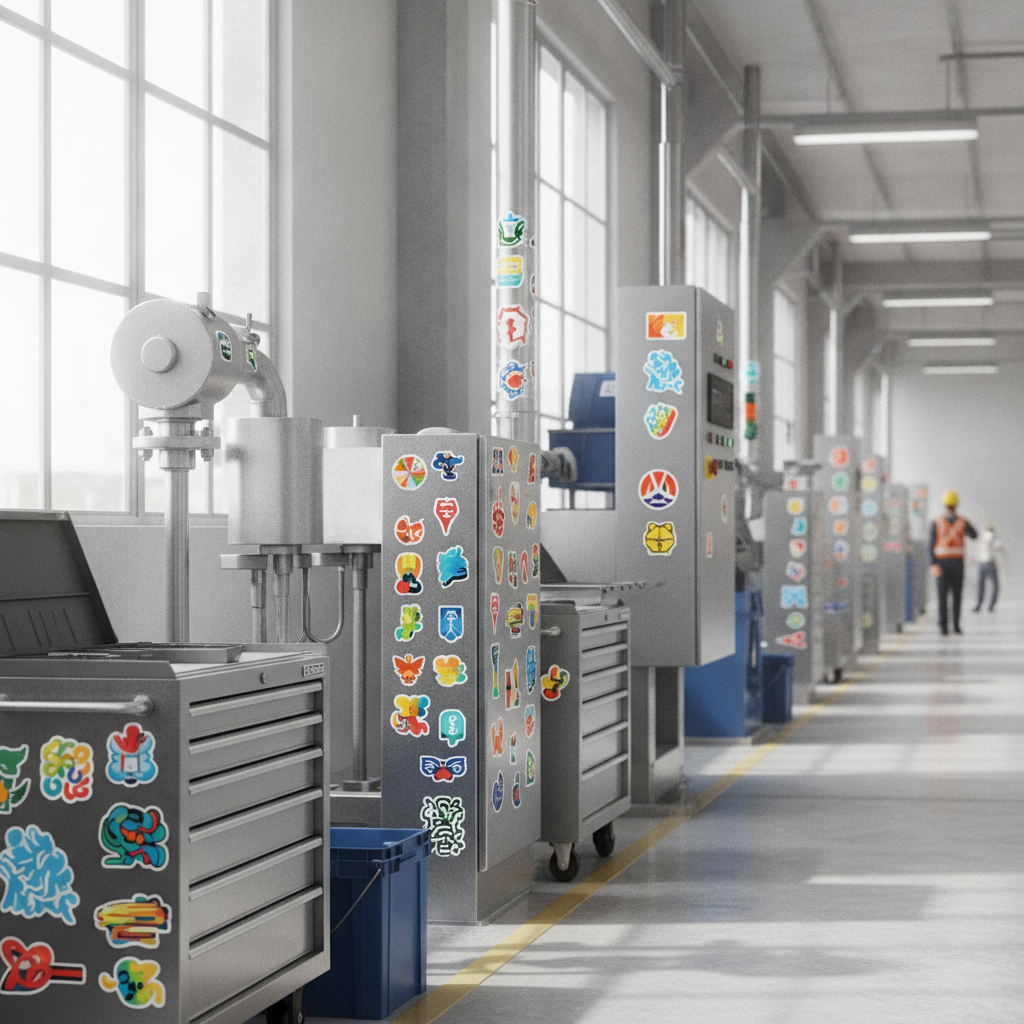
Waterproof vinyl stickers are durable PVC labels with pressure-sensitive adhesive and a protective overlaminate that resist water, UV, and chemicals. In the USA, they support OSHA/ANSI-aligned safety communication on equipment, tools, and piping. They matter because legibility and adhesion must survive washdowns, rain, and outdoor exposure without peeling or fading.
By Dante de Felice — VisionMarker
Last updated: July 5, 2026
At a Glance: Why Waterproof Vinyl Stickers Belong in Industrial Safety
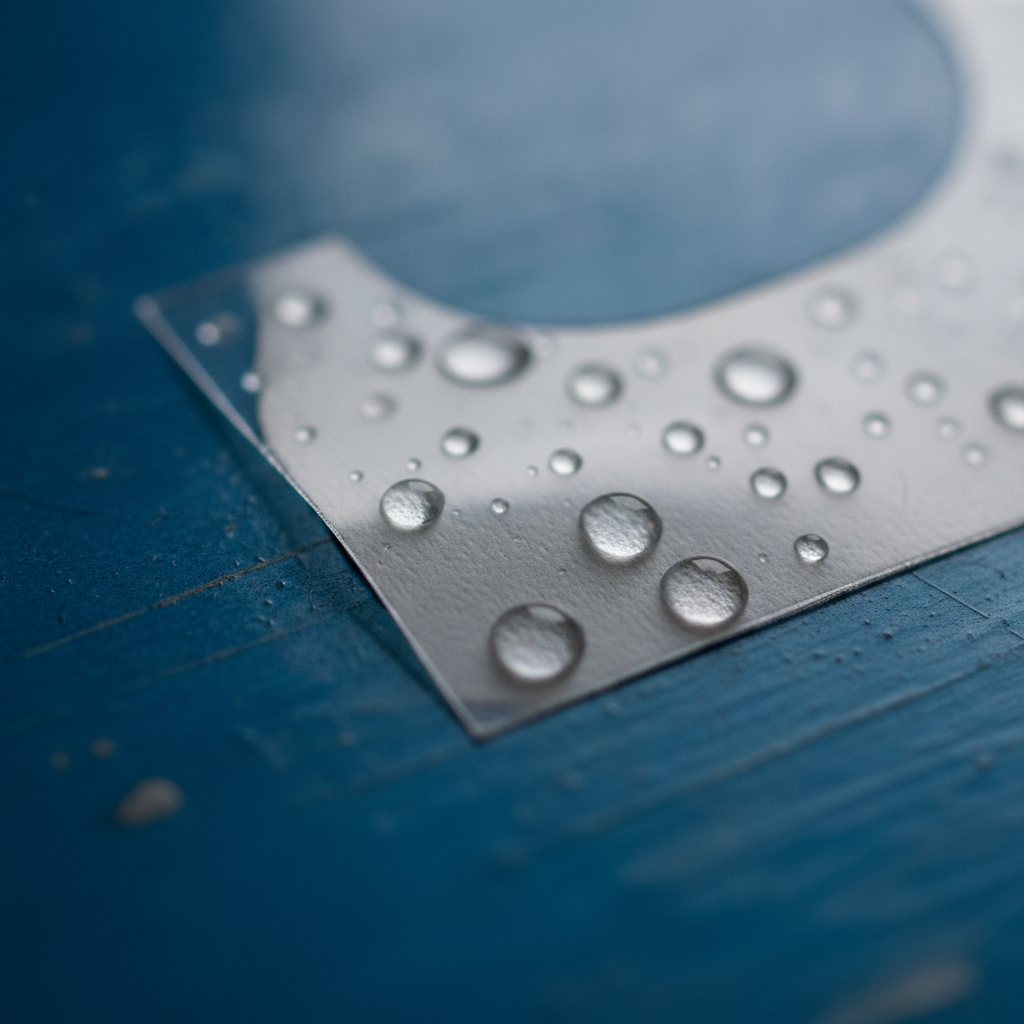
Waterproof vinyl stickers keep critical messages readable where moisture, oils, and sunlight normally destroy labels. With PVC film, acrylic adhesive, and a clear overlaminate, they offer multi-year outdoor durability, fast application, and standards-ready colors and symbols for equipment, piping, and fire protection identification across USA facilities.
VisionMarker serves facility managers and EHS leaders who need labels that last. This guide shows how to choose, apply, and maintain waterproof vinyl stickers that align with ANSI/NFPA/ASME practices while standing up to harsh conditions.
- What waterproof vinyl stickers are made of and how they resist weathering
- Where they improve safety: piping, equipment, and emergency systems
- Step-by-step surface prep and application that prevents failures
- Best practices for ANSI-style colors, symbols, and legibility
- Maintenance routines and replacement triggers EHS teams can trust
- Quick picks inside this guide link to VisionMarker resources for ANSI pipe labeling, caution labels, and OSHA warning signs.
What Are Waterproof Vinyl Stickers?
Waterproof vinyl stickers are pressure-sensitive labels built with PVC film, permanent acrylic adhesive, and a clear protective overlaminate. The construction blocks water ingress, resists chemicals and abrasion, and shields inks from UV, enabling multi-year readability on indoor and outdoor assets, tools, machinery, and pipe runs.
In our experience at VisionMarker, the most reliable builds combine a 3–4 mil vinyl face stock with a 1–2 mil clear laminate. That brings total thickness near 5–6 mil, which balances conformability on curved pipes with abrasion resistance on busy production lines.
- Core components
- Face film: Flexible PVC (often calendered) to conform over slight textures and curves.
- Adhesive: Solvent- or water-based acrylic designed for metals and durable plastics.
- Overlaminate: Clear PVC or polyester layer that blocks moisture and UV and resists scuffs.
- Performance targets
- Application temperature window: about 50–100°F helps maximize wet-out.
- Service temperature range: often -40 to 176°F for industrial-grade constructions.
- Outdoor legibility: commonly 3–7 years with UV-stable pigments and laminate.
PVC’s inherent water resistance makes it a smart default. For deeper material context on PVC substrates, review industry background like PVC product materials and general PVC overviews available from manufacturers.
Why Waterproof Vinyl Stickers Matter for Safety and Compliance
Labels that survive moisture and sunlight prevent misreads, speed hazard recognition, and keep identification systems intact. Waterproof vinyl stickers preserve ANSI-style colors and safety symbols, reducing errors during maintenance, lockout/tagout, and emergency response across demanding USA facilities.
When labels fail, risk grows. A smeared warning or missing pipe flow direction can slow a shutdown or invite a wrong valve turn. We’ve seen maintenance teams cut search time by minutes once equipment tags stayed readable after routine washdowns.
- Operational clarity: Clear tags shorten troubleshooting. Legible identifiers can trim diagnostics by several minutes per task during PM rounds.
- Incident prevention: Durable color coding supports faster recognition of hazards and required PPE in noisy, fast-moving areas.
- Standards alignment: Color fields and symbol areas map to ANSI/NFPA conventions used in common safety programs.
- Continuity: Labels that last 3–5 years outdoors reduce mid-cycle reprints and changeover gaps.
If you’re building a program around pipe and equipment ID, keep our pipe ID guide and ANSI pipe labeling primers handy. They align with how durable vinyl performs in the field.
How Waterproof Vinyl Stickers Work: Materials, Adhesives, and Laminates
PVC face film resists water and flexes to surfaces, acrylic adhesive forms a moisture-resistant bond, and a clear laminate seals inks from UV and abrasion. Together, these layers create long-term readability and adhesion on metals and plastics, even through cleaning cycles and outdoor exposure.
Think of the construction as a sandwich. The vinyl face film carries printed color and text. The adhesive layer wets out into microscopic surface valleys. A clear laminate caps the print, adding scratch resistance and UV screening.
- Face films
- Calendered PVC (3–4 mil): The workhorse for industrial labels; good conformability.
- Cast PVC (2–3 mil): Thinner, higher dimensional stability; helpful on aggressive curves.
- Adhesives
- Permanent acrylic: Broad compatibility with painted and bare metals and many plastics.
- High-tack acrylic: For powder coats and low-surface-energy plastics (e.g., HDPE).
- Service build: Bonds approach full strength in 24–72 hours after application.
- Overlaminates
- Clear PVC (1–2 mil): Matches the face film’s flex; resists common shop chemicals.
- Polyester (1 mil): Higher scratch resistance; stiffer feel for flat equipment plates.
For environments with frequent splash or condensation, review waterproofing practices in industrial spaces to set maintenance intervals and cleaning methods appropriate for labels as part of the environment planning. See a general discussion of industrial waterproofing contexts in this overview.
Types, Formats, and Approaches for Industrial Use
Choose from preprinted hazard labels, blank write-on panels, and continuous rolls. Pair standard adhesives with PVC or polyester laminates, then match formats to assets: curved pipes, flat panels, or rough housings. The right build reduces replacements and supports color coding across zones and systems.
VisionMarker’s portfolio centers on practical combinations that meet real plant constraints. Here’s how we recommend choosing.
Format options
- Preprinted safety labels: Ready-to-apply messages (e.g., CAUTION, PPE icons) speed deployment.
- Blank write-on labels: Add equipment IDs or inspection dates with an indelible marker.
- Pipe marker rolls: Continuous vinyl for custom widths and on-site cutting; see pipe markers on a roll.
- Die-cut markers: Arrows, circles, and panels for flow, valves, and control points.
Material decisions
- Calendered PVC + PVC laminate: Best balance of cost, conformity, and wet performance.
- Cast PVC + polyester laminate: Higher UV and scratch resistance on equipment faces.
- Textured laminates: Improve grip and hide scuffs on hand-contact surfaces.
Adhesive selection
- Standard permanent acrylic: Painted steel, aluminum, smooth powder coats.
- High-tack acrylic: Low-surface-energy plastics, lightly textured housings.
- Conformable adhesive: Curved pipes and small-diameter handrails.
For background on PVC as a substrate family, review manufacturer overviews like this PVC materials page to understand flexibility and finish considerations.
Step-by-Step: How to Apply Waterproof Vinyl Stickers That Last
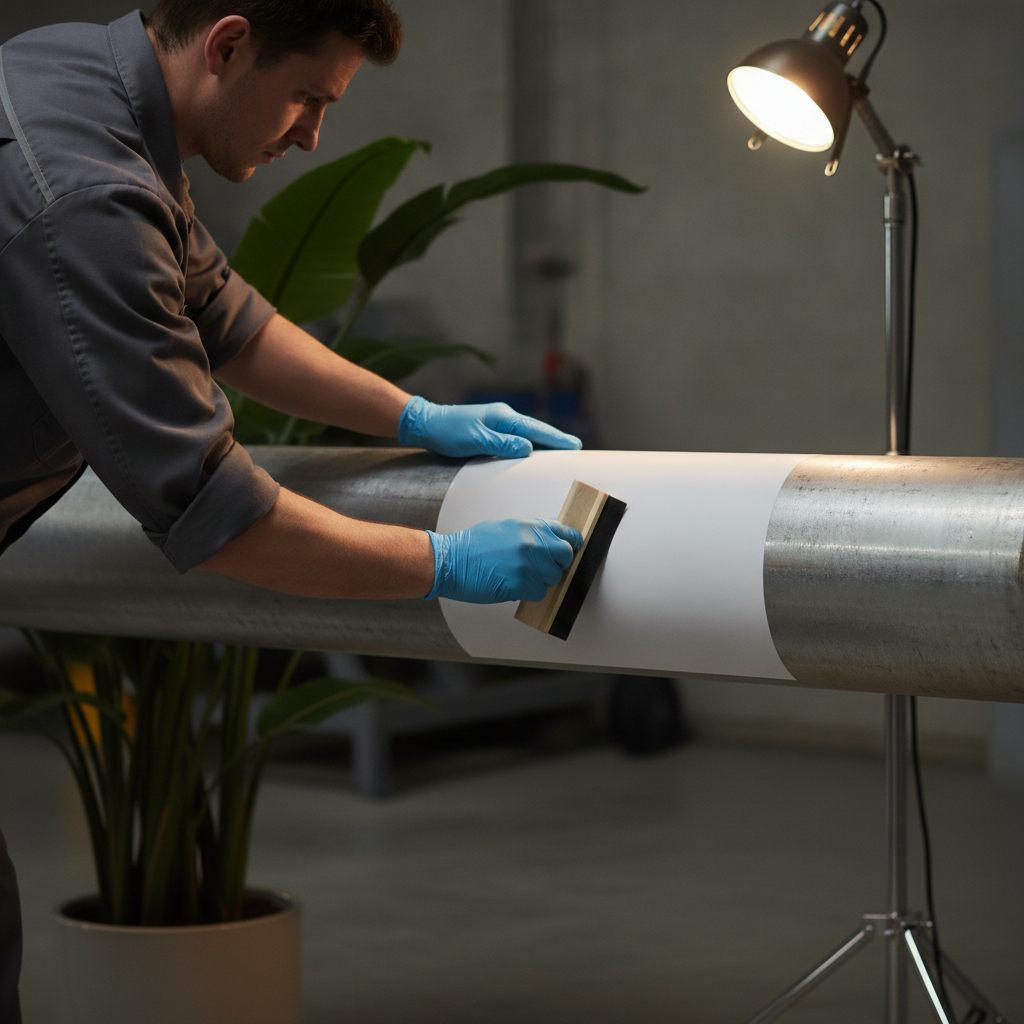
Clean, dry, and decontaminate the surface; mark alignment; apply with firm squeegee pressure; then allow 24–72 hours for adhesive build. Control temperature and humidity during install, and avoid immediate washdowns. This sequence prevents edge lift and preserves print clarity.
- Prepare the surface
- Degrease with a lint-free wipe and an approved solvent; remove oils and dust.
- Dry thoroughly. Moisture trapped under film can cause bubbles and blushing.
- Target install temperatures around 60–80°F for easier wet-out.
- Plan the placement
- Use masking tape to hinge and mark level lines and flow-arrow direction.
- On pipes, center labels so edges don’t land on weld seams or tight bends.
- Apply the label
- Peel a small section of liner, tack, then squeegee from the center outward.
- Use overlapping strokes. Firm pressure improves initial contact area.
- Finish and cure
- Re-squeegee edges to seal. Avoid washing for at least 24 hours.
- Expect full-bond strength in 24–72 hours depending on temperature and surface.
For pipe IDs, alignment and arrow placement matter as much as adhesion. Our self-adhesive pipe markers guide walks through orientation and spacing that crews can repeat consistently.
Best Practices: Durability, Readability, and Standards Alignment
Use UV-stable inks with a clear laminate, choose adhesives matched to your substrate, and size text for fast reads at working distances. Maintain clean edges, apply within recommended temperatures, and re-inspect labels during PMs to replace any with abrasion or chemical attack.
Durability checklist
- Film + laminate: 3–4 mil PVC plus 1–2 mil laminate balances conformability and scuff resistance.
- Edges: Rounded corners reduce lift; re-squeegee perimeters at install.
- Washdowns: Delay high-pressure washing 48–72 hours after install for best bond.
Readability and layout
- Contrast: High-contrast color pairs cut misreads under glare and dust.
- Text height: Aim for 0.25–0.5 in characters at arm’s-length reads; larger for mezzanines.
- Pictograms: Use familiar safety symbols; keep a clear zone around icons for faster recognition.
Program alignment
- Color coding: Map to your safety program’s ANSI-style conventions for hazards and PPE.
- Inspection cadence: Fold label checks into monthly PMs; tag any peeling or faded items.
- Training: Teach crews the installation window (50–100°F) and 24–72 hour cure time.
When these fundamentals are in place, your identification system endures. For a deeper framework across your site, see our marking systems safety guide.
Need compliant labels for harsh environments? VisionMarker’s ANSI-informed designs and durable constructions help programs stand up to UV, moisture, and chemicals. Share your application details and we’ll align materials, adhesives, and formats to your environment.
Tools and Resources to Speed Deployment
Standardize with checklists, a substrate map, and pre-approved label specs. Keep a squeegee, solvent wipes, nitrile gloves, and spare markers in a dedicated kit. Link your team to reference pages for ANSI-style pipe ID and hazard labels to reduce rework.
- Install kit: Squeegee with felt edge, isopropyl wipes, nitrile gloves, microfiber cloths, painter’s tape, measuring tape.
- Reference library: Bookmark ANSI pipe labeling and warning label categories for quick selection.
- Substrate map: Note every asset’s material (painted steel, aluminum, HDPE) and choose adhesive type accordingly.
- Spec sheet: Document target thickness (5–6 mil total), application window (50–100°F), and cure (24–72 hours).
Teams that centralize these resources cut install time and mistakes. Keeping common sizes and color sets pre-approved also speeds purchasing and audits.
Comparison: Vinyl vs. Polyester vs. Polycarbonate
Vinyl wins for conformability and cost-efficiency; polyester adds scratch resistance; polycarbonate offers premium clarity and stiffness. For curved pipes and outdoor tools, vinyl plus a clear laminate is the default. On flat equipment plates, polyester laminate can extend abrasion life.
| Property | Vinyl (PVC) | Polyester (PET) | Polycarbonate (PC) |
|---|---|---|---|
| Conformability | Excellent on curves | Fair on curves | Poor on curves |
| Scratch resistance | Good (laminated) | Very good | Excellent |
| Outdoor legibility | 3–7 years with UV inks/lam | 5–8 years with UV inks/lam | 5–10 years with UV inks/lam |
| Typical thickness | 3–4 mil film | 2–4 mil film | 5–10 mil sheet |
| Best uses | Pipes, tools, general ID | Flat plates, high-wear zones | Nameplates, panels |
For PVC fundamentals behind vinyl’s flexibility and finishes, browse manufacturer primers such as this PVC overview.
Case Studies and Practical Examples from VisionMarker Programs
Waterproof vinyl labels reduce rework and keep programs audit-ready. Across piping, equipment, and emergency systems, the right film/laminate/adhesive mix preserves color codes and symbols through washdowns, UV, and incidental chemical splash.
1) Piping identification in utility corridors
- Challenge: Condensation and occasional leaks caused paper tags to fail within weeks.
- Approach: 3.2 mil PVC film + 1.5 mil clear laminate, high-tack acrylic on painted steel.
- Outcome: After three months of seasonal swings, arrows and service names remained crisp; crews reported faster valve tracing.
2) Forklift battery rooms and wash areas
- Challenge: Splash and alkaline cleaners degraded unlaminated labels.
- Approach: Laminated vinyl hazard labels paired with bold PPE icons from our caution label lineup.
- Outcome: Inspectors found consistent legibility; maintenance reduced label replacements during quarterly PMs.
3) Emergency and fire protection placards
- Challenge: Sun-exposed exterior cabinets faded within a year.
- Approach: UV-stable inks under a clear polyester laminate to raise fade and scratch resistance.
- Outcome: Field checks at the one-year mark showed color retention and no edge lift on south-facing panels.
These results mirror what we see when programs stick to sound installation windows and maintenance cadences. Waterproof builds help signage stay inspection-ready instead of becoming a rolling punch-list item.
Frequently Asked Questions
Waterproof vinyl stickers excel in wet, outdoor, and high-wear zones. They’re built from PVC film, permanent adhesive, and a clear laminate to protect print and edges. Below are quick answers to common questions about selection, application, and care.
Will waterproof vinyl stickers stick to powder-coated equipment?
Yes, but use a high-tack acrylic adhesive and ensure the surface is clean and dry. Lightly warming the surface (not the adhesive) and applying firm squeegee pressure improves wet-out. Allow 24–72 hours before washdowns for full bond development.
How long do laminated vinyl labels last outdoors?
With UV-stable inks and a clear laminate, expect roughly 3–7 years of outdoor readability, depending on sun exposure, cleaners, and abrasion. South-facing equipment and desert sun shorten longevity; shaded or indoor assets extend it.
What temperatures are best for application?
Most industrial adhesives apply best between 50–100°F. We recommend targeting 60–80°F when possible and avoiding installs on very cold or very hot surfaces. Maintain low humidity and keep the surface dry during application.
Can I write on waterproof vinyl stickers?
Yes. Use blank write-on panels and indelible markers suitable for vinyl. If you must write on the face film, test first and consider a write-on laminate finish to improve ink anchorage and legibility over time.
Key Takeaways and Next Steps
Pick a laminated PVC build matched to your substrate, install within the recommended temperature window, and fold label checks into routine PMs. Those three moves keep identification systems readable, compliant, and ready for audits in wet or outdoor conditions.
- Material match: PVC face + clear laminate + substrate-appropriate adhesive.
- Right conditions: Apply near 60–80°F; let bonds mature 24–72 hours.
- Program discipline: Inspect, replace, and standardize color/size choices.
- Use resources: Lean on ANSI pipe labeling and our OSHA warning sign primers to stay consistent.
Ready to standardize waterproof labeling? Share your environment (substrates, cleaners, temperatures) and we’ll recommend a field-proven construction and formats your team can deploy quickly.